
A typical window air conditioner uses between 5 to 15 amps. However, this number can vary significantly based on the unit’s size, cooling capacity, and energy efficiency. Figuring out the correct window AC amperage is crucial for ensuring your home’s electrical system can handle the load, preventing blown fuses or tripped circuit breakers, and ultimately saving you money on your electricity bill by making informed decisions about window AC power consumption. This guide will delve into the factors influencing window AC power draw, help you decipher window AC electrical requirements, and explain how to choose the right unit for your needs.
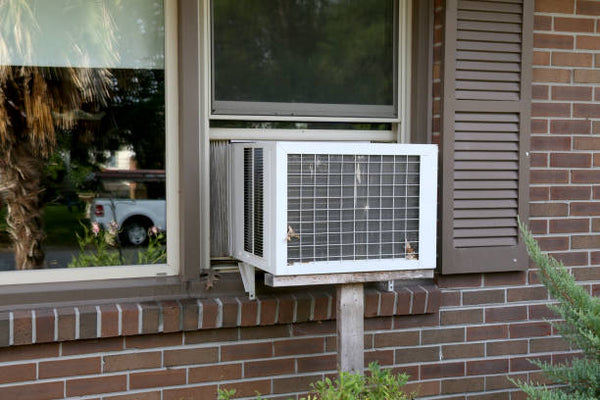
Image Source: cdn.shopify.com
Deciphering Window AC Electrical Needs
When you look at a window air conditioner, you’ll see a label with its electrical specifications. This label tells you a lot about what the unit needs to run safely and effectively. Understanding these numbers is key to avoiding electrical problems and ensuring your comfort.
Voltage and Amperage: The Basics
- Voltage (V): This is the electrical “pressure” that pushes electricity through the wires. Most standard household circuits in North America operate at 120 volts (V). Larger or more powerful appliances might require 240 volts (V), but most common window AC units are designed for 120V. It’s essential to match the window AC voltage to your home’s available power.
- Amperage (A): This measures the rate of electrical current flow. Think of it as the “amount” of electricity the appliance uses. Window AC amperage is a critical figure because it tells you how much of your electrical circuit’s capacity the AC will consume.
Wattage: The Full Picture of Power Consumption
- Wattage (W): This represents the total power the appliance uses. It’s calculated by multiplying voltage by amperage: Wattage (W) = Voltage (V) × Amperage (A). So, a 120V air conditioner drawing 10 amps uses 1200 watts of power. Knowing the window air conditioner wattage gives you a clearer idea of the energy it consumes. How much electricity does a window AC use is directly related to its wattage.
Factors Affecting Window AC Amperage
Several elements contribute to the typical window AC amps you’ll see. Understanding these can help you choose a unit that fits your electrical setup.
Cooling Capacity (BTUs)
British Thermal Units (BTUs) measure the amount of heat an air conditioner can remove from a space. The higher the BTU rating, the more powerful the air conditioner, and generally, the more electricity it will use.
- Smaller Units (5,000-6,000 BTUs): These are suitable for small rooms (around 150-250 sq ft). They typically draw 5 to 7 amps on 120V.
- Medium Units (8,000-12,000 BTUs): Designed for medium-sized rooms (around 350-550 sq ft). These often consume 7 to 10 amps on 120V.
- Larger Units (14,000-24,000 BTUs): For larger spaces or open-plan areas (up to 1000+ sq ft). These can draw 10 to 15 amps or even more on 120V. Some very large window units might require a 240V outlet and draw a different amperage.
Energy Efficiency (EER and SEER)
- Energy Efficiency Ratio (EER): This is a measure of how efficiently an air conditioner cools. It’s calculated by dividing the cooling capacity (BTUs) by the power input in watts at a specific outdoor temperature. A higher EER means greater efficiency. More efficient units will have lower window AC power consumption for the same cooling output.
- Seasonal Energy Efficiency Ratio (SEER): While more common for central air conditioning, some window units may also list SEER. It measures efficiency over an entire cooling season, taking into account varying temperatures. Higher SEER ratings indicate better energy savings.
Age and Condition of the Unit
Older air conditioners, especially those that haven’t been regularly maintained, can become less efficient over time. This means they might draw more power (higher amperage) to achieve the same level of cooling as when they were new.
Ambient Temperature and Thermostat Settings
- Hotter Temperatures: When the outside temperature is very high, the air conditioner has to work harder to cool the room. This increased workload means it will draw more power, leading to higher window AC amperage and increased window AC power consumption.
- Thermostat Setting: Setting the thermostat to a much colder temperature than the current room temperature will also make the unit run longer and harder, increasing its window AC power draw.
Compressor Type
- Standard Compressors: These cycle on and off to maintain the desired temperature. They can cause a temporary surge in amperage when they start.
- Inverter Compressors: These are more advanced and can vary their speed. They generally use less energy overall and have a more consistent window AC power consumption without the large startup surges.
Calculating Your Window AC’s Power Needs
To accurately determine how much electricity does a window AC use, you need to consider its specifications.
Reading the Nameplate
Every air conditioner has a nameplate, usually located on the side or back of the unit. This is where you’ll find crucial information:
- Volts (V): The operating voltage.
- Amps (A) or Full Load Amps (FLA): The maximum current the unit is designed to draw during normal operation. This is the most important figure for determining window AC circuit breaker size.
- Watts (W) or Wattage: The total power consumption.
Example Calculations
Let’s say you have a window AC with the following specifications:
- Voltage: 120V
- Amperage: 8.5A
Using the formula Wattage = Voltage × Amperage:
- Wattage = 120V × 8.5A = 1020 Watts
This means the unit, on average, will consume about 1020 watts of power. If it runs for 8 hours a day, the daily energy consumption would be:
- Energy (kWh) = (Wattage / 1000) × Hours
- Energy = (1020 W / 1000) × 8 hours = 8.16 kilowatt-hours (kWh)
This calculation helps you estimate the impact on your electricity bill.
Connecting Your Window AC: Electrical Safety and Circuit Sizing
Properly connecting your window air conditioner is paramount for safety and to avoid overloading your home’s electrical system. This involves understanding the relationship between window AC amperage and your home’s wiring and circuit breakers.
Understanding Circuit Breakers
Circuit breakers are safety devices that protect your home’s wiring from overheating and causing a fire. They “trip” and shut off power to a circuit if the current exceeds a safe level.
Determining the Window AC Circuit Breaker Size
The National Electrical Code (NEC) provides guidelines for electrical installations. A general rule of thumb for powering appliances like window AC units is to ensure the circuit breaker is rated at 125% of the appliance’s continuous load.
- Continuous Load: This refers to a load that operates for 3 hours or more. Most air conditioners operate continuously during hot weather.
Let’s use our example of an 8.5A window AC:
Calculate the required breaker size:
- 8.5 Amps × 1.25 = 10.625 Amps
Choose the next standard breaker size: The next standard breaker size above 10.625 Amps is 15 Amps.
Therefore, for an 8.5A window AC, a 15 Amp circuit breaker is typically the best amperage for window AC circuits.
Dedicated Circuits
For window air conditioners, especially those drawing more than 7-8 amps, it is highly recommended to have them on a dedicated circuit. This means the circuit breaker and the wiring serving that circuit are used only for the air conditioner.
- Why a Dedicated Circuit?
- Prevents Overloading: When you plug an AC into a circuit already powering other devices (lights, TVs, computers), the combined amperage can easily exceed the circuit’s capacity, causing the breaker to trip.
- Ensures Consistent Power: A dedicated circuit ensures the AC receives the stable power it needs to operate efficiently and reliably.
- Safety: Reduces the risk of overheating wires and potential fire hazards.
What if Your Window AC Requires More Amps?
If you have a larger window AC unit that draws, for example, 13 amps:
Calculate required breaker size:
- 13 Amps × 1.25 = 16.25 Amps
Choose the next standard breaker size: The next standard breaker size above 16.25 Amps is 20 Amps.
In this scenario, you would need a 20 Amp circuit breaker, and this circuit should definitely be dedicated to the air conditioner. If your home only has 15 Amp circuits available for outlets and your AC requires a 20 Amp breaker, you will need to have an electrician install a new, dedicated 20 Amp circuit.
Outlet Types
- Standard 15A Outlet: This is the common household outlet and is designed for up to 15 amps. It typically has two vertical slots and a U-shaped ground pin.
- 20A Outlet: These can have a horizontal slot alongside the vertical slot, indicating it’s rated for 20 amps. Larger window AC units requiring a 20A circuit will have a plug that matches this outlet type.
Crucially, never force a plug into an outlet it doesn’t fit. Using the wrong outlet or adapter can be a fire hazard.
Extension Cords and Their Risks
While some manufacturers may allow the use of heavy-duty extension cords, it’s generally best to avoid them for window air conditioners.
- Amperage Rating: If you must use an extension cord, ensure it is specifically rated for the amperage of your air conditioner and is a heavy-gauge cord (lower gauge number means thicker wire and higher capacity).
- Voltage Drop: Long or thin extension cords can cause voltage drop, meaning the AC receives less than its required voltage. This can lead to inefficient operation and potential damage to the unit’s motor.
- Heat Generation: Underrated extension cords can overheat, posing a fire risk.
The best practice is to plug the air conditioner directly into a wall outlet. If the outlet is not conveniently located, consider having an electrician move or add an outlet.
Choosing the Best Amperage for Window AC for Your Home
Selecting the right window air conditioner involves balancing cooling needs with your home’s electrical capacity.
Assess Your Electrical System
- Know Your Panel: Locate your home’s main electrical panel (breaker box). It will indicate the total amperage your home is designed to handle (e.g., 100A, 150A, 200A).
- Identify Existing Circuits: Look at the labels on your circuit breakers. You’ll see which circuits are dedicated to specific areas or appliances. Note the amperage rating of each breaker (usually 15A or 20A for standard outlets).
- Check Circuit Load: If you plan to install a powerful window AC, you might need to assess how many other high-draw appliances are on nearby circuits. Adding a significant load to an already heavily used circuit is not advisable.
Match BTU Needs to Amperage
As a general guide, consider these typical window AC amps when selecting a unit:
| BTU Range | Typical Room Size (sq ft) | Typical Window AC Amps (120V) | Recommended Window AC Circuit Breaker Size |
|---|---|---|---|
| 5,000 – 6,000 | 150 – 250 | 5.0 – 7.0 A | 15 A |
| 7,000 – 8,000 | 250 – 350 | 6.0 – 8.0 A | 15 A |
| 9,000 – 12,000 | 350 – 550 | 7.0 – 10.0 A | 15 A (or 20A for higher end) |
| 14,000 – 18,000 | 550 – 700 | 9.0 – 12.0 A | 20 A |
| 20,000 – 24,000 | 700 – 1000+ | 11.0 – 15.0 A | 20 A |
Note: These are approximate figures. Always check the unit’s nameplate for exact specifications.
Prioritize Energy Efficiency
When comparing units with similar BTU ratings, opt for the one with the higher EER or SEER rating. While it might have a slightly higher initial cost, the long-term savings on your window AC power consumption can be significant. An energy-efficient unit will have a lower window AC power draw for the same amount of cooling.
Consult a Professional
If you’re unsure about your home’s electrical capacity or the requirements for a particular air conditioner, it’s always best to consult a qualified electrician. They can assess your system, advise on the best window AC electrical requirements, and ensure a safe installation.
Troubleshooting Common Electrical Issues
Encountering electrical problems with your window AC can be frustrating. Here’s how to address common issues related to window AC amperage and power.
Tripped Circuit Breaker
- Cause: The AC is drawing too much current, likely due to overloading the circuit, the AC unit itself drawing more amps than rated, or a malfunction.
- Solution:
- Turn off the air conditioner.
- Go to your electrical panel and reset the tripped breaker (push it fully off, then back on).
- If it trips again immediately, do not reset it. There’s likely a short circuit or a significant problem with the AC unit. Unplug the AC.
- If the breaker trips after the AC has been running for a while, it could be due to the circuit being overloaded by other appliances. Try running the AC on a dedicated circuit or with fewer other devices running simultaneously.
- If the problem persists, call an electrician.
Blown Fuse (Older Homes)
- Cause: Similar to a tripped breaker, a fuse blows when too much current flows through it.
- Solution:
- Turn off the AC.
- Locate the fuse box.
- Identify and replace the blown fuse with a new one of the exact same amperage rating.
- If the new fuse blows, there’s a serious issue, and you should contact an electrician.
AC Not Turning On
- Cause: Power supply issue, tripped breaker/blown fuse, or a problem with the AC unit itself.
- Solution:
- Check if the unit is plugged in securely.
- Check the circuit breaker or fuse.
- Try plugging another small appliance into the same outlet to see if the outlet is working.
- If the outlet is functional and the breaker is on, the AC unit may have an internal issue. Contact the manufacturer or a repair technician.
Unit Runs, But Not Cooling Effectively
- Cause: While not directly an amperage issue, poor performance can sometimes be linked to electrical problems or the unit working harder. This could be due to:
- Dirty air filter.
- Dirty condenser coils.
- Refrigerant leak.
- Incorrect sizing for the room.
- Voltage issues (though less common if it runs).
- Solution:
- Clean or replace the air filter regularly.
- Clean the condenser and evaporator coils.
- Ensure the thermostat is set correctly.
- If the problem persists, call a qualified HVAC technician.
Frequently Asked Questions (FAQ)
Q1: Can I plug my window AC into a regular outlet?
A1: Yes, if the outlet is on a circuit that can safely handle the window AC amperage and window AC power consumption. For most smaller units (under 7-8 amps), a standard 15A circuit with other devices is often okay, but a dedicated circuit is always preferred for reliability and safety. For larger units, a dedicated 20A circuit is usually necessary. Always check the unit’s rating and your home’s circuit capacity.
Q2: How do I know if I need a new circuit for my window AC?
A2: If your circuit breaker trips frequently when the AC is running, or if you’re adding a unit that draws more than 7-8 amps to a circuit with other appliances, you likely need a new, dedicated circuit. Consult an electrician to assess your needs.
Q3: Does my window AC use a lot of electricity?
A3: How much electricity does a window AC use depends on its size, efficiency, and how long it runs. A 10,000 BTU unit might use around 1,000 watts (or 1kW) while running. If it runs for 8 hours a day, it will consume about 8 kWh. Comparing this to other appliances helps gauge its usage. Energy Star certified models are designed to minimize window AC power consumption.
Q4: What is the difference between amps and watts for a window AC?
A4: Amps (A) measure the flow of electrical current, while watts (W) measure the total power used. They are related by the formula: Watts = Volts × Amps. The amperage tells you how much current the unit draws, which is critical for circuit sizing, while wattage indicates the rate of energy consumption.
Q5: Can I use a 20 Amp extension cord for a 15 Amp window AC?
A5: While a 20 Amp extension cord can handle more current, it’s best to use an extension cord that is rated exactly for your appliance’s amperage. More importantly, avoid extension cords altogether if possible, and always ensure the cord is heavy-gauge and in good condition. Plugging directly into the wall is the safest option.
By carefully considering the window AC amperage, window air conditioner wattage, and your home’s electrical infrastructure, you can ensure your window AC operates safely, efficiently, and keeps you cool all summer long.

My name is Carlos Gadd, and I am the creator of AirPurityGuide.com.. With a passion for footwear, I share my experiences, insights, and expertise about shoes. Through my blog, I aim to guide readers in making informed decisions, finding the perfect pair, and enhancing their footwear knowledge. Join me on this journey to explore everything about shoes!