
Can I just throw an old air conditioner in the trash? No, you cannot simply throw an old air conditioner in the trash. These appliances contain refrigerants and other materials that require special handling to protect the environment and comply with regulations. This guide will walk you through the correct methods for appliance disposal near me and the responsible cooling system removal of your old air conditioner.
Getting rid of an old air conditioner might seem straightforward, but it’s actually a process that requires attention to detail. These units are more than just metal and plastic; they often contain refrigerant disposal concerns and are considered electronic waste. Improper disposal can lead to harmful chemicals entering our environment. Fortunately, there are several safe and responsible ways to handle HVAC removal, ensuring your old unit doesn’t harm the planet. We’ll cover everything from preparing the unit for removal to finding the right recycling centers.
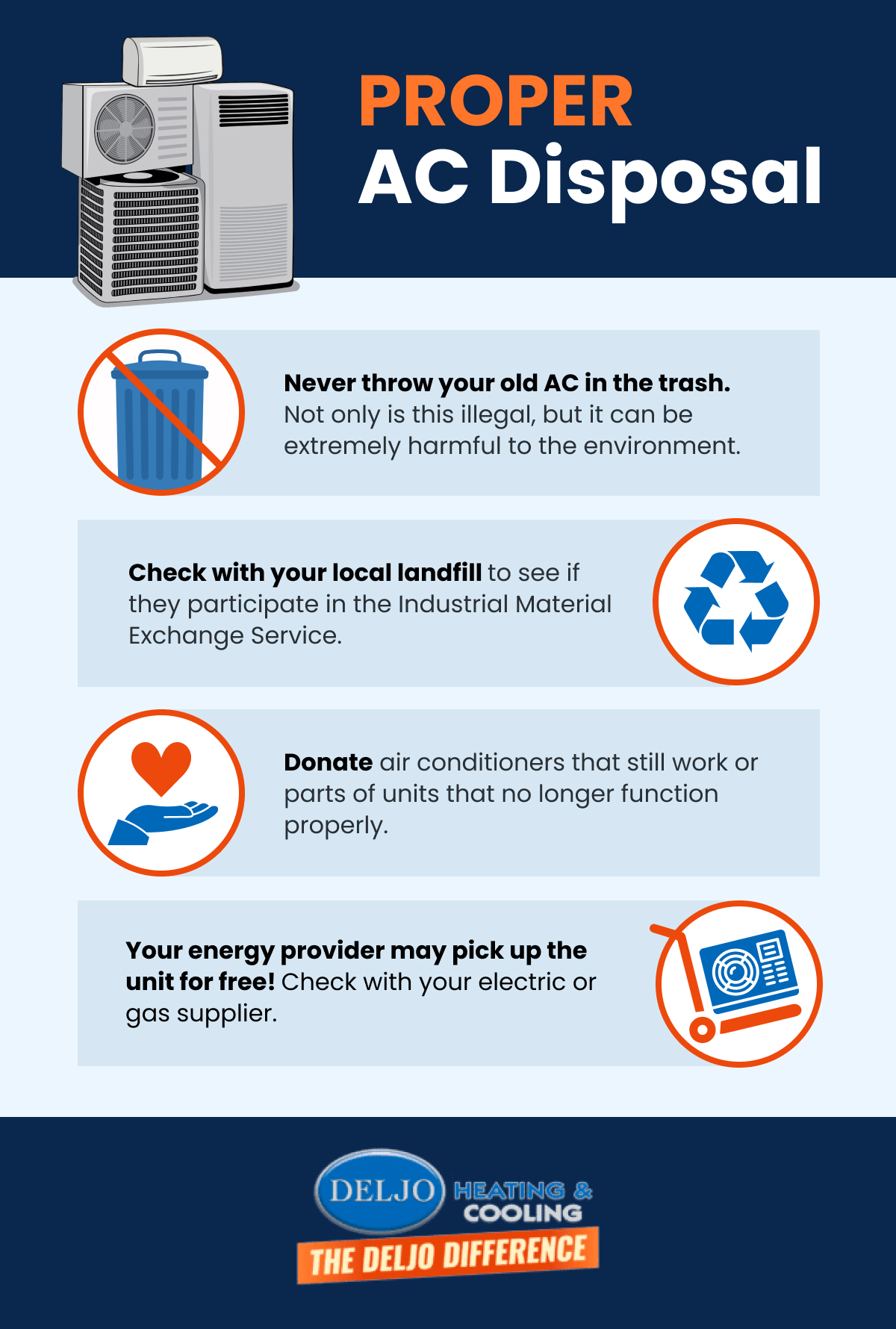
Image Source: deljoheating.com
Preparing Your Old Air Conditioner for Removal
Before your old air conditioner can be removed, a few crucial steps need to be taken. This preparation ensures that the process is safe for both you and the environment.
De-energizing the Unit
The very first step in any cooling system removal is to ensure the unit is completely powered down and disconnected from any electricity source. This prevents electrical hazards during the removal process.
- Turn off the power at the breaker box. Locate the circuit breaker that controls your air conditioner and switch it to the “off” position.
- Verify the power is off. Use a voltage tester or simply try to turn the unit on to confirm it is no longer receiving power. This is a critical safety precaution.
Handling Refrigerant Safely
This is perhaps the most critical aspect of appliance disposal. Air conditioners contain refrigerants, such as R-22 (Freon) or newer alternatives like R-410A, which are potent greenhouse gases if released into the atmosphere.
- Professional Recovery is Essential: You should never attempt to vent refrigerant yourself. It requires specialized equipment and certification to safely recover refrigerants. A certified HVAC technician must perform this task.
- Why Professional Recovery Matters: Releasing refrigerants contributes to ozone depletion and climate change. Regulations are in place to prevent this. Technicians use recovery machines that capture the refrigerant for proper disposal or recycling.
- Finding a Certified Technician: If you are not replacing your AC unit with a new one through an installation company, you will need to hire an HVAC professional specifically for the refrigerant disposal aspect of the HVAC removal.
Detaching the Unit
Once the power is off and refrigerant has been handled by a professional, the unit can be physically detached. This might involve disconnecting electrical wiring, refrigerant lines, and condensate drains. Depending on the type of unit (window AC, central AC component, or mini-split), the process will vary.
Window Air Conditioners
For window units, this is often a DIY task if you’re comfortable working with appliances.
- Remove mounting hardware: Unscrew any brackets or supports holding the unit in the window frame.
- Carefully lift the unit: Window ACs can be heavy. It’s best to have someone help you lift it to prevent injury.
- Seal any open lines: If there are any exposed refrigerant lines (though this is less common with window units compared to central systems), they should ideally have been professionally capped during the refrigerant recovery.
Central Air Conditioner Components (Condenser Unit)
The outdoor condenser unit of a central AC system requires professional cooling system removal.
- Professional Disconnection: HVAC technicians will safely disconnect the refrigerant lines, electrical wiring, and any plumbing connected to the unit.
- Securing the Unit: The unit is usually bolted to a concrete pad, so these bolts will need to be removed.
Mini-Split Systems
These systems involve both an indoor and an outdoor unit connected by refrigerant lines and electrical wiring.
- Professional Service Required: The disconnection of refrigerant lines and the recovery of refrigerant are critical and must be done by a certified professional.
- Indoor Unit Removal: The indoor unit is typically mounted on a wall and can be removed after the refrigerant lines and electrical connections are safely disconnected by a technician.
Responsible Disposal Options
Once your old air conditioner is ready for disposal, you have several responsible options to consider. Choosing the right option ensures compliance with environmental regulations and contributes to a circular economy.
Appliance Recycling Programs
Many municipalities and counties offer appliance recycling programs, especially for large appliances like air conditioners.
- Curbside Pickup: Some local waste management services offer special collection days for large appliances. You may need to schedule this in advance and there might be a fee.
- Drop-off Centers: Recycling centers or transfer stations often accept old appliances. They usually have designated areas for scrap metal and other recyclable materials.
- Check Local Authority Websites: The best way to find out about these programs is to visit your city or county’s sanitation or public works department website. Search for terms like “appliance disposal,” “recycling centers,” or “bulk waste pickup.”
Retailer Take-Back Programs
When purchasing a new air conditioner, many retailers offer a haul-away service for your old unit.
- Convenient Option: This is often the most convenient method, as the old unit is removed at the time of the new installation.
- Inquire at Purchase: Ask your appliance dealer or HVAC installer if they offer this service and if there are any associated fees. They will typically handle the proper disposal and recycling of the old unit.
Junk Removal Services
If you need a quick and comprehensive solution for removing an old air conditioner, alongside other unwanted items, a junk removal service is an excellent choice.
- Full-Service Removal: These companies will come to your home, remove the appliance, and transport it for disposal or recycling.
- Cost Consideration: While convenient, junk removal services typically charge a fee based on the volume and type of items removed. Ensure they practice responsible disposal methods.
- Finding Services: Search online for “junk removal services” or “appliance removal” in your area.
Scrap Metal Recycling
Air conditioners are made up of a significant amount of metal, making them suitable for metal recycling.
- Scrap Yards: Local scrap metal yards will often accept old air conditioning units. They will pay by weight for the metals.
- Refrigerant Removal is Key: Crucially, scrap yards will not accept units that still contain refrigerant. You must ensure the refrigerant has been professionally recovered before taking it to a scrap yard.
- Dismantling: Some scrap yards might require you to partially dismantle the unit (e.g., remove the compressor and electrical components) to isolate the metal.
Environmental Regulations and Why They Matter
The proper disposal of air conditioners is not just about being eco-friendly; it’s also about complying with environmental regulations. These rules are in place to protect human health and the environment.
Refrigerant Management
As mentioned, refrigerants are the primary concern.
- Clean Air Act: In the United States, Section 608 of the Clean Air Act regulates refrigerants. It prohibits the intentional release of refrigerants into the atmosphere.
- Purpose: These regulations aim to prevent ozone depletion and reduce the emission of potent greenhouse gases.
- Certified Technicians: Only certified technicians are legally allowed to handle and recover refrigerants.
Electronic Waste (E-Waste) Regulations
Air conditioners, like many appliances, are classified as electronic waste or universal waste in some regions.
- Hazardous Components: They can contain small amounts of hazardous materials such as lead, mercury, and cadmium, though refrigerants are the most significant concern.
- Landfill Bans: Many jurisdictions ban electronics from being sent to regular landfills to prevent these hazardous materials from leaching into the soil and groundwater.
- Responsible Recycling: Regulations encourage or mandate recycling through certified e-waste recyclers who can safely dismantle and process these items.
What to Look For in a Disposal Service
When choosing how to dispose of your old air conditioner, consider the following to ensure you’re making the best choice.
Certified Professionals for Refrigerant Recovery
- EPA Certification: Ensure that any technician handling refrigerant disposal is certified by the Environmental Protection Agency (EPA) or equivalent local authority.
- Documentation: Ask if they provide documentation that the refrigerant was recovered according to regulations.
Recycler Certifications
- R2 or e-Stewards: For e-waste recycling, look for facilities certified by R2 (Responsible Recycling) or e-Stewards. These certifications indicate a commitment to environmentally sound practices and data security.
- Local Certifications: Check if your local government has specific requirements or endorsements for recycling facilities.
Transparency in Fees and Practices
- Clear Pricing: Understand all costs associated with disposal, whether it’s a recycling center fee, a junk removal service charge, or a retailer’s haul-away fee.
- Disposal Methods: Ask the service provider about their disposal methods. Do they prioritize recycling? How do they handle the refrigerants?
DIY vs. Professional Removal
Deciding whether to tackle HVAC removal yourself or hire professionals depends on your comfort level, the type of unit, and local regulations.
DIY Removal Considerations
- Window Units: If you are physically capable and comfortable handling tools, removing a window AC unit can be a DIY project. However, you must ensure the refrigerant has been professionally recovered beforehand.
- Central AC Components: Removing the outdoor condenser unit of a central AC system is generally not recommended for DIY due to the complexities of refrigerant lines and electrical connections.
Professional Removal Benefits
- Safety: Professionals have the training and equipment to handle potentially hazardous materials like refrigerants and electrical components safely.
- Compliance: They are knowledgeable about environmental regulations and ensure proper disposal.
- Efficiency: They can often remove the unit quickly and efficiently.
- Refrigerant Handling: This is the biggest advantage. They can legally and safely recover the refrigerant, which is essential for responsible appliance disposal.
Frequently Asked Questions (FAQ)
Q1: How much does it cost to dispose of an old air conditioner?
A1: The cost varies significantly depending on your chosen method. Retailer haul-away services might be included with the purchase of a new unit or cost between $50-$150. Junk removal services can range from $100-$300 or more, depending on the size of the unit and the service area. Recycling centers may have a small drop-off fee, often between $20-$50. The most critical cost is usually the professional refrigerant recovery, which can range from $75-$200.
Q2: Can I sell my old air conditioner?
A2: If your air conditioner is still in working condition, you might be able to sell it. Options include online marketplaces (like Craigslist, Facebook Marketplace) or local appliance dealers who might buy used units. However, if it’s old and inefficient, or if the refrigerant has already been recovered for disposal, selling it might not be an option.
Q3: What happens if I don’t dispose of my air conditioner properly?
A3: Improper disposal can lead to significant environmental damage. Releasing refrigerants contributes to ozone depletion and climate change. Hazardous materials can also contaminate soil and water if the unit ends up in a landfill. You could also face fines for violating environmental regulations.
Q4: Do I need to recover the refrigerant myself before recycling?
A4: Absolutely not. You should never attempt to recover refrigerant yourself. It is illegal and dangerous without proper certification and equipment. Always hire a certified HVAC technician to perform refrigerant disposal.
Q5: Where can I find appliance recycling near me?
A5: You can find appliance recycling near me by checking your local municipality’s website (search for sanitation, public works, or waste management departments), looking up local scrap metal yards, or contacting appliance retailers about their haul-away programs. Many junk removal services also focus on responsible recycling.
Q6: What are the main components of an air conditioner that need special disposal?
A6: The primary components requiring special attention are the refrigerants within the sealed system and any electronic components. The metals like copper and aluminum are valuable for metal recycling, but only after the refrigerant is safely handled.
Q7: Is it okay to leave my old AC unit sitting in my yard?
A7: It’s best not to. Old appliances can be eyesores, attract pests, and may still contain residual refrigerants or oils that could potentially leak into the environment over time. Responsible appliance disposal is the best course of action.
Conclusion
Disposing of an old air conditioner is more than just clearing space; it’s an act of environmental responsibility. By ensuring proper refrigerant disposal, utilizing appliance recycling programs, and respecting environmental regulations, you contribute to a healthier planet. Whether you choose a dedicated recycling center, a junk removal service, or a retailer’s take-back program, always prioritize safety and compliance. Remember, a certified professional is essential for handling refrigerants, and this step is non-negotiable for proper disposal and responsible cooling system removal. By following these guidelines, you can ensure your old air conditioner is removed safely and responsibly, keeping harmful substances out of our environment and valuable materials in the loop for metal recycling.

My name is Carlos Gadd, and I am the creator of AirPurityGuide.com.. With a passion for footwear, I share my experiences, insights, and expertise about shoes. Through my blog, I aim to guide readers in making informed decisions, finding the perfect pair, and enhancing their footwear knowledge. Join me on this journey to explore everything about shoes!