
When the pipe on your air conditioning unit is frozen, it’s a clear sign that something is wrong with your system, and it needs attention. An AC unit’s frozen pipe typically indicates a problem with airflow or the amount of refrigerant in the system.
Seeing ice on your air conditioner’s pipes, especially the larger, insulated copper line (the “suction line”), is a symptom of a deeper issue. This isn’t a normal occurrence and usually points to a malfunction that, if left unaddressed, can lead to more serious damage and costly repairs. This guide will walk you through the common reasons why your AC pipe might be frozen and what you can do about it.
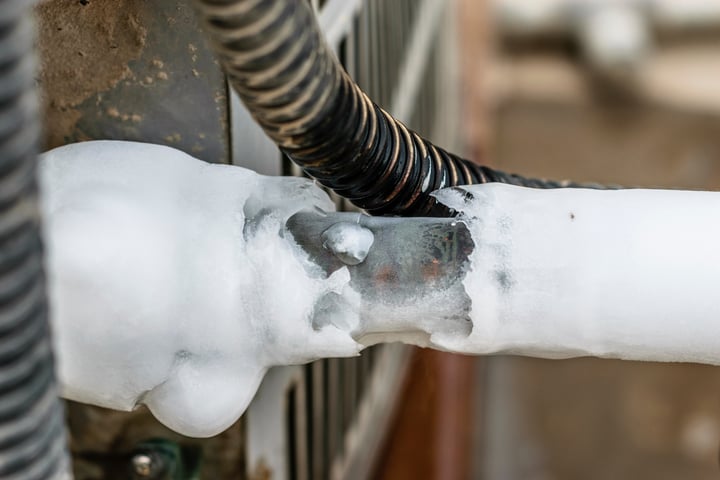
Image Source: www.topnotchheatingandair.com
Deciphering the Ice: Common Causes of a Frozen AC Pipe
A frozen AC pipe is a distress signal from your cooling system. It means the refrigerant inside the pipe has become too cold, causing moisture in the air to condense and freeze onto the pipe’s surface. This ice buildup restricts the system’s ability to cool your home effectively and can even damage internal components.
1. Dirty Air Filter: The Silent Blocker of Airflow
The most common culprit for a frozen AC pipe is a dirty, clogged air filter. Your air conditioner relies on a steady stream of air flowing over the evaporator coil. This coil is where the refrigerant absorbs heat from the air. If the air filter is too dirty, it restricts this airflow.
When airflow is reduced, the refrigerant in the evaporator coil doesn’t pick up enough heat. This causes the refrigerant to get excessively cold, so cold that it can freeze the moisture in the air that touches the coil and the connected pipes. Think of it like trying to breathe through a thick blanket – it’s hard to get enough air.
- How a dirty filter causes freezing:
- Restricts the volume of warm air reaching the evaporator coil.
- Causes the coil to get colder than it should.
- The cold refrigerant absorbs heat from the surrounding air, but with less air, it absorbs less heat.
- This leads to a drastic drop in temperature within the refrigerant lines, potentially below freezing.
- Condensation forms on the cold pipes and freezes, creating ice buildup on AC.
Actionable Tip: Check your air filter regularly – usually once a month. If it looks dirty, replace it. This simple step can prevent many AC problems, including frozen pipes.
2. Airflow Restriction: More Than Just the Filter
While a dirty air filter is a primary cause of airflow restriction, other issues can also impede the movement of air into your AC unit. Proper airflow is crucial for the system to function correctly and prevent freezing.
- Blocked Vents and Registers: If your home’s vents or registers are blocked by furniture, curtains, or other objects, it prevents warm air from circulating into the AC system. This creates areas of low airflow, similar to a clogged filter.
- Closed or Leaky Ducts: Damaged or improperly sealed ductwork can significantly reduce the amount of air that reaches your AC unit. Leaky ducts allow conditioned air to escape into unconditioned spaces, and closed dampers restrict airflow.
- Obstructions in the Return Air Grille: The return air grille pulls air from your home back into the AC system. If this grille is blocked or dirty, it will restrict the amount of air entering the unit.
Consequences of Airflow Restriction:
* Reduced cooling efficiency.
* Increased strain on the AC components.
* Higher energy bills.
* The dreaded AC frozen pipe.
3. Evaporator Coil Issues: The Heart of the Cooling Process
The evaporator coil, located inside your home (usually in the air handler unit), is where the magic of cooling happens. Warm air from your house passes over this cold coil, transferring its heat to the refrigerant inside. If the evaporator coil itself is compromised or dirty, it can lead to freezing.
- Dirty Evaporator Coil: Over time, dust, dirt, and debris can accumulate on the evaporator coil’s fins. This layer of grime acts as an insulator, preventing efficient heat transfer. Just like a dirty air filter, a dirty coil reduces airflow and causes the refrigerant to get too cold.
- Damaged Evaporator Coil Fins: Bent or damaged fins on the evaporator coil can also obstruct airflow across the coil’s surface, leading to uneven cooling and potential freezing.
Signs of Evaporator Coil Problems:
* Reduced cooling capacity.
* Strange noises coming from the air handler.
* Musty odors.
* Ice buildup on the coil and refrigerant pipes.
4. Low Refrigerant: The Lifeblood of Your AC
Refrigerant is the substance that absorbs and releases heat within your air conditioning system. If your system has a refrigerant leak, the amount of refrigerant circulating will be lower than it should be. This is a critical issue that requires professional attention.
When the refrigerant level is low, the refrigerant pressure within the system drops. This lower pressure causes the refrigerant to boil and evaporate at a much lower temperature than normal. As it circulates through the evaporator coil, it gets extremely cold, leading to ice forming on the coil and the surrounding pipes.
- How low refrigerant causes freezing:
- A leak reduces the total amount of refrigerant in the system.
- The reduced refrigerant volume leads to lower system pressure.
- Lower pressure causes the refrigerant to reach its boiling point at a colder temperature.
- This colder refrigerant absorbs too much heat from the surrounding air.
- As a result, the refrigerant itself becomes too cold, causing the evaporator coil and the connected pipe to freeze.
Important Note: You cannot simply “add” refrigerant to a leaking system. The leak must be found and repaired by a qualified technician before the system can be recharged. Simply topping off the refrigerant will only lead to the problem recurring.
5. Fan Motor Problems: When the Blower Fails
The blower fan in your indoor unit is responsible for circulating air throughout your home. If the fan motor isn’t working correctly, it will directly impact airflow.
- Weak Fan Motor: If the fan motor is starting to fail or is running at a lower speed than usual, it won’t move enough air across the evaporator coil. This reduced airflow leads to the refrigerant becoming too cold, just like a dirty air filter.
- Fan Motor Failure: If the fan motor completely stops working, there will be no airflow at all. This is a surefire way to get an AC frozen pipe very quickly. The refrigerant will just keep getting colder and colder with no air to absorb heat from.
Troubleshooting Fan Motor Issues:
* Check if the fan is running at all.
* Listen for unusual noises from the fan motor.
* Ensure the fan is blowing air out of the vents.
6. Thermostat Settings: Setting the Stage for Freezing
While not a mechanical failure, incorrect thermostat settings can inadvertently contribute to freezing issues.
- Setting the thermostat too low: If you set your thermostat to a very low temperature, especially during very hot and humid weather, the AC system will run continuously trying to reach that temperature. This prolonged operation can sometimes lead to the system freezing up if other minor airflow issues are present.
- Fan set to “ON” instead of “AUTO”: If your thermostat fan is set to “ON,” it will continuously blow air even when the AC is not actively cooling. While this generally improves air circulation, if there are other underlying issues like low refrigerant, it can sometimes exacerbate freezing by circulating cold air over already over-chilled components.
Recommendation: For optimal operation and to help prevent freezing, set your thermostat fan to “AUTO.” This ensures the fan only runs when the cooling system is actively engaged.
The Cycle of Freezing: How Ice Forms and What to Do
When an AC pipe freezes, it’s a process that occurs due to a disruption in the normal operation of the system. The refrigerant, which is supposed to absorb heat from your home’s air, can’t do its job effectively when airflow is poor or refrigerant levels are low.
The Formation of Ice Buildup on AC
The core of the problem lies in the refrigerant cycle.
1. Refrigerant absorbs heat: In the evaporator coil (inside your home), the cold refrigerant absorbs heat from the air blowing over it. This process makes the air cooler.
2. Airflow is key: A strong flow of warm air over the coil is necessary for the refrigerant to absorb heat efficiently.
3. When airflow is restricted: If airflow is weak (due to a dirty filter, blocked vents, or fan problems) or if there’s not enough refrigerant to carry the heat, the refrigerant in the evaporator coil doesn’t absorb enough heat.
4. Refrigerant gets too cold: Without enough heat to absorb, the refrigerant’s temperature drops significantly.
5. Condensation and freezing: The cold refrigerant super-cools the evaporator coil. When the air that is flowing over it encounters this extreme cold, the moisture in the air condenses onto the coil and the refrigerant lines.
6. Ice formation: This condensed water then freezes, gradually building up into a thick layer of ice on the evaporator coil and the refrigerant pipes. The larger, insulated pipe (suction line) is most prone to freezing because it carries the cold, low-pressure refrigerant from the evaporator coil back to the compressor.
Thawing Your Frozen AC Pipe: A Patient Approach
The first and most important step when you notice a frozen AC pipe is to turn off your air conditioner. Running a frozen AC unit can cause serious damage to the compressor, which is the most expensive component of the system.
Steps to safely thaw your AC:
- Turn off the AC: Locate the thermostat and switch your AC from “Cool” to “Off.” You should also turn off the system at the breaker box for added safety.
- Turn on the fan: Switch the thermostat fan setting to “On” (not “Auto”). This will help circulate room-temperature air over the frozen components and speed up the thawing process.
- Allow ample time: It can take several hours, or even overnight, for a frozen AC pipe to completely thaw. Be patient.
- Place towels: Place towels around the indoor unit to catch any dripping water as the ice melts.
- Check for leaks: Once thawed, inspect the unit for any signs of leaks or damage.
- Address the root cause: After the ice has melted, it’s crucial to determine why it froze in the first place. This is the most critical step to prevent recurrence.
What NOT to Do: Avoiding Further Damage
- Do not try to chip away the ice: Using sharp objects to break the ice can puncture the refrigerant lines or damage the evaporator coil, leading to a refrigerant leak and much more expensive repairs.
- Do not turn the AC back on immediately: Ensure the ice is completely melted before restarting the system.
Identifying the Culprit: A Step-by-Step Diagnosis
Once your AC has thawed, you need to pinpoint the reason for the freezing to prevent it from happening again. Here’s a breakdown of how to investigate.
Step 1: Inspect the Air Filter
This is the easiest and most common fix.
- Locate: Your air filter is typically found in the return air grille or within the air handler unit itself.
- Examine: Pull out the filter and hold it up to a light source. If you can’t see light through it, it’s definitely time for a replacement.
- Replace: Install a new filter of the correct size and MERV rating.
Step 2: Check for Airflow Blockages
Ensure air can move freely into and out of your system.
- Vents and Registers: Walk around your home and check all supply and return vents. Remove any furniture, rugs, or drapes that might be blocking them. Make sure no vents are accidentally closed.
- Return Air Grille: Ensure the main return air grille is clean and unobstructed.
Step 3: Evaluate the Evaporator Coil (If Accessible)
This might require a bit more effort or professional help, but it’s important.
- Access: You might need to open the access panel to your air handler.
- Visual Check: Look at the evaporator coil (a series of metal fins). If it’s covered in dust or grime, it’s likely contributing to the problem.
- Cleaning: Cleaning an evaporator coil can be tricky. While some DIY coil cleaners are available, a professional cleaning is often recommended to ensure it’s done correctly without damaging the delicate fins.
Step 4: Assess the Blower Fan
The fan is crucial for moving air.
- Listen: When the AC is supposed to be running (after thawing and you’ve checked the filter), listen to the indoor unit. Do you hear the fan running?
- Feel: Place your hand near a supply vent. Do you feel a strong, consistent flow of air?
- Troubleshooting: If the fan isn’t running or the airflow is weak, the fan motor itself might be the issue. This often requires a technician to diagnose and repair.
Step 5: Consider Refrigerant Issues (Professional Diagnosis Needed)
If you’ve checked the filter, vents, and airflow, and the problem persists, a refrigerant leak or low refrigerant is a strong possibility.
- Symptoms of Low Refrigerant:
- The AC is not cooling effectively, even with good airflow.
- You might hear hissing noises from the refrigerant lines.
- The frozen pipe symptom itself is a major indicator.
- Why Professionals are Necessary: Checking and adjusting refrigerant levels is a job for certified HVAC technicians. They have the specialized tools and knowledge to safely handle refrigerants and diagnose refrigerant pressure issues. Adding refrigerant without fixing a leak is not a solution.
When to Call a Professional HVAC Technician
While some issues like a dirty air filter can be addressed by homeowners, many causes of a frozen AC pipe require the expertise of a qualified HVAC professional. It’s especially important to call a technician if:
- The problem persists after thawing and basic troubleshooting: If you’ve replaced the filter and cleared vent blockages, and the pipe freezes again, there’s a more complex issue at play.
- You suspect a refrigerant leak: Tampering with refrigerant can be dangerous and is illegal without proper certification. Technicians can detect leaks, repair them, and safely recharge the system.
- The blower fan isn’t working correctly: A faulty fan motor needs professional diagnosis and repair or replacement.
- The evaporator coil is heavily soiled or damaged: Proper cleaning or repair of the coil requires specialized tools and knowledge.
- You’re uncomfortable performing any checks: If you’re unsure about any step or feel it’s beyond your comfort level, it’s always best to err on the side of caution and call a pro.
Frequently Asked Questions About Frozen AC Pipes
Q1: Can I just run my AC without the cover to help it thaw faster?
A1: It’s generally not recommended to run your AC with its covers off, as this can expose sensitive components to dust and damage, and it won’t necessarily speed up the thawing process safely. Stick to the recommended thawing steps.
Q2: How long does it take for an AC pipe to thaw?
A2: It typically takes several hours, from 4 to 12 hours, depending on the severity of the ice buildup and the ambient temperature. Be patient and let it thaw naturally.
Q3: My AC pipe froze, but now the ice is gone. Is it okay to turn it back on?
A3: Once the ice is completely gone, you can try turning your AC back on. However, if the underlying cause isn’t addressed, it’s likely to freeze again. It’s a good idea to have it inspected by a professional soon after.
Q4: Can I use a hairdryer to thaw the ice on my AC pipe?
A4: While a hairdryer might seem like a quick solution, it’s generally not advised. The concentrated heat could damage the insulation on the pipe or the pipe itself. Airflow and patience are the safest methods.
Q5: What is the difference between the two refrigerant pipes on my AC?
A5: Your AC has two copper lines carrying refrigerant. The larger, insulated line is the “suction line,” carrying cold, low-pressure refrigerant from the evaporator coil back to the compressor. This is the one most likely to freeze. The smaller, uninsulated line is the “liquid line,” carrying warmer, high-pressure liquid refrigerant from the condenser to the expansion valve.
Q6: What happens if I run my AC with a frozen pipe?
A6: Running an AC with a frozen pipe puts immense strain on the compressor. The ice restricts refrigerant flow, and the compressor can overheat and seize, leading to a very expensive repair or replacement.
Conclusion
A frozen pipe on your air conditioning unit is a clear indicator that your system needs immediate attention. Most often, this issue stems from airflow restriction, commonly caused by a dirty air filter, but can also be due to blocked vents or duct problems. Less frequently, evaporator coil issues, fan motor problems, or critically, low refrigerant levels due to a leak, can be the root cause.
Addressing this problem involves a two-step approach: safely thawing the unit and then diagnosing and fixing the underlying issue to prevent ice buildup on AC from recurring. While simple fixes like filter replacement are DIY-friendly, more complex problems, particularly those involving refrigerant pressure, demand the expertise of a qualified HVAC professional. By understanding these causes and taking prompt action, you can ensure your AC system runs efficiently and reliably, keeping your home cool and comfortable.

My name is Carlos Gadd, and I am the creator of AirPurityGuide.com.. With a passion for footwear, I share my experiences, insights, and expertise about shoes. Through my blog, I aim to guide readers in making informed decisions, finding the perfect pair, and enhancing their footwear knowledge. Join me on this journey to explore everything about shoes!