
When your old air conditioner (AC) finally gives up the ghost, you might wonder, “Can I just throw it in the trash?” The answer is a resounding no. Improper disposal of old air conditioners can harm the environment. So, what is the correct way to get rid of an old AC unit? You need to explore responsible disposal methods like appliance recycling, professional junk removal services, or taking it to an authorized electronic waste disposal facility.
Replacing an old air conditioner is a significant undertaking. These units, whether window units, portable ACs, or central HVAC systems, are complex appliances. They contain refrigerants that can be harmful if released into the atmosphere, as well as valuable scrap metal that can be recycled. Simply tossing an old AC into your regular garbage bin is not only irresponsible but often illegal. This guide will walk you through the best and most responsible ways to handle AC disposal, ensuring you protect the environment and potentially recoup some value from your old unit.
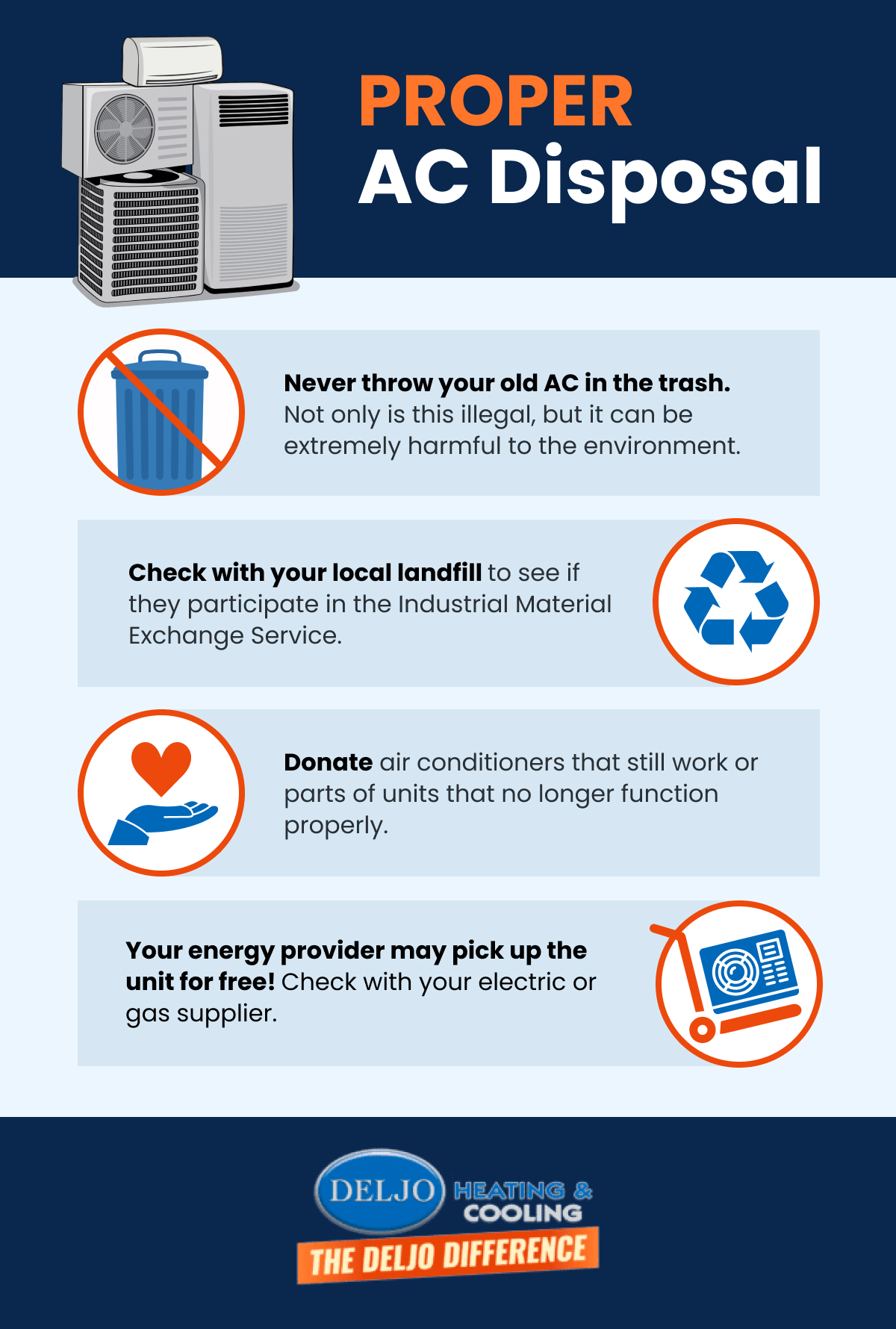
Image Source: deljoheating.com
Why Responsible AC Disposal Matters
The materials inside an old air conditioner are what make responsible disposal so crucial. Many components are not meant for landfills.
The Environmental Impact of Improper Disposal
- Refrigerants: AC units contain refrigerants, chemicals that are potent greenhouse gases. When an AC is improperly disposed of, these refrigerants can leak into the atmosphere, contributing to climate change and ozone depletion. The Montreal Protocol and subsequent agreements aim to phase out ozone-depleting substances, making proper handling of refrigerants vital.
- Metals and Plastics: ACs are made of various metals like copper and aluminum, as well as plastics and other materials. Landfills are not designed to process these materials efficiently. Valuable metals can be lost forever, and plastics can take hundreds of years to decompose, leaching harmful chemicals into the soil and water.
- Oils and Lubricants: Older units may also contain oils that can contaminate soil and water if not disposed of correctly.
Legal Regulations and Fines
Many local and state governments have specific regulations regarding the disposal of appliances containing refrigerants. Ignoring these rules can lead to fines. For instance, the Environmental Protection Agency (EPA) has regulations concerning the handling and disposal of refrigerants to prevent their release. These rules ensure that trained professionals recover refrigerants before the unit is dismantled.
Your Options for Responsible AC Disposal
You have several viable options when it comes to AC disposal. Each offers a different approach, balancing convenience, cost, and environmental responsibility.
1. Appliance Recycling Programs
Appliance recycling is a cornerstone of responsible disposal. Many municipalities and private companies offer programs specifically for old appliances.
How Appliance Recycling Works
- Collection: You might need to schedule a special pickup for your old AC. Some utility companies or local waste management services offer bulky item pickup for appliances.
- Refrigerant Recovery: Certified technicians will safely recover the refrigerant from the unit. This is a critical step to prevent environmental damage.
- Dismantling and Sorting: The unit is then dismantled. Metals are separated for scrap metal recycling, and plastics and other components are sorted for appropriate recycling or disposal.
- Recycling Centers: Many dedicated recycling centers accept old air conditioners. You may need to transport the unit yourself, but this is often a cost-effective and environmentally sound choice.
Finding Local Appliance Recycling Options
- Municipal Waste Management: Check your city or county’s waste management website. They often list approved appliance recycling centers or special pickup days.
- Appliance Retailers: When you purchase a new air conditioner, the retailer might offer to haul away your old unit as part of the service. Ask about their AC disposal policies and any associated appliance removal cost.
- Online Directories: Search online for “appliance recycling near me” or “electronic waste disposal” in your area.
2. Junk Removal Services
Junk removal services offer a convenient way to get rid of your old AC, especially if you have other items to dispose of as well.
What Junk Removal Companies Do
- Convenience: You schedule a pickup, and the company comes to your home to remove the AC. This is ideal if you can’t transport it yourself.
- Professional Handling: Reputable junk removal services are aware of proper disposal methods. They will ensure refrigerants are handled correctly and that the unit is taken to an appropriate recycling facility.
- All-Inclusive Cost: The appliance removal cost typically includes labor, transportation, and proper disposal fees.
Choosing a Reputable Junk Removal Service
- Check for Licensing and Insurance: Ensure the company is licensed and insured.
- Ask About Disposal Practices: Inquire about how they handle AC disposal and if they prioritize responsible recycling. Some companies have partnerships with recycling centers.
- Get Quotes: Obtain quotes from several companies to compare prices. Be wary of unusually low prices, as they might indicate improper disposal practices.
- Look for Eco-Friendly Options: Some services specifically market themselves as eco-friendly and emphasize their commitment to electronic waste disposal and responsible disposal.
3. HVAC Contractors
If you’re replacing your central AC system or a large split system, your HVAC contractor is an excellent resource.
How HVAC Contractors Assist with HVAC Disposal
- Integrated Service: When installing a new HVAC system, contractors often offer to remove and dispose of the old unit as part of the installation package.
- Expertise: They have experience with handling HVAC equipment and understand the legal requirements for refrigerant recovery.
- Network: Contractors usually have established relationships with recycling centers and waste disposal facilities.
When to Inquire with Your HVAC Contractor
- During the Estimate: When getting quotes for a new system, explicitly ask about their HVAC disposal services and any associated costs.
- Scheduling Installation: Confirm their plan for handling the old unit when you book the installation.
4. Scrap Metal Recycling Yards
Old air conditioners contain significant amounts of valuable metals like copper, aluminum, and steel.
The Process at Scrap Yards
- Metal Recovery: Scrap metal recycling yards specialize in reclaiming these valuable materials.
- Refrigerant Concerns: Crucially, most scrap yards will not accept an AC unit with refrigerant still in it. You must ensure the refrigerant has been safely recovered by a certified professional before taking it to a scrap yard. Some specialized yards may offer refrigerant recovery services, but this is less common.
- Potential Earnings: Depending on the metal market and the size of your unit, you might even get paid for the scrap metal.
Preparing Your AC for Scrap Metal Recycling
- Professional Refrigerant Removal: Hire a certified technician to evacuate the refrigerant. Get a receipt or certification for this service.
- Basic Cleaning: Remove any obvious debris or non-metal components if you can safely do so.
- Transportation: You will need to transport the unit to the scrap yard. This might require a truck or trailer.
Special Considerations for Different AC Types
The type of air conditioner you have might influence the best disposal method.
Window Air Conditioners
Window AC units are relatively common and often easier to manage.
- DIY Transport: Many people can transport a window AC themselves to a local recycling center or scrap yard (after refrigerant removal).
- Bulky Item Pickup: Check if your local sanitation department offers bulky item pickup days for appliances like window ACs.
- Retailer Take-Back: If you buy a new window AC, the retailer might offer haul-away services.
Portable Air Conditioners
Portable AC units are generally smaller and lighter, making them simpler to handle.
- Electronic Waste Disposal: Due to their electrical components, portable ACs often fall under electronic waste disposal regulations. Look for certified e-waste recyclers in your area.
- Retailer Returns: Similar to window units, retailers may accept old portable ACs for recycling.
- Donation: If a portable AC is still in good working order, consider donating it to a local charity or community center.
Central Air Conditioning Systems
Central AC systems are larger and more complex, involving an outdoor condenser unit and often an indoor air handler.
- HVAC Contractor is Key: The most common and responsible method is to have your HVAC contractor handle the HVAC disposal when installing a new system.
- Professional Decommissioning: The outdoor unit contains the compressor and refrigerant. It requires professional handling for safe refrigerant recovery and proper dismantling.
- Scrap Metal Value: The metal components of central AC units can have significant scrap metal value, which your contractor might factor into the overall cost or even pass on to you.
Preparing Your Old AC for Removal
Regardless of the disposal method you choose, some preparation steps ensure a smooth and responsible process.
Safety First: Handling Refrigerants
- Never attempt to remove refrigerant yourself. This is dangerous and illegal. Only certified technicians have the equipment and training to do this safely.
- Ensure refrigerant recovery is documented. Ask for proof that the refrigerant has been properly evacuated from the unit before it is transported.
Cleaning and Detaching
- Window Units: For window ACs, you might need to disconnect any electrical wiring. Ensure the power is off at the breaker. If you are handling the removal yourself, be mindful of the weight and size.
- Portable Units: Ensure the water tank is emptied, and if it has detachable hoses, remove them.
- Central AC: The outdoor unit is usually disconnected by the HVAC technician during the installation of a new system.
Securing the Unit (If Transporting Yourself)
- Window Units: Secure them with straps or ropes in your vehicle to prevent them from shifting or falling.
- Portable Units: Place them upright in your vehicle and secure them.
The Cost of Appliance Removal
The appliance removal cost can vary depending on the method you choose.
| Disposal Method | Typical Cost | Pros | Cons |
|---|---|---|---|
| Municipal Bulky Item Pickup | Often Free or Low Fee | Convenient, cost-effective | Limited availability, may have specific pickup days |
| Appliance Recycling Center | Free to Low Fee (may charge for refrigerant) | Environmentally sound, potentially free | Requires self-transport, need to ensure refrigerant removal |
| Junk Removal Service | $100 – $300+ (depending on size/location) | Very convenient, handles all aspects | Can be more expensive than other options |
| HVAC Contractor | Often included in installation, or add-on fee | Integrated service, handles complex units | Only applicable when replacing a central AC system |
| Scrap Metal Yard | Free to potentially get paid (after service) | Recovers valuable materials, potential earnings | Requires self-transport, MUST have refrigerant removed |
Note: Prices are estimates and can vary significantly by location and service provider.
Minimizing Your Costs
- Compare Quotes: Get multiple quotes for junk removal services.
- DIY Transportation: If possible and safe, transporting the unit yourself to a recycling center or scrap yard can save money.
- Retailer Incentives: Look for retailers offering free haul-away with new appliance purchases.
- Check for Rebates: Sometimes, local utility companies offer rebates for responsible appliance disposal, especially for older, less efficient units.
Frequently Asked Questions (FAQ)
Here are some common questions about getting rid of old air conditioners:
Q1: Can I sell my old air conditioner?
Yes, if your old air conditioner is still in good working condition, you might be able to sell it. List it on online marketplaces like Craigslist, Facebook Marketplace, or eBay. Ensure you clearly state its condition and any known issues. If you sell it, the buyer is responsible for removal, but you should still inform them about proper disposal if they eventually discard it.
Q2: What are the environmental risks of improper AC disposal?
The primary risks are the release of refrigerants, which are potent greenhouse gases that contribute to climate change and ozone depletion. Additionally, improper disposal can lead to valuable metals and plastics ending up in landfills, polluting soil and water over time.
Q3: Do I need a permit to dispose of an old AC?
This depends on your local regulations. Many areas require special handling for appliances containing refrigerants, so it’s best to check with your local waste management authority or environmental agency. Disposing of it in regular trash is often prohibited and may result in fines.
Q4: What is considered “electronic waste disposal” for AC units?
Electronic waste disposal refers to the proper handling and recycling of discarded electronic devices. For AC units, this primarily concerns the electrical components, refrigerants, and valuable metals. Certified e-waste recyclers are equipped to handle these materials responsibly.
Q5: Can I take the AC apart myself to recycle the metal?
While it might seem like a way to get scrap metal, attempting to dismantle an AC unit without proper training and equipment is extremely dangerous. You risk exposure to refrigerants and sharp components. It’s always best to leave the dismantling and refrigerant recovery to certified professionals.
Q6: What if my AC unit is broken beyond repair?
If your AC unit is broken, your options are still focused on responsible disposal. Appliance recycling, junk removal services, or taking it to an electronic waste disposal facility are your best bets. They are equipped to handle non-functional units safely and sustainably.
Q7: How do I find a certified technician for refrigerant removal?
Look for HVAC technicians or refrigeration specialists who are certified under EPA Section 608. Reputable companies will advertise their certifications. You can also ask your HVAC contractor or local appliance repair shops for recommendations.
By following these guidelines, you can ensure that your old air conditioner is disposed of in an environmentally responsible manner, protecting our planet for future generations. Whether you choose appliance recycling, junk removal services, or work with your HVAC contractor, making the right choice for AC disposal is a small but significant step towards a greener future. Remember, responsible disposal and responsible recycling are key.

My name is Carlos Gadd, and I am the creator of AirPurityGuide.com.. With a passion for footwear, I share my experiences, insights, and expertise about shoes. Through my blog, I aim to guide readers in making informed decisions, finding the perfect pair, and enhancing their footwear knowledge. Join me on this journey to explore everything about shoes!