
When your trusty window air conditioner finally gives out, you might wonder, “What is the proper disposal of AC units?” The answer is that you can’t just toss it in the regular trash. Window air conditioners contain refrigerants and other components that need special handling to protect the environment and your health. This guide will walk you through the best ways to handle your old air conditioner, ensuring you follow safe and eco-friendly practices for residential AC disposal.
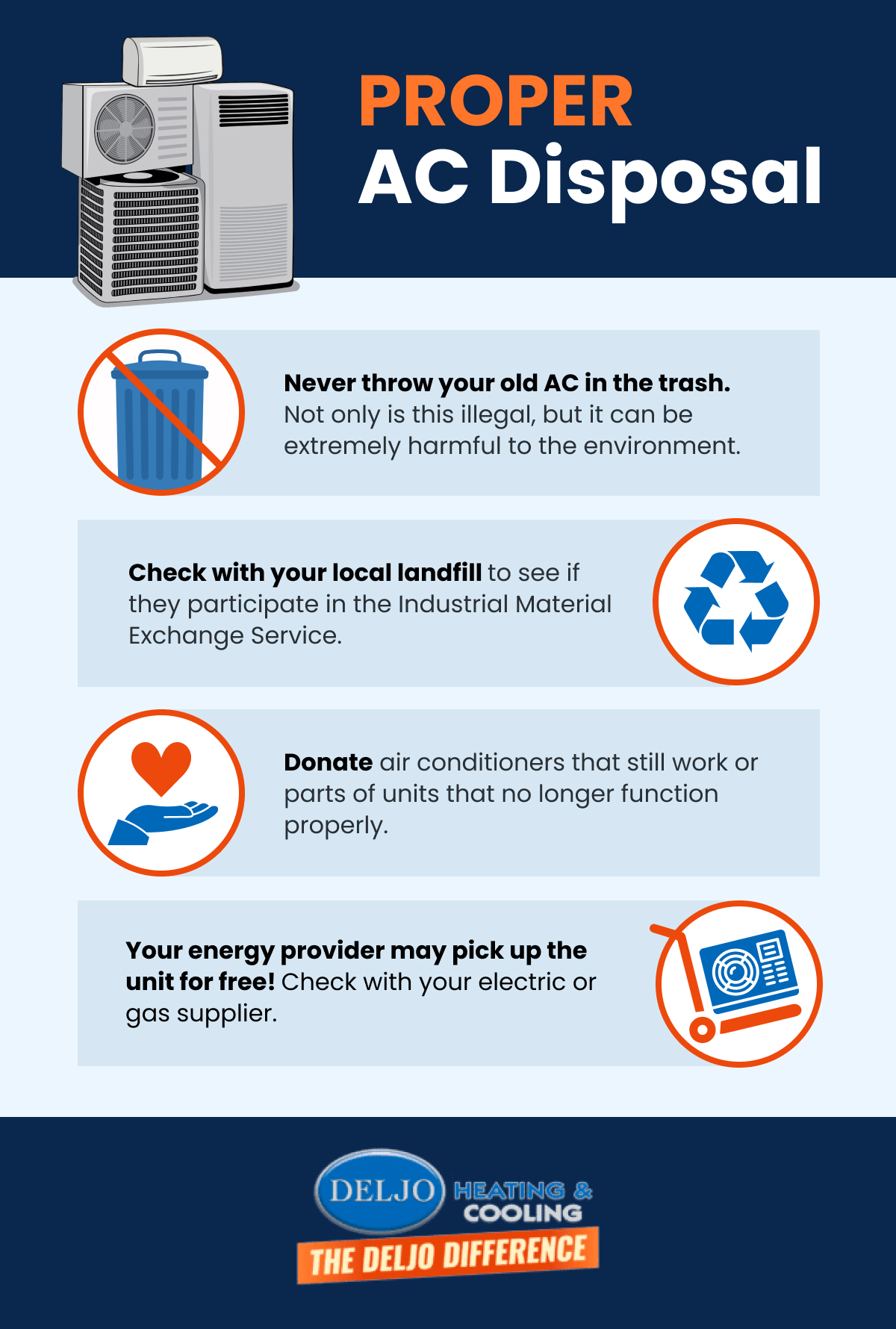
Image Source: deljoheating.com
Why Proper Disposal Matters
Simply discarding an old window air conditioner can have serious consequences. These units contain substances like refrigerants (like Freon or its replacements) that can harm the ozone layer and contribute to climate change if released into the atmosphere. They also contain valuable materials that can be salvaged through scrap metal recycling and other electronics recycling processes. Ignoring proper disposal of AC can lead to environmental damage and even legal penalties in some areas. Therefore, old air conditioner removal requires a thoughtful approach.
Environmental Concerns
- Refrigerant Release: Refrigerants are powerful greenhouse gases. If the system is not handled correctly, these gases can escape and contribute to global warming.
- Hazardous Waste: Components within the AC unit, such as oils and certain metals, can be classified as hazardous waste if not managed properly. This necessitates hazardous waste disposal protocols.
- Landfill Burden: Electronic waste, including old appliances, takes up valuable space in landfills and can leach harmful substances into the soil and groundwater over time.
Valuable Material Recovery
Window air conditioners are also made of materials that are highly recyclable:
- Metals: Copper, aluminum, and steel are commonly found in AC units and are valuable resources for scrap metal recycling.
- Plastics: Various plastic components can also be reprocessed.
- Electronics: Other electronic components can be safely dismantled and recycled.
By choosing to recycle, you contribute to a circular economy, reducing the need for virgin materials and conserving energy.
Options for Disposing of Your Window Air Conditioner
When it’s time to say goodbye to your old window AC, you have several responsible options. The best choice often depends on your local resources and whether you’re replacing the unit.
1. Retailer Take-Back Programs
Many appliance retailers offer to take your old unit when you purchase a new one. This is often the most convenient method for appliance disposal if you’re upgrading.
- How it Works: When you buy a new air conditioner, ask the retailer about their take-back program. They usually handle the transportation and responsible disposal or recycling window AC units for you.
- Benefits: Convenience, ensures responsible handling, often included with delivery or installation services.
- Considerations: May only apply when purchasing a new unit.
2. Manufacturer Take-Back Programs
Some manufacturers also have their own recycling programs. Check the manufacturer’s website or your unit’s manual for information.
- How it Works: Similar to retailer programs, you might be able to arrange for the manufacturer to pick up your old unit.
- Benefits: Direct manufacturer involvement in recycling.
- Considerations: Availability varies by manufacturer and region.
3. Local Recycling Centers and Waste Management Facilities
Your local government or waste management authority is a great resource for finding authorized recycling centers. These facilities are equipped to handle electronics recycling and often have specific drop-off points for appliances.
- How it Works: Search online for “local AC disposal” or “appliance recycling near me.” You can also check your city or county’s waste management website. Some facilities may charge a small fee.
- Benefits: Supports local recycling infrastructure, ensures compliance with regulations.
- Considerations: You will likely need to transport the unit yourself.
4. Certified E-Waste Recyclers
Specialized e-waste recyclers are experts in dismantling electronics and appliances safely and efficiently. They have the proper training and equipment to handle refrigerants and other potentially hazardous materials.
- How it Works: Look for certified e-waste recyclers in your area. Organizations like R2 (Responsible Recycling) or e-Stewards certify recyclers that meet high environmental and safety standards.
- Benefits: Highest level of environmental protection, ensures all components are recycled or disposed of correctly.
- Considerations: May have a fee associated with the service.
5. Junk Removal Services
If you need a quick and easy solution, a professional junk removal AC service can be a good option. These companies handle the pickup and disposal of various items, including large appliances.
- How it Works: Contact a reputable junk removal company, schedule a pickup, and they will take the unit away for you. Be sure to ask about their disposal practices to ensure they use environmentally friendly methods.
- Benefits: Convenience, handles the heavy lifting and transport.
- Considerations: Can be more expensive than other options; verify their eco-friendly practices.
6. Donation Centers (If Still Working)
If your window air conditioner is still in good working condition, consider donating it to a local charity or a community organization. This is a fantastic way to give your old appliance a new life and help someone in need.
- How it Works: Contact local charities, homeless shelters, or community centers to see if they accept working air conditioners.
- Benefits: Helps others, reduces waste.
- Considerations: The unit must be in good working order.
Steps for Preparing Your Window Air Conditioner for Disposal
Before you hand over your old window AC, there are a few crucial steps to take to ensure it’s ready for responsible disposal or recycling window AC.
1. Remove the Unit from the Window
This is often the most physically demanding part.
- Safety First: Ensure the power to the unit is turned off at the circuit breaker before you begin.
- Assistance: Window ACs can be heavy and awkward. Get help from another person to avoid injury.
- Tools: You might need a screwdriver to remove mounting screws or brackets.
- Support: Carefully support the unit as you slide it out of the window frame.
2. Drain Any Remaining Water
Many window air conditioners have a drip pan that collects condensation.
- Locate the Drain: Check for a small drain hole or plug at the bottom of the unit.
- Empty Carefully: Place a bucket or container underneath the drain hole and allow any water to empty. Dispose of the water responsibly, ideally down a drain or on a garden bed if it’s just clean condensation. Avoid dumping it near sensitive plants or waterways.
3. Secure Loose Parts
To prevent damage during transport and facilitate easier handling at the recycling facility:
- Coil Cords: Wrap the power cord neatly and secure it with tape or a bungee cord.
- Remove Filters: Take out any washable air filters. These can often be cleaned and reused or disposed of separately.
4. Check for Special Handling Requirements
- Refrigerant: The most critical component is the refrigerant. Certified professionals are required to recover refrigerants safely. If you are not a certified technician, do not attempt to tamper with the sealed refrigerant system. Reputable recycling centers and services will handle this.
Finding Local Disposal and Recycling Options
Navigating local AC disposal options can seem daunting, but resources are available to help.
Online Search Tools
- Search Engines: Use search terms like “where to recycle window AC,” “appliance disposal near me,” or “e-waste recycling centers [your city/state].”
- Government Websites: Your local city or county waste management department’s website is an excellent source of information on approved disposal sites and recycling events.
Specialized Recycling Organizations
- EPA Website: The U.S. Environmental Protection Agency (EPA) provides information on hazardous waste and appliance recycling.
- Certified Recycler Directories: Websites like those for R2 or e-Stewards allow you to search for certified recyclers in your area.
Retailer and Manufacturer Information
As mentioned, check with the store where you purchased your new AC or the manufacturer of your old one. They are often the most convenient resources.
Community Recycling Events
Many communities hold periodic e-waste collection days or hazardous waste drop-off events. Keep an eye out for announcements from your local government or community groups.
What NOT to Do When Disposing of a Window Air Conditioner
To ensure you’re acting responsibly, here are some common mistakes to avoid:
1. Never Put it in Regular Trash or Curbside Recycling
Window air conditioners are not regular household waste. They contain materials that require specialized handling and cannot go into your curbside bin or the landfill. This is a critical aspect of proper disposal of AC.
2. Do Not Attempt to Discharge Refrigerant Yourself
Tampering with the refrigerant lines is dangerous and illegal. Refrigerants are potent greenhouse gases and can cause frostbite if released improperly. This is why hazardous waste disposal protocols are in place.
3. Avoid Uncertified or Informal Disposal Services
Be wary of individuals or services that offer to take your AC for a low price but don’t have clear, environmentally sound disposal methods. They might simply dump it illegally, which defeats the purpose of responsible old air conditioner removal.
The Recycling Process for Window Air Conditioners
When a window air conditioner arrives at a proper recycling facility, it undergoes a careful process.
Table: Stages of Window AC Recycling
| Stage | Description | Key Components Handled | Environmental Impact |
|---|---|---|---|
| Receiving & Inspection | Units are received and inspected to identify any immediate hazards or special handling requirements. | Refrigerant lines, electrical components, casing. | Ensures safe handling and adherence to disposal regulations. |
| Refrigerant Recovery | Certified technicians use specialized equipment to safely extract and contain refrigerants, preventing their release into the atmosphere. | Refrigerants (e.g., R-410A, R-22). | Prevents ozone depletion and reduces greenhouse gas emissions. |
| Dismantling | Trained personnel carefully dismantle the unit, separating various materials such as metals, plastics, and electronic components. | Copper coils, aluminum fins, steel casing, motors, capacitors, wires, plastics. | Allows for efficient separation of recyclable materials. |
| Material Separation | Separated materials are further sorted for processing. Metals are typically sent for scrap metal recycling, plastics are processed, and circuit boards go to electronics recycling. | All dismantled components. | Maximizes resource recovery and minimizes landfill waste. |
| Component Processing | Metals are melted down to create new products. Plastics are cleaned and reprocessed. Electronic components are either refurbished or sent for specialized processing. | Recovered metals, plastics, electronic parts. | Reduces the need for mining new raw materials, conserves energy, and reduces pollution associated with material production. |
| Hazardous Waste Disposal | Any residual hazardous materials that cannot be recycled are disposed of according to strict environmental regulations for hazardous waste disposal. | Oils, certain capacitors. | Ensures that harmful substances are managed safely and do not contaminate the environment. |
This comprehensive process ensures that your old unit is not just discarded but given a new life through recycling window AC and responsible material management.
Cost Considerations for Disposal
The cost of disposing of a window air conditioner can vary.
- Retailer Take-Back: Often free when purchasing a new unit, or a small fee might apply.
- Municipal Drop-Offs: Some facilities are free, while others charge a nominal fee for appliance disposal, typically between $10-$50.
- Certified E-Waste Recyclers: Fees can range from $25 to $100 or more, depending on the service and location.
- Junk Removal Services: These are usually priced by volume and weight, with appliance removal potentially costing $75-$200 or more.
Always inquire about fees upfront before scheduling a pickup or drop-off.
Replacing Your Window Air Conditioner
If you’re disposing of your old unit because you’re getting a new one, consider energy-efficient models.
- ENERGY STAR Certified Units: These units use less energy, saving you money on electricity bills and reducing your environmental footprint.
- Proper Sizing: Ensure the new unit is correctly sized for your room. An oversized unit will cycle on and off more frequently, wasting energy and not dehumidifying effectively.
When arranging for your new unit, coordinate its delivery with the pickup of your old air conditioner removal. This can streamline the process significantly.
Frequently Asked Questions About Window AC Disposal
Here are some common questions people have about getting rid of their old window air conditioners:
Q1: Can I sell my old window air conditioner?
A1: If your window air conditioner is still in good working condition, you can try selling it. Online marketplaces, local classifieds, or garage sales are good options. However, if it’s not working or is very old, recycling is the better choice.
Q2: Do I need a permit to dispose of an old AC unit?
A2: Generally, you do not need a permit for individual residential AC disposal. However, regulations can vary by location. It’s always best to check with your local waste management authority to be sure.
Q3: What happens to the refrigerant in my old AC?
A3: Refrigerants are recovered by certified professionals using specialized equipment. They are then typically reclaimed, purified, and reused, or they are destroyed using environmentally sound methods, preventing their release into the atmosphere. This is a key part of responsible hazardous waste disposal.
Q4: Is it legal to put an old AC unit on the curb for bulk trash pickup?
A4: In most municipalities, it is not legal or environmentally responsible to put an old AC unit on the curb with regular trash. They require special handling due to refrigerants and other components. Always verify with your local waste management services.
Q5: Can I take the AC to a scrap metal yard myself?
A5: While scrap metal yards accept metal components, they may not be equipped to handle the refrigerant. Some scrap metal yards might accept the unit if the refrigerant has been properly recovered by a certified technician, but it’s essential to confirm their specific policies for appliances.
Q6: How do I find a certified e-waste recycler?
A6: You can search online directories from organizations like R2 Solutions or e-Stewards. Your local government’s environmental or waste management department might also have a list of certified recyclers in your area.
By following these guidelines, you can ensure your old window air conditioner is disposed of safely and in an eco-friendly manner, contributing to a healthier planet. Remember that proper appliance disposal is a shared responsibility.

My name is Carlos Gadd, and I am the creator of AirPurityGuide.com.. With a passion for footwear, I share my experiences, insights, and expertise about shoes. Through my blog, I aim to guide readers in making informed decisions, finding the perfect pair, and enhancing their footwear knowledge. Join me on this journey to explore everything about shoes!