
Sure, I can help you with that. Here’s a comprehensive blog post on how to dispose of an air conditioner safely and responsibly.
Can you throw an old air conditioner in the regular trash? No, you cannot throw an old air conditioner in the regular trash. Air conditioners contain refrigerants and other materials that are considered hazardous waste and require special handling.
Disposing of an old air conditioner might seem straightforward – it’s just a bulky appliance, right? However, the process is far more complex due to the components inside these units, particularly the refrigerants. Improper disposal can harm the environment and even pose health risks. This guide will walk you through everything you need to know about responsible appliance disposal for your old AC unit disposal, ensuring you do it safely and legally. We’ll cover why it’s important, the steps involved, and where you can take your old unit.
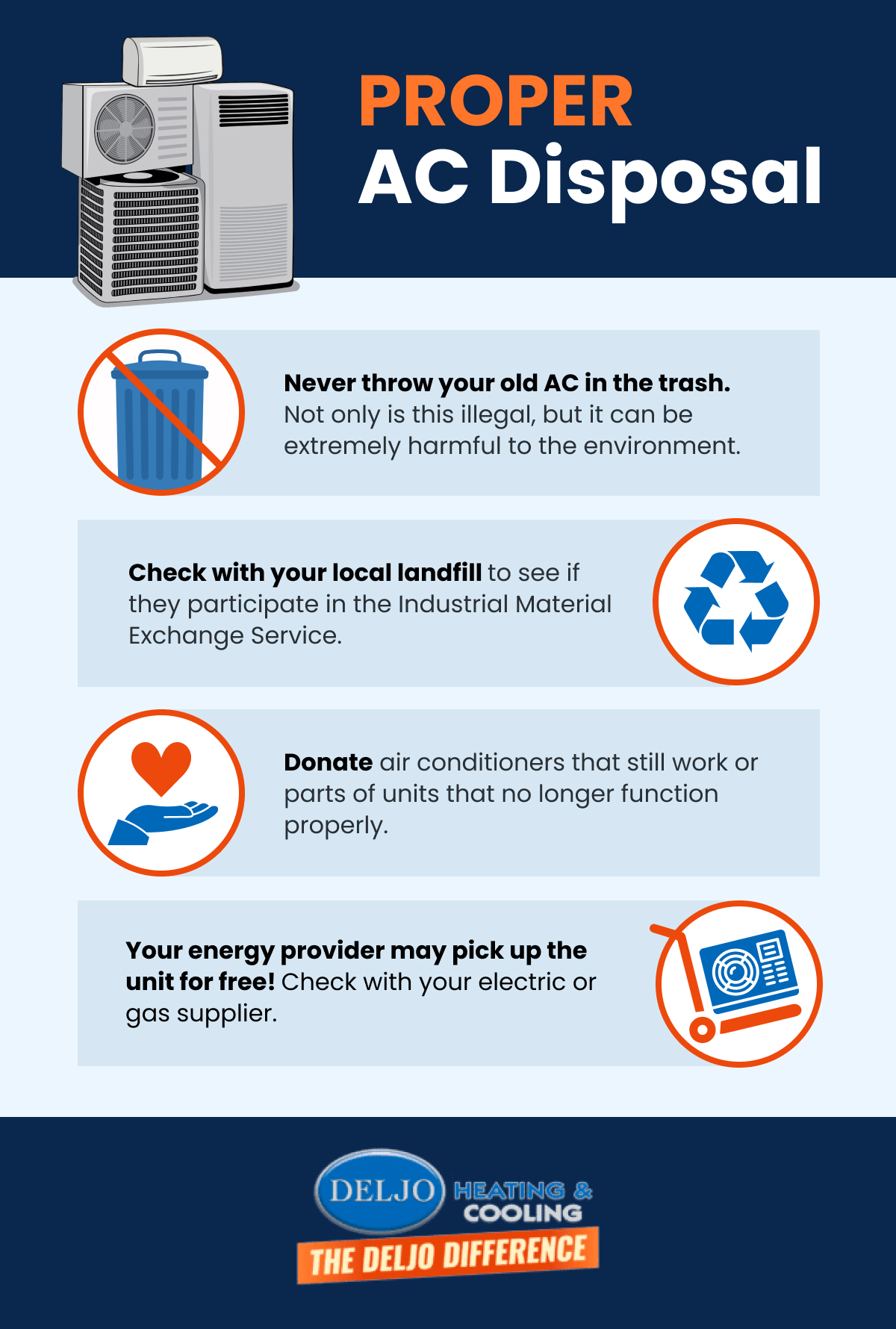
Image Source: deljoheating.com
Why Safe Disposal Matters
Modern air conditioners are marvels of engineering, but they also contain substances that need careful management. The primary concern is the refrigerant, a chemical that helps cool the air.
The Environmental Impact of Refrigerants
Refrigerants, like Freon (though mostly phased out) and newer hydrofluorocarbons (HFCs), are potent greenhouse gases. When released into the atmosphere, they can contribute significantly to climate change, far more than carbon dioxide. This is why refrigerant disposal is heavily regulated.
- Ozone Depletion: Older refrigerants, like CFCs and HCFCs, were also known to deplete the Earth’s ozone layer, which protects us from harmful UV radiation. While these are largely banned, older units may still contain them.
- Global Warming Potential (GWP): Even newer refrigerants, while not depleting the ozone layer, have very high GWPs. This means even small leaks can have a significant impact on global warming.
The Legal Implications
Disposing of an air conditioner improperly can lead to fines. Environmental protection agencies have strict rules about hazardous waste disposal, and refrigerants fall under this category. Your local waste management authorities will have specific guidelines you must follow.
The Role of AC Recycling
AC recycling is crucial for several reasons. It ensures that harmful substances are removed safely and that valuable materials within the AC unit, such as metals and plastics, are recovered and reused. This reduces the need for mining new resources and conserves energy.
Steps for Responsible Air Conditioner Disposal
When it’s time to say goodbye to your old AC unit, follow these steps for a safe and responsible disposal.
Step 1: Check Your New AC Unit’s Disposal Policy
Often, when you purchase a new air conditioner, the retailer or installer will offer to haul away your old unit. This is usually the most convenient and responsible option. They are equipped to handle the coolant recovery and proper disposal procedures. Always ask about this service when buying a new unit.
Step 2: Professional Coolant Recovery
This is the most critical step. Before your air conditioner can be scrapped or recycled, the refrigerant must be removed by a certified technician.
What is Coolant Recovery?
Coolant recovery is the process of safely extracting refrigerant from an air conditioning system. This is done using specialized equipment that captures the refrigerant in a sealed container.
- Certified Technicians: Only EPA-certified technicians are legally allowed to perform refrigerant disposal and coolant recovery. They have the training and equipment to handle these potentially harmful substances.
- Why It’s Necessary: Releasing refrigerants into the atmosphere is illegal and environmentally damaging. Professional recovery ensures the refrigerant is either reclaimed for reuse or disposed of in an environmentally sound manner.
If you are not purchasing a new unit, you will need to arrange for a certified technician to recover the refrigerant from your old AC unit.
Step 3: Find an Authorized Disposal or Recycling Center
Once the refrigerant has been safely recovered, you can then proceed with disposing of the rest of the unit.
Options for Disposal and Recycling:
- Local Recycling Centers: Many municipal recycling centers or dedicated appliance recycling facilities accept old air conditioners. They are equipped to handle them and often have scrap metal recycling programs.
- Scrap Metal Dealers: Since air conditioners are largely made of metal (copper, aluminum, steel), they can be taken to scrap metal dealers. However, they will likely require proof that the refrigerant has been properly recovered.
- Appliance Removal Services: Numerous companies specialize in appliance removal. These services will pick up your old AC unit and ensure it’s disposed of or recycled correctly. This is a convenient option if you cannot transport the unit yourself.
- Manufacturer Take-Back Programs: Some manufacturers offer take-back programs for their old appliances. Check with the brand of your air conditioner.
- Donation (if working): If your AC unit is still in good working condition, consider donating it to a local charity or a non-profit organization that refurbishes and distributes appliances to those in need. This is responsible appliance disposal in its most beneficial form.
Step 4: Transporting Your Old AC Unit
When transporting your old AC unit, ensure it is secured properly to prevent any damage or further release of residual chemicals. If you are taking it to a recycling center yourself, check their specific requirements for accepting appliances.
Special Considerations for Different Types of Air Conditioners
The process of disposal might vary slightly depending on the type of air conditioner you have.
Window Air Conditioners
Window AC units are relatively straightforward to dispose of. Once the refrigerant is recovered, they can typically be taken to local appliance recyclers or scrap metal facilities. They are generally easier to handle and transport than central AC units.
Portable Air Conditioners
Similar to window units, portable ACs also contain refrigerants and should be handled with care. Most disposal options for window units will also apply to portable ACs.
Mini-Split and Central Air Conditioner Systems
These systems are more complex as they involve an outdoor unit (condenser) and an indoor unit (evaporator), connected by refrigerant lines.
- Outdoor Unit: The outdoor unit is the primary component containing the compressor and the majority of the refrigerant. Professional coolant recovery is absolutely essential for this unit.
- Indoor Unit: The indoor unit contains the evaporator coil and air handler. While it doesn’t typically hold as much refrigerant as the outdoor unit, it still needs to be handled responsibly.
- Refrigerant Lines: The copper lines connecting the indoor and outdoor units may also contain residual refrigerant and should be handled by professionals.
For these systems, it is highly recommended to use licensed HVAC professionals for both removal and disposal, as they have the expertise to safely dismantle the entire system and manage the refrigerant disposal. This ensures that all aspects of appliance removal are handled correctly.
What About Other Appliances?
While we are focusing on air conditioners, it’s worth noting that many other appliances also require responsible disposal, especially those containing refrigerants or hazardous materials.
Refrigerator Disposal
Refrigerators and freezers contain refrigerants and also have insulating foam that can release harmful chemicals if not handled properly. Similar to AC units, refrigerator disposal requires professional coolant recovery. Many utility companies offer rebates or pick-up services for old refrigerators.
Electronics Recycling
Other appliances, like dehumidifiers, often contain electronic components. These fall under the umbrella of electronics recycling. While they may not have refrigerants, their electronic circuit boards can contain heavy metals like lead and mercury, which are hazardous. Therefore, they should also be taken to specialized electronics recycling centers.
Finding Local Resources
The best way to ensure you are disposing of your AC unit correctly is to identify local resources that can assist you.
How to Find a Certified Technician
- HVAC Companies: Search online for local HVAC (Heating, Ventilation, and Air Conditioning) companies. Look for those that advertise coolant recovery services and have EPA certification.
- Local Government Websites: Your city or county waste management department’s website often lists certified professionals or authorized recycling centers.
How to Find Recycling Centers
- EPA Website: The U.S. Environmental Protection Agency (EPA) website can provide general information on appliance disposal and recycling.
- Earth911.com: This website is an excellent resource for finding local recycling centers for various items, including appliances.
- Local Waste Management Authority: Your local authority is the best source for specific information on what they accept and where.
FAQs About AC Disposal
Here are answers to some common questions people have about disposing of air conditioners.
Q1: Can I just leave my old AC unit on the curb?
A1: No, you generally cannot leave an old AC unit on the curb for regular trash pickup. Most municipalities do not accept them due to the hazardous materials they contain. You may incur fines for improper disposal. Always check with your local waste management services first.
Q2: Does AC recycling pay money?
A2: Some scrap metal recyclers might offer a small payment for the metal content of an old AC unit, especially if it’s a larger unit. However, this is usually minimal, and the primary benefit is ensuring responsible disposal. The cost of professional coolant recovery might offset any potential payment.
Q3: What are the environmental risks of not recovering refrigerant?
A3: The primary environmental risks include contributing to global warming and potentially depleting the ozone layer (with older refrigerants). Refrigerants are greenhouse gases with a much higher warming potential than carbon dioxide.
Q4: How do I know if my AC unit contains Freon?
A4: Freon (specifically R-12) was phased out by the Montreal Protocol and is no longer used in new equipment. If your unit is older than the early 1990s, it might contain Freon. Newer units use R-410A or other alternatives. Regardless of the type, all refrigerants require professional recovery.
Q5: What if my AC unit is still working?
A5: If your AC unit is still working, consider donating it to a charity or selling it. This is the most sustainable form of responsible appliance disposal. However, if you are replacing it, ensure the removal and transfer process also handles the refrigerant safely.
Q6: Do I need a special license to dispose of an AC unit?
A6: Individuals typically do not need a license for disposal. However, the coolant recovery process must be performed by an EPA-certified technician. Facilities that accept appliances for recycling also need to be properly licensed and equipped to handle them.
Q7: What is involved in appliance removal services?
A7: Appliance removal services typically handle the pickup and transportation of old appliances from your home. Reputable services will ensure that the appliances are taken to appropriate recycling facilities and that all regulations regarding refrigerant and hazardous materials are followed.
Q8: Is refrigerant disposal handled differently for different types of refrigerants?
A8: While the principle of recovery remains the same, different refrigerants have different environmental impacts and handling requirements. Certified technicians will have the specific equipment and knowledge to handle various types of refrigerants, ensuring that they are either reclaimed, recycled, or destroyed according to regulations.
Q9: Where can I find information on local hazardous waste disposal regulations?
A9: Your local government’s waste management department website or office is the best source for information on hazardous waste disposal regulations in your area. They can provide specific guidelines for appliances and other items.
Q10: Can I recycle the metal parts of my AC unit myself?
A10: You can recycle the metal parts through scrap metal recycling, but only after the refrigerant has been professionally recovered. Most scrap yards will not accept a unit with refrigerant still in it due to legal and safety reasons.
Conclusion
Disposing of an old air conditioner is more than just getting rid of an unwanted item; it’s a responsibility towards the environment and public safety. By following the proper steps, ensuring coolant recovery by certified professionals, and utilizing AC recycling facilities or reputable appliance removal services, you can make a positive impact. Remember, responsible appliance disposal protects our planet from harmful greenhouse gases and promotes the reuse of valuable materials. If you’re unsure about any part of the process, always consult local authorities or certified HVAC professionals. Your efforts contribute to a cleaner, healthier future.

My name is Carlos Gadd, and I am the creator of AirPurityGuide.com.. With a passion for footwear, I share my experiences, insights, and expertise about shoes. Through my blog, I aim to guide readers in making informed decisions, finding the perfect pair, and enhancing their footwear knowledge. Join me on this journey to explore everything about shoes!