
A window air conditioner typically uses between 5 to 15 amps. However, the exact amperage depends on the unit’s cooling capacity (measured in BTUs) and its energy efficiency.
When you’re looking to cool your home with a window air conditioner, one of the most important electrical considerations is how much power it draws. This is typically measured in amps. But what does that number really mean for your home’s electrical system? Let’s dive deep into window AC amperage and explore everything you need to know about amps for window unit usage. We’ll break down what influences it, how to find it, and why it matters for your electrical safety and efficiency.
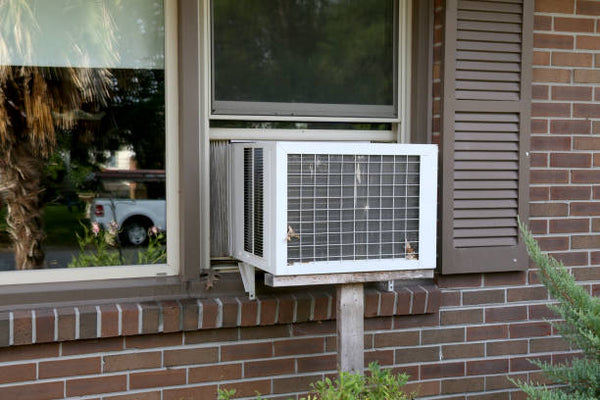
Image Source: cdn.shopify.com
Deciphering Window AC Amperage: What’s the Magic Number?
The amperage of a window air conditioner tells you how much electrical current it needs to operate. Think of it like the flow of water through a pipe; amps are the volume of that flow. A higher amp number means the unit draws more electrical current. This is a crucial piece of information when you’re considering installing a new unit or troubleshooting your home’s electrical panel.
Factors Influencing Window AC Amperage
Several key factors determine the window air conditioner current draw:
- Cooling Capacity (BTUs): This is the most significant factor. A larger room requires a more powerful air conditioner, typically with a higher BTU rating. More BTUs mean a bigger compressor and fan motor, which naturally consume more electricity, leading to higher amperage. A small 5,000 BTU unit will draw far less amperage than a 12,000 BTU unit.
- Energy Efficiency (EER/SEER Ratings): Energy Efficiency Ratio (EER) and Seasonal Energy Efficiency Ratio (SEER) ratings indicate how efficiently the unit converts electricity into cooling. A unit with a higher EER or SEER rating will generally draw fewer amps to achieve the same cooling effect compared to a less efficient model.
- Compressor Type and Size: The compressor is the heart of the air conditioner. Its size and type (e.g., rotary, scroll) directly impact power consumption. Larger, more powerful compressors require more amperage.
- Fan Speed and Settings: While less significant than the compressor, the fan speed also affects amperage. Running the fan on high will use slightly more power than running it on low.
- Age and Condition of the Unit: Older units, or those that haven’t been properly maintained, can become less efficient and draw more power than they originally did. Dirt buildup in coils or a struggling motor can increase amperage.
How Much Power Does a Window AC Use? Connecting Amps to Watts
To truly grasp how much power does a window AC use, we need to connect amps to watts. Watts are a measure of power consumption. The relationship between volts (voltage), amps (current), and watts (power) is fundamental in electrical engineering and is described by Ohm’s Law:
Watts (W) = Volts (V) × Amps (A)
In most homes in North America, the standard voltage for a household outlet is 120 volts. Some larger window AC units might require 240 volts, but the majority of typical window units operate on 120 volts.
Let’s look at some typical window AC power consumption scenarios:
- A 5,000 BTU unit drawing 5 amps:
- Power (Watts) = 120 Volts × 5 Amps = 600 Watts
- A 10,000 BTU unit drawing 10 amps:
- Power (Watts) = 120 Volts × 10 Amps = 1200 Watts (or 1.2 kilowatts)
- A 12,000 BTU unit drawing 12 amps:
- Power (Watts) = 120 Volts × 12 Amps = 1440 Watts (or 1.44 kilowatts)
This calculation helps you visualize the energy impact of your window AC. You can often find the wattage directly on the unit’s label or in its manual. If you only have the amperage, you can easily convert it to watts using the formula above, assuming you know your home’s standard voltage. This conversion is key to understanding window AC watts to amps relationships.
Estimating Window AC Power Consumption
To give you a better idea, here’s a table showing typical amperage ranges for common window AC sizes and their approximate power consumption:
| Cooling Capacity (BTU) | Typical Amperage Range (Amps) | Estimated Watts (at 120V) | Typical Voltage |
|---|---|---|---|
| 5,000 – 6,000 | 4.5 – 6.5 | 540 – 780 | 120V |
| 8,000 – 10,000 | 6.0 – 10.0 | 720 – 1200 | 120V |
| 10,000 – 12,000 | 8.0 – 12.0 | 960 – 1440 | 120V |
| 14,000 – 15,000 | 10.0 – 15.0 | 1200 – 1800 | 120V |
| 18,000 – 24,000 | 12.0 – 20.0 | 1440 – 2400 | 120V or 240V |
Note: These are general estimates. Actual figures can vary significantly based on the specific model and its efficiency.
Average Amps Window AC: What to Expect
When we talk about the average amps window AC, it’s useful to categorize them by size. For the most common residential window units, typically ranging from 6,000 to 12,000 BTUs, you can generally expect them to draw between 6 to 12 amps. Smaller units (around 5,000 BTUs) might operate on as little as 4.5 amps, while larger units exceeding 15,000 BTUs can go up to 20 amps or more, often requiring a 240-volt circuit.
It’s important to check the window AC electrical requirements for your specific unit. This information is usually found on a label on the side or back of the air conditioner itself, or within the user manual. This label will clearly state the voltage, amperage, and sometimes even the recommended circuit breaker size.
Finding the Amperage on Your Window AC
Locating the amperage information is straightforward. Look for a label that typically includes:
- Model Number
- Serial Number
- Voltage (V)
- Amperage (A) or Running Amps (RA)
- Wattage (W)
- Hz (Hertz)
This label is your most reliable source for the unit’s specific electrical needs.
Window AC Circuit Breaker Size: Matching the Load
Knowing the amperage of your window AC is crucial for selecting the correct circuit breaker size. A circuit breaker is a safety device designed to protect your home’s wiring from overheating and causing a fire. It interrupts the flow of electricity when the current exceeds a safe level.
The Importance of Proper Circuit Breaker Sizing
- Overheating and Fire Risk: Using a circuit breaker that is too small for the appliance will cause it to trip frequently, interrupting the AC’s operation. Using one that is too large means it won’t trip in time during an overload, allowing the wiring to overheat.
- Appliance Protection: Correctly sized breakers help protect the air conditioner itself from electrical surges or faults.
- Preventing Nuisance Tripping: A breaker that’s too small for the continuous load of the AC (air conditioners are often considered continuous loads) can lead to frequent and annoying power interruptions.
How to Determine Window AC Circuit Breaker Size
Electrical codes (like the National Electrical Code in the US) provide guidelines for sizing circuit breakers. A general rule of thumb for continuous loads is to size the circuit breaker at 125% of the appliance’s running amperage.
Let’s consider our earlier examples:
- A 5,000 BTU unit drawing 5 amps:
- Minimum breaker size = 5 amps × 1.25 = 6.25 amps.
- The next standard breaker size up is 10 amps.
- A 10,000 BTU unit drawing 10 amps:
- Minimum breaker size = 10 amps × 1.25 = 12.5 amps.
- The next standard breaker size up is 15 amps.
- A 12,000 BTU unit drawing 12 amps:
- Minimum breaker size = 12 amps × 1.25 = 15 amps.
- The next standard breaker size up is 15 amps. (If the unit draws exactly 12 amps, a 15 amp breaker is appropriate. If it’s rated closer to 12.5 amps, a 20 amp breaker might be needed if a 15 amp breaker is too close to the continuous load limit).
Important Considerations:
- Dedicated Circuit: It is highly recommended that window air conditioners, especially those drawing 7 amps or more, be plugged into a dedicated circuit. This means the circuit breaker only serves the air conditioner and nothing else. Sharing a circuit with other high-draw appliances (like microwaves, hair dryers, or vacuum cleaners) can easily overload the circuit and trip the breaker.
- Outlet Type: Most 120-volt window AC units plug into a standard three-prong outlet. Larger units or those requiring 240 volts will have different plug configurations and require specialized outlets and wiring.
- Consult an Electrician: If you are unsure about the appropriate circuit breaker size or wiring for your window air conditioner, it is always best to consult a qualified electrician. They can assess your home’s electrical system and ensure safe and compliant installation.
Common Breaker Sizes for Window ACs
Here are typical circuit breaker sizes you’ll encounter for window air conditioners:
- For units drawing up to 6-7 amps: A 10-amp or 15-amp breaker.
- For units drawing 7-12 amps: A 15-amp breaker.
- For units drawing 12-15 amps: A 20-amp breaker.
What amperage is a window AC typically on its label? Always refer to the label for the most accurate information to guide your breaker choice.
Window AC Electrical Requirements: Beyond Just Amps
While amperage is a primary concern, other window AC electrical requirements are also vital for safe and efficient operation:
- Voltage: As mentioned, most standard window ACs use 120 volts. Larger or more powerful units might require 240 volts. Ensure your home’s electrical supply matches the unit’s requirements. Connecting a 240-volt unit to a 120-volt outlet (or vice-versa) will likely damage the unit or the wiring.
- Plug Type: The plug on the power cord must match the outlet. Standard 120V units typically have a NEMA 5-15P plug (the common three-prong plug). Higher amperage 120V units, or 240V units, will have different plug configurations (e.g., NEMA 5-20P, NEMA 6-15P, NEMA 6-20P).
- Outlet Condition: The outlet should be in good condition, free from damage or corrosion, and properly grounded.
- Circuit Capacity: Your home’s electrical panel (breaker box) must have sufficient overall capacity to handle the load of the air conditioner, especially if you plan to run other appliances simultaneously.
Ensuring Safe Installation
To ensure your window AC operates safely and efficiently, follow these installation guidelines:
- Read the Manual: Always read and follow the manufacturer’s installation and operating instructions.
- Dedicated Circuit: As stressed earlier, use a dedicated circuit whenever possible, especially for units over 7 amps.
- Proper Outlet: Ensure the outlet is the correct type, in good condition, and properly grounded.
- Cord Management: Avoid running the power cord under rugs or carpets, where it can be damaged or overheat. Ensure the cord isn’t pinched or kinked.
- Surge Protection: Consider using a surge protector designed for appliances to protect your window AC from power surges and spikes.
Window AC Power Consumption and Efficiency
The window AC power consumption is directly tied to its efficiency rating. Higher efficiency means less energy is used to produce the same amount of cooling, translating to lower amperage draw and lower electricity bills.
EER vs. SEER: What’s the Difference?
- EER (Energy Efficiency Ratio): EER measures how efficiently an air conditioner cools when operating at a constant, high-demand temperature (typically 95°F outdoor and 75°F indoor). It’s calculated by dividing the cooling capacity (in BTUs) by the power input (in watts). A higher EER means a more efficient unit. For window ACs, EER is more commonly used than SEER.
- SEER (Seasonal Energy Efficiency Ratio): SEER is similar but measures efficiency over an entire cooling season, taking into account varying temperature and humidity levels. It’s primarily used for central air conditioning systems.
When comparing window AC units, look for the highest EER rating within a similar BTU range. A unit with a higher EER will generally have a lower amperage draw for the same cooling output.
Energy Saving Tips for Your Window AC
To minimize your window AC’s impact on your electricity bill, consider these tips:
- Choose the Right Size: An oversized unit will cycle on and off more frequently, wasting energy and not dehumidifying effectively. An undersized unit will run constantly without adequately cooling the space.
- Maintain Your Unit: Clean or replace the air filter regularly (monthly during peak season). Dirty filters restrict airflow, making the unit work harder and consume more energy. Also, ensure the outdoor condenser coils are free of debris.
- Seal Air Leaks: Ensure the window unit is properly sealed in the window frame to prevent cool air from escaping and hot air from entering. Use foam insulation or weatherstripping.
- Use a Thermostat Wisely: Set the thermostat to a comfortable but not excessively low temperature. Every degree lower can significantly increase energy consumption. Consider a unit with a programmable thermostat.
- Use Fans: Ceiling fans or portable fans can help circulate cool air, allowing you to set the thermostat a few degrees higher while still feeling comfortable.
- Shade the Unit: If possible, position the window AC so it’s not in direct sunlight during the hottest parts of the day. Trees, awnings, or even reflective window coverings can help.
Frequently Asked Questions (FAQ)
Here are some common questions related to window AC amperage:
- Q1: Can I plug my window AC into a regular outlet?
- A1: Most standard 120-volt window AC units (typically 5,000 to 10,000 BTUs) can be plugged into a regular 15-amp household outlet. However, if the unit draws more than 7-8 amps, it’s highly recommended to use a dedicated circuit to avoid tripping the breaker. Always check the unit’s label and your home’s electrical capacity.
- Q2: What happens if I plug my window AC into an extension cord?
- A2: It’s generally not recommended. Most manufacturers advise against using extension cords. If an extension cord is absolutely necessary, it must be heavy-duty, rated for outdoor use, and specifically designed for the amperage of the air conditioner. Using an undersized or damaged extension cord can cause overheating and pose a fire risk.
- Q3: My window AC keeps tripping the circuit breaker. What could be the problem?
- A3: Several reasons could cause this:
- The circuit is overloaded (too many appliances on the same circuit).
- The circuit breaker is undersized for the AC unit.
- The AC unit itself has a fault or is drawing more power than it should due to age or malfunction.
- The unit is starting up (the initial surge of power can sometimes trip a breaker that’s too close to its limit).
It’s best to have an electrician diagnose the issue.
- A3: Several reasons could cause this:
- Q4: How do I convert watts to amps for my window AC?
- A4: Use the formula: Amps = Watts / Volts. For a standard 120-volt outlet, if your AC uses 1200 watts, it draws 1200W / 120V = 10 amps. This calculation is fundamental to understanding window AC watts to amps conversions.
- Q5: Do I need a special outlet for a 10,000 BTU window AC?
- A5: A 10,000 BTU window AC typically draws around 8-10 amps. While it might work on a standard 15-amp outlet, it’s highly recommended to have it on a dedicated 15-amp or 20-amp circuit for optimal performance and safety. The outlet itself will likely be a standard NEMA 5-15R (for 15 amps) or NEMA 5-20R (for 20 amps), but the circuit capacity is key.
By understanding these concepts and checking the specific requirements of your window air conditioner, you can ensure safe, efficient, and comfortable cooling throughout your home. Always prioritize safety and consult professionals when in doubt about electrical installations.

My name is Carlos Gadd, and I am the creator of AirPurityGuide.com.. With a passion for footwear, I share my experiences, insights, and expertise about shoes. Through my blog, I aim to guide readers in making informed decisions, finding the perfect pair, and enhancing their footwear knowledge. Join me on this journey to explore everything about shoes!