
Does your air conditioner seem to take forever to make your home comfortable on a hot day? You’re not alone in wondering about AC cooling time. Generally, it should take your air conditioner approximately 15 to 30 minutes to cool a room by a few degrees. However, the time for AC to cool room can vary significantly based on several factors. This comprehensive guide will help you understand what influences your AC’s performance and how to ensure it’s working efficiently.
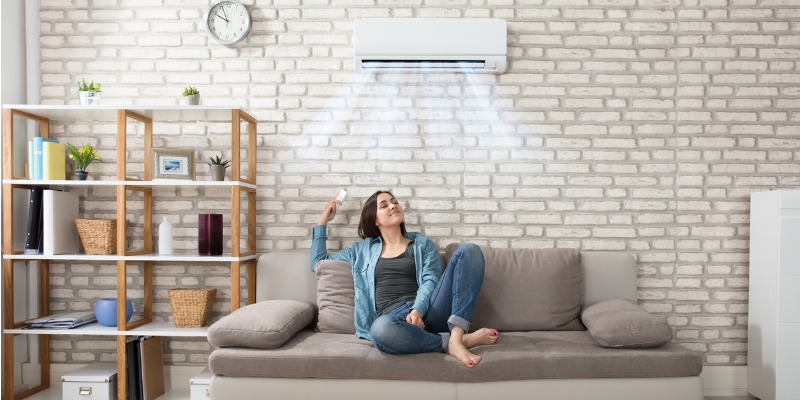
Image Source: www.dandbclimatecare.com
Factors Affecting AC Cooling Speed
Several elements play a crucial role in how quickly your air conditioner can lower the temperature inside your home. Pinpointing these can help you diagnose issues and improve your AC’s effectiveness.
Air Conditioner Cooling Capacity
The size and power of your air conditioner, known as its air conditioner cooling capacity, are paramount. This is usually measured in British Thermal Units (BTUs).
- Undersized AC: An AC unit that is too small for your home will struggle to keep up with the cooling demand. It will run for extended periods, often without reaching your desired temperature. This is inefficient and can lead to premature wear and tear.
- Oversized AC: Conversely, an AC unit that is too large can cool your home too quickly without properly dehumidifying the air. This can result in a clammy feeling and short cycling, where the unit turns on and off frequently, reducing efficiency and potentially damaging the compressor.
Your HVAC professional will calculate the appropriate AC size based on the square footage of your home, insulation levels, climate, and other factors.
Ambient Temperature and AC Cooling
The outside temperature plays a significant role in how hard your AC has to work.
- High Ambient Temperatures: On extremely hot days, your AC will need more time to cool your house. The greater the difference between the outside and inside temperatures you desire, the longer the AC will need to run. This is a normal part of the cooling process.
- Moderate Temperatures: On milder days, your AC will likely cool your home much faster.
AC Efficiency and Cooling Time
The overall AC efficiency and cooling time are directly linked. A more efficient unit can transfer heat more effectively, leading to faster cooling.
- Energy Efficiency Ratio (EER) and Seasonal Energy Efficiency Ratio (SEER): These ratings indicate how efficiently an AC unit uses energy to cool. Higher SEER and EER ratings generally mean faster and more effective cooling.
- Maintenance: Regular maintenance, such as cleaning air filters and checking refrigerant levels, is crucial for maintaining AC efficiency. A dirty filter or low refrigerant can significantly slow down cooling.
Home Insulation and Air Sealing
How well your home is insulated and sealed against air leaks greatly impacts how quickly it cools and how long it stays cool.
- Poor Insulation: If your walls, attic, or windows are poorly insulated, heat from outside will easily enter your home, forcing your AC to work harder and longer.
- Air Leaks: Gaps around windows, doors, electrical outlets, and other openings allow cooled air to escape and hot air to enter, hindering the cooling process. Proper sealing can dramatically improve AC cooling time.
Thermostat Settings for Cooling
The temperature you set on your thermostat influences how long the AC runs.
- Aggressive Setbacks: Setting your thermostat much lower than the ambient temperature will require the AC to run for a longer duration. For optimal comfort and efficiency, aim for gradual temperature changes.
- Smart Thermostats: These can learn your habits and adjust temperatures accordingly, potentially improving AC cooling speed and reducing energy consumption.
Ductwork Condition
The condition and design of your home’s ductwork are critical for distributing cool air effectively.
- Leaky Ducts: Leaks in your ductwork can result in a significant loss of cooled air before it reaches your rooms, making the cooling process much slower.
- Poorly Sized Ducts: Ducts that are too small or too large for your system can restrict airflow and reduce cooling performance.
- Blocked Ducts: Obstructions within the ducts, such as debris or collapsed sections, can also impede airflow.
Internal Heat Sources
Appliances, lighting, and even people generate heat within your home, adding to the cooling load.
- Heat-Generating Appliances: Using ovens, dryers, or incandescent light bulbs during the hottest parts of the day can increase the workload for your AC.
- Sunlight: Direct sunlight entering through windows can significantly heat up interior spaces.
How Long Should AC Run to Cool a House?
The question of how long AC should run is also tied to the desired temperature drop. A common goal is to lower the indoor temperature by about 10-15 degrees Fahrenheit from the thermostat setting to the outside temperature.
- Typical Run Time: For a properly sized and functioning AC, a typical cooling cycle might last anywhere from 10 to 20 minutes. However, if the outside temperature is very high or your home has been exposed to direct sun all day, it might need to run for longer to achieve the desired coolness.
- Shorter Cycles: If your AC is constantly cycling on and off in short bursts (less than 10 minutes), this could indicate an oversized unit, a dirty air filter, or a refrigerant issue. This is not an optimal AC run time.
- Continuous Running: If your AC runs continuously without significant temperature reduction, it suggests it might be undersized, struggling with the cooling load, or experiencing a mechanical issue.
Optimal AC Run Time for Effective Cooling
The optimal AC run time isn’t a fixed duration but rather the time it takes for your AC to reach your set thermostat temperature efficiently without excessively long or short cycles.
Achieving the Desired Temperature
A well-functioning AC should aim to cool your home to your set thermostat temperature within a reasonable timeframe.
- Initial Cool-Down: When your AC is first turned on after a period of inactivity or on a very hot day, it might run for a longer initial period, perhaps 30 minutes or more, to bring the temperature down significantly.
- Maintaining Temperature: Once the desired temperature is reached, the AC should cycle on and off as needed to maintain that temperature. These cycles should ideally be longer than 10 minutes and not run continuously for hours on end unless the heat load is exceptionally high.
Factors Influencing Optimal Run Time
- Thermostat Setting: The lower you set your thermostat, the longer the AC will need to run to reach that temperature.
- Home Size and Layout: Larger homes or homes with complex layouts may take longer to cool evenly.
- Insulation and Air Sealing: As mentioned, these significantly impact how long the AC needs to work.
- Weather Conditions: Extreme heat will naturally lead to longer run times.
Assessing Your AC’s Cooling Performance
Observing your AC’s behavior is key to assessing its cooling performance of AC.
Signs of an Efficient AC
- Consistent Temperature: Your home maintains the temperature set on the thermostat with minimal fluctuations.
- Reasonable Cycle Times: The AC turns on, runs for a sufficient period (typically 10-20 minutes), and then cycles off, repeating as needed.
- Even Cooling: All rooms in your house feel similarly cool.
- Quiet Operation: While ACs make noise, extremely loud or unusual sounds can indicate a problem.
Signs Your AC May Be Struggling
- Long Run Times Without Cooling: The AC runs for extended periods but the temperature barely drops.
- Short Cycling: The AC turns on and off frequently, often within minutes.
- Uneven Cooling: Some rooms are much hotter or colder than others.
- Ice Buildup: Frost or ice forming on the AC unit’s refrigerant lines or coils is a serious sign of an issue, often related to airflow or refrigerant levels.
- High Energy Bills: A sudden spike in your electricity bill can indicate your AC is working harder than it should be.
What to Do If Your AC Isn’t Cooling Properly
If you suspect your AC isn’t cooling effectively or is taking too long, here are steps you can take:
1. Check and Replace Air Filters
- This is the most common and easiest solution. A clogged air filter restricts airflow, making your AC work harder and reducing its efficiency.
- Frequency: Check your air filter monthly, especially during peak cooling seasons, and replace it when it appears dirty. The exact frequency depends on the type of filter and your home environment (pets, allergies, etc.).
2. Inspect the Outdoor Unit (Condenser)
- Ensure the area around your outdoor unit is clear of debris, leaves, and vegetation. The unit needs unobstructed airflow to release heat.
- Cleaning: Gently hose down the fins of the outdoor unit to remove dirt and debris that can impede heat transfer. Be careful not to bend the fins.
3. Verify Thermostat Settings
- Make sure your thermostat is set to “Cool” and not “Fan Only.”
- Ensure the temperature setting is reasonable. Setting it drastically lower than the current temperature will lead to longer run times.
4. Check for Blocked Vents and Returns
- Ensure that supply vents (where cool air comes out) and return vents (where air is pulled back into the system) are not blocked by furniture, curtains, or other objects.
5. Professional Inspection
If the simple checks don’t resolve the issue, it’s time to call a qualified HVAC technician. They can diagnose more complex problems such as:
- Low Refrigerant Levels: This indicates a leak and requires professional repair and recharging.
- Dirty Evaporator Coils: These coils inside your home absorb heat. If they are dirty, heat transfer is significantly reduced.
- Faulty Fan Motor: If the fan isn’t circulating air properly, cooling will be ineffective.
- Electrical Issues: Problems with capacitors, relays, or the compressor itself.
- Ductwork Problems: Leaks, blockages, or improper sizing.
Factors Influencing AC Cooling Speed: A Deeper Dive
Let’s explore some of the previously mentioned factors in more detail to gain a better grasp of their impact on your AC’s performance.
Thermostat Settings for Cooling: The Art of Gradual Change
The way you interact with your thermostat significantly influences your AC’s AC cooling time. While it might be tempting to crank the thermostat down on a sweltering day, this can be counterproductive.
- The 15-Degree Rule: A general guideline is to avoid setting your thermostat more than 15 degrees Fahrenheit lower than the outside temperature. For instance, if it’s 95°F outside, setting your thermostat to 72°F is reasonable. Setting it to 60°F is not only energy-inefficient but also puts immense strain on your AC.
- Programmable and Smart Thermostats: These devices allow you to set schedules. You can program them to cool your home gradually before you arrive or wake up, rather than blasting the AC from a high temperature. This is far more efficient and leads to a more consistent comfort level.
AC Efficiency and Cooling Time: The SEER Factor
The SEER rating is a critical indicator of your AC’s ability to cool efficiently.
| SEER Rating | Typical Efficiency | Cooling Speed Impact |
|---|---|---|
| 13-14 | Basic | Slower cooling, less efficient in extreme heat. |
| 15-17 | Good | Moderate cooling speed, decent efficiency. |
| 18-21+ | High | Faster cooling, superior efficiency, better dehumidification. |
A higher SEER-rated unit can remove more heat from your home for the same amount of energy consumed. This translates to a shorter AC cooling time and lower energy bills. If your AC unit is old (over 10-15 years), it likely has a lower SEER rating and might be a prime candidate for an upgrade if cooling performance is a concern.
Air Conditioner Cooling Capacity: The Right Size Matters
Choosing the correct air conditioner cooling capacity is crucial for optimal AC cooling time and overall comfort.
- Manual J Calculation: HVAC professionals use a load calculation method called Manual J to determine the precise cooling capacity needed for your home. This calculation considers:
- Square footage of the home
- Ceiling height
- Window types and sizes
- Insulation levels (attic, walls, floors)
- Local climate data
- Number of occupants
- Heat-generating appliances
- Consequences of Incorrect Sizing:
- Undersized: Leads to prolonged run times, inability to reach desired temperatures, and increased wear on components.
- Oversized: Results in rapid cooling followed by short cycling, poor dehumidification, potential for mold and mildew, and reduced system lifespan.
Ambient Temperature and AC Cooling: The Heat Battle
The greater the difference between the outside ambient temperature and AC cooling the inside temperature, the harder your AC must work.
- Heat Transfer: Your AC works by transferring heat from inside your home to the outside. When it’s extremely hot outside, there’s a larger temperature gradient, meaning your AC has to work more intensely to move that heat.
- Impact on Run Time: On a 100°F day, your AC will naturally take longer to bring the indoor temperature down to 75°F than it would on an 80°F day to reach 75°F. This is normal operation.
Optimizing AC Usage for Better Cooling
To improve your AC’s cooling performance of AC and reduce AC cooling time:
- Use Curtains and Blinds: Close curtains and blinds, especially on windows that receive direct sunlight, to block solar heat gain.
- Reduce Internal Heat Sources: Use appliances like ovens and dryers during cooler parts of the day or in the early morning/late evening. Switch to LED lighting, which generates less heat than incandescent bulbs.
- Seal Air Leaks: Caulk around windows and doors, and seal any other gaps where air can escape or enter. This is a cost-effective way to improve efficiency.
- Regular Maintenance: Schedule annual preventative maintenance with a qualified HVAC technician. They will clean coils, check refrigerant levels, inspect electrical components, and ensure everything is running smoothly. This is vital for maintaining AC efficiency and cooling time.
Frequently Asked Questions (FAQ)
Q1: Is it normal for my AC to run for a long time on a very hot day?
A1: Yes, it is normal for your AC to run for longer periods when the ambient temperature and AC cooling demand is high. If it’s exceptionally hot outside, your AC will need more time to bring the indoor temperature down to your set point.
Q2: How often should my AC cycle on and off?
A2: Ideally, your AC should cycle on, run for approximately 10-20 minutes to cool the air, and then cycle off until the temperature rises again. Short cycling (running for less than 10 minutes) can be a sign of an issue. Continuous running without significant temperature drops also indicates a problem. The optimal AC run time aims for consistent cooling without excessive cycling.
Q3: My AC cools one room quickly, but the rest of the house stays warm. What’s wrong?
A3: This is often a ductwork issue, such as leaks, blockages, or poorly balanced airflow. It could also be due to a unit that is not properly sized for the entire house. This impacts the time for AC to cool room unevenly.
Q4: Can a dirty air filter make my AC take longer to cool?
A4: Absolutely. A dirty air filter severely restricts airflow. This reduces the volume of cool air distributed throughout your home, making the AC work harder and increasing AC cooling time. It also reduces overall AC efficiency and cooling time.
Q5: How long should it take my AC to cool my house from 85°F to 75°F?
A5: This depends on many factors, including the AC’s capacity, insulation, humidity, and whether windows and doors are closed. However, for a properly functioning system, it might take anywhere from 30 minutes to a couple of hours for a significant temperature drop of 10°F. The time for AC to cool room is highly variable.
Q6: What is the ideal thermostat setting for cooling?
A6: For energy efficiency and comfort, a common recommendation is to set your thermostat between 75°F and 78°F when you are home. You can set it a few degrees higher when you are away to save energy. Avoid drastic temperature changes.
By understanding these principles and paying attention to your AC’s performance, you can ensure your home stays comfortable and your cooling system operates efficiently, minimizing AC cooling time and maximizing comfort.

My name is Carlos Gadd, and I am the creator of AirPurityGuide.com.. With a passion for footwear, I share my experiences, insights, and expertise about shoes. Through my blog, I aim to guide readers in making informed decisions, finding the perfect pair, and enhancing their footwear knowledge. Join me on this journey to explore everything about shoes!