
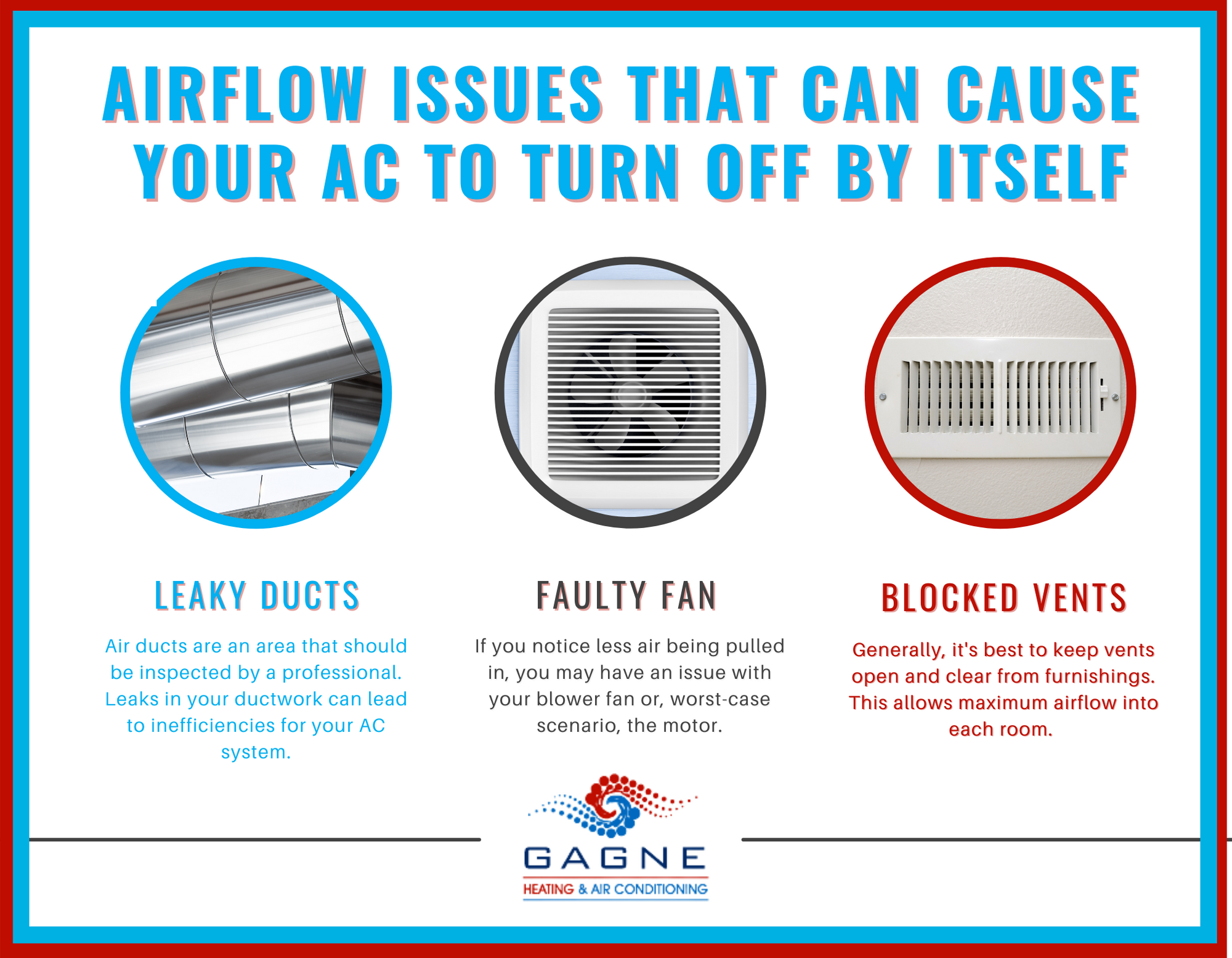
Image Source: gagneac.com
Why Does My Air Conditioner Turn Off By Itself? Explained
Your air conditioner (AC) turning off by itself is a common and frustrating issue. When your AC starts AC cycling off, meaning it turns on and then quickly shuts down again, or your HVAC shutting down unexpectedly, it can be due to various reasons, from simple thermostat settings to more complex mechanical problems.
Common Culprits Behind an AC Unit Shutting Down Unexpectedly
An AC unit shutting down can be alarming, especially on a hot day. Several factors can cause your cooling system to stop working without warning. Let’s dive into the most frequent causes.
1. Thermostat Troubles: The Brain of Your AC
Your thermostat is designed to regulate the temperature in your home. When it malfunctions or is set incorrectly, it can cause your AC to shut off prematurely.
Thermostat Turning Off AC: Calibration and Settings
Sometimes, the simplest explanation is a miscalibrated thermostat. If your thermostat thinks the room has reached the desired temperature, even if it hasn’t, it will signal the AC to turn off.
- Incorrect Temperature Setting: Double-check that the thermostat is set to “Cool” and that the desired temperature is lower than the current room temperature. A common mistake is accidentally setting it to “Fan Only” or “Heat.”
- Faulty Thermostat: Older thermostats, especially mechanical ones, can become inaccurate over time. Digital thermostats can also fail due to battery issues, faulty wiring, or internal component failure. If the screen is blank or erratic, it’s a strong indicator of a problem.
- Thermostat Placement: If your thermostat is located in direct sunlight, near a heat-generating appliance (like a lamp or television), or in a drafty area, it can receive inaccurate temperature readings. This can lead to the AC overcompensating or shutting off too soon.
- Programming Errors: Programmable thermostats can be tricky. If you’ve accidentally programmed a “hold” temperature or a schedule that overrides your current setting, it could be the reason your thermostat turning off AC.
Battery Life and Power Supply
For digital thermostats, low or dead batteries are a frequent culprit. Even if the display is still on, weak batteries can cause erratic behavior, including unexpected shutdowns. Ensure you replace them regularly.
2. Airflow Restrictions: When the AC Can’t Breathe
Proper airflow is crucial for your air conditioner to function efficiently. Blocked airflow can lead to several problems, including the unit overheating and shutting down to protect itself.
Clogged Air Filters: The Most Common Culprit
A dirty air filter is often the primary reason for an intermittent air conditioner. When a filter is clogged with dust and debris, it restricts the amount of air that can be drawn into the system.
- Reduced Cooling Efficiency: Less air passing over the evaporator coils means less heat is absorbed, leading to poor cooling.
- Frozen Evaporator Coils: The restricted airflow can cause the evaporator coils (the cold indoor part of your AC) to freeze over. Ice buildup further impedes airflow and can eventually cause the system to shut down.
- Overheating: The AC’s internal components, particularly the compressor, can overheat due to the strain of trying to push air through a clogged filter.
Table 1: Air Filter Maintenance Schedule
| Filter Type | Recommended Replacement/Cleaning Frequency |
|---|---|
| Fiberglass Filters | Every 30-60 days |
| Pleated Filters | Every 60-90 days |
| Washable/Reusable Filters | Clean every 30-60 days (check manufacturer instructions) |
Blocked Vents and Registers
Ensure that furniture, curtains, or other objects are not blocking your supply and return air vents. Blocked vents reduce airflow throughout your home, impacting the AC’s performance and potentially causing it to shut off.
Dirty Evaporator and Condenser Coils
Over time, dust and debris can accumulate on both the indoor evaporator coils and the outdoor condenser coils.
- Evaporator Coils: Dirty evaporator coils can’t absorb heat effectively, leading to freezing and poor performance.
- Condenser Coils: Dirty condenser coils in the outdoor unit can’t release heat efficiently. This causes the system to overheat and shut down, often to prevent damage to the compressor.
3. Overheating Problems: Protecting Vital Components
Your air conditioner has built-in safety mechanisms to prevent damage from overheating. When the system gets too hot, it will shut down.
AC Overheating Problem: Causes and Solutions
Several factors contribute to an AC overheating problem.
- Low Refrigerant Levels: A refrigerant leak can cause low refrigerant levels. This reduces the system’s ability to absorb heat, leading to component overheating, particularly the compressor. Low refrigerant also indicates a leak that needs professional repair.
- Dirty Condenser Coils: As mentioned earlier, dirty outdoor coils prevent heat dissipation.
- Blocked Condenser Unit: Debris, leaves, or even overgrown vegetation around the outdoor unit can obstruct airflow, causing it to overheat.
- Overworked Compressor: If the AC is undersized for the space it needs to cool, or if it’s constantly running due to poor insulation or high thermostat settings, the compressor can overheat.
Overheating Protection Mechanism
Most AC units have a high-pressure or high-temperature switch. When the internal pressure or temperature of a component like the compressor exceeds a safe limit, this switch will trigger and shut down the system. This is a crucial safety feature to prevent permanent damage.
4. Electrical Issues: The Unseen Interruptions
Electrical problems are another significant reason for your AC unit shutting down. These can range from simple tripped breakers to more complex wiring issues.
Circuit Breaker Tripping AC: What It Means
When your AC unit draws more electrical current than the circuit can safely handle, the circuit breaker will “trip,” interrupting the power supply to prevent an electrical fire or damage to the wiring.
- Overloaded Circuit: If other appliances are running on the same circuit as your AC, it can overload the system.
- Short Circuit: A short circuit within the AC unit itself or its wiring can cause a sudden surge in current, tripping the breaker.
- Faulty Capacitor: Capacitors are essential for starting the AC’s motor and compressor. If a capacitor is failing or has failed, it can cause the unit to draw too much power, leading to a tripped breaker.
- Overheating Motor: An overheating motor can also draw excessive current.
Loose Wiring or Connections
Loose or damaged electrical connections within the AC unit, at the thermostat, or at the breaker box can cause intermittent power loss, leading to unexpected shutdowns.
Capacitor Failure
Capacitors provide the initial jolt of energy needed to start the AC’s motors. A failing capacitor might cause the AC to try to start but fail, or it might start but run inefficiently, leading to overheating and shutdowns.
5. AC Compressor Issues: The Heart of the System
The compressor is the most vital and expensive component of your air conditioning system. When it experiences problems, it can cause the entire unit to shut down.
AC Compressor Issues: Signs and Causes
- Overheating Compressor: As discussed earlier, overheating can lead to shutdowns.
- Hard Starting: If the compressor struggles to start, it draws a lot of power, which can trip a breaker. This is often due to failing start components like capacitors or relays.
- Internal Mechanical Failure: Like any mechanical part, compressors can wear out. Internal damage or seizure can cause the unit to stop working entirely.
- Voltage Fluctuations: Inconsistent power supply can stress the compressor.
Compressor Overload Protector
Many compressors have an internal overload protector that will shut down the unit if it gets too hot or if there’s too much pressure. This is a safety mechanism, but frequent tripping can indicate an underlying problem.
6. Refrigerant Leaks: The Cooling Medium
Refrigerant is the substance that absorbs heat from your home. If there’s a leak, the system won’t cool effectively and can suffer serious damage.
Low Refrigerant Levels
When refrigerant leaks out, the pressure within the system drops. This can cause the evaporator coils to freeze and, as mentioned, lead to overheating of the compressor. The AC cycling off prematurely is a common symptom of low refrigerant.
Importance of Professional Repair
Refrigerant is a chemical that requires specialized handling. If you suspect a refrigerant leak, it’s crucial to call a qualified HVAC technician. They can locate and repair the leak, then recharge the system with the correct amount of refrigerant.
7. The AC Fan Not Running: A Critical Component Failure
The indoor fan (blower fan) and the outdoor fan (condenser fan) are both essential for the AC’s operation. If either stops working, the system will likely shut down.
AC Fan Not Running: Indoor Blower Motor
The indoor blower motor circulates cool air throughout your home. If it fails:
- Poor Airflow: This leads to inefficient cooling and can cause the evaporator coils to freeze.
- System Shutdown: The AC unit may have a safety switch that shuts it down if it detects no airflow from the indoor fan.
AC Fan Not Running: Outdoor Condenser Fan Motor
The outdoor fan is responsible for dissipating the heat absorbed by the AC unit. If the outdoor fan motor fails:
- Heat Buildup: The outdoor unit will rapidly overheat.
- Compressor Damage: The compressor is particularly vulnerable to overheating.
- System Shutdown: The high-pressure switch will typically trip, shutting down the entire AC unit to protect the compressor.
8. Drainage Issues: Preventing Water Damage and System Malfunctions
Your air conditioner produces condensation as it cools the air. This water needs to drain away properly.
Clogged Condensate Drain Line
The condensate drain line removes water from the evaporator coil. If it becomes clogged with algae, mold, or debris:
- Water Backup: Water can back up into the drain pan.
- Overflow Switch Activation: Many AC systems have an overflow safety switch. When water reaches a certain level in the drain pan, this switch will turn off the AC to prevent water damage to your home.
- Mold Growth: A clogged drain can also promote mold and mildew growth, affecting air quality.
9. Over-Cycling: The Problem of Frequent Starts and Stops
An intermittent air conditioner, or one that cycles on and off too frequently, is not only annoying but also inefficient and can shorten the lifespan of your system. This is often related to the issues mentioned above, such as improper sizing or thermostat placement, but can also be due to:
- Oversized AC Unit: An AC unit that is too large for your home will cool the space down very quickly, causing it to shut off. It will then turn back on again shortly after the temperature rises slightly. This “short cycling” is hard on the equipment.
- Thermostat Location: As discussed, a poorly placed thermostat can lead to rapid temperature fluctuations, triggering the AC to cycle on and off more often.
Troubleshooting Steps: What You Can Do
Before calling a professional, there are a few simple checks you can perform yourself when your AC unit is shutting down unexpectedly.
Basic DIY Checks
- Check Your Thermostat:
- Ensure it’s set to “Cool” and the fan is set to “Auto.”
- Verify the temperature setting is appropriate.
- Replace batteries if it’s a digital thermostat.
- Make sure it’s not covered or near a heat source.
- Inspect the Air Filter:
- Locate and check your air filter. If it looks dirty, replace or clean it. This is the most common fix for many AC problems.
- Check the Circuit Breaker:
- Locate your electrical panel and find the breaker labeled for your AC unit.
- If it’s tripped (in the middle or off position), try resetting it by flipping it fully off and then back on.
- If it trips again immediately, do not keep resetting it. This indicates a more serious electrical issue requiring professional attention.
- Clear Obstructions:
- Ensure there are no items blocking your indoor air vents or registers.
- Check the outdoor unit for any debris, leaves, or overgrown plants that might be restricting airflow. Gently clear away any obstructions.
When to Call a Professional
If the basic checks don’t resolve the issue, or if you suspect a more complex problem, it’s time to call a qualified HVAC technician. These situations include:
- The circuit breaker repeatedly trips.
- You suspect a refrigerant leak (hissing sounds, ice on refrigerant lines, or no cooling).
- The outdoor unit fan is not spinning, or the indoor blower fan is not working.
- You hear unusual noises from the AC unit.
- Your thermostat is malfunctioning or showing error codes.
- The AC continues to shut off after performing the basic troubleshooting steps.
Table 2: Common AC Shutoff Issues and Potential Causes
| Symptom | Potential Cause(s) |
|---|---|
| AC turns off shortly after starting | Thermostat issues, dirty air filter, AC overheating, short cycling, refrigerant leak |
| AC runs for a while then shuts off | AC overheating problem, tripped breaker, dirty coils, refrigerant leak, compressor issues |
| AC cycles on and off frequently | Oversized unit, thermostat placement, dirty filter, low refrigerant |
| AC turns off and you hear a clicking sound | Failing capacitor, faulty start relay, electrical issue |
| AC turns off, no fan or compressor | Tripped breaker, thermostat failure, power supply issue, control board failure |
| AC turns off and freezes up | Dirty filter, low refrigerant, blocked vents, dirty coils |
Frequently Asked Questions (FAQ)
Q1: Can I fix a tripped circuit breaker myself?
A: Yes, you can try resetting a tripped breaker once. If it trips again, do not force it. This indicates a problem that requires a professional electrician or HVAC technician.
Q2: How often should I change my air filter?
A: The frequency depends on the type of filter and your home environment. As a general rule, check monthly and replace or clean every 1-3 months. If you have pets or allergies, you may need to change it more often.
Q3: My AC is making strange noises and then shuts off. What could it be?
A: Unusual noises, such as grinding, banging, or squealing, often indicate mechanical problems with the fan motor, compressor, or other internal components. It’s best to turn the unit off and call a technician immediately.
Q4: Is it normal for my AC to turn off when it reaches the set temperature?
A: Yes, that is precisely how your AC is designed to work. It should turn on when the room temperature rises above your set point and turn off when it reaches that point. The problem arises when it turns off too soon, too often, or doesn’t turn on at all.
Q5: What does it mean if my AC is cycling off?
A: “AC cycling off” usually refers to the unit turning on and then shutting down again after a very short period, often before it has a chance to cool the room effectively. This is known as short-cycling and can be caused by various issues like a dirty filter, low refrigerant, or an oversized AC unit.
By staying aware of these potential causes and performing regular maintenance, you can help prevent your air conditioner from shutting off unexpectedly and ensure it operates efficiently for years to come.

My name is Carlos Gadd, and I am the creator of AirPurityGuide.com.. With a passion for footwear, I share my experiences, insights, and expertise about shoes. Through my blog, I aim to guide readers in making informed decisions, finding the perfect pair, and enhancing their footwear knowledge. Join me on this journey to explore everything about shoes!