
Can your air conditioner be frozen? Yes, your air conditioner can freeze up. Knowing the signs of a frozen AC unit is crucial for homeowners to prevent damage and ensure efficient cooling. If your AC is blowing warm air, it could be a sign of ice building up on AC components.
An air conditioner iced up can seem like a mysterious problem, but it’s often a straightforward issue with identifiable symptoms. When your AC unit is frozen, it means that ice has formed on the evaporator coil, which is a key component responsible for absorbing heat from your home. This ice buildup acts as an insulator, preventing the AC from doing its job effectively.
The most common indicator that your air conditioner is frozen is a significant drop in cooling performance. You might notice that your AC is blowing warm air instead of cool air, or that the airflow from your vents is much weaker than usual. If you’ve ever wondered about refrigerator coils frosted over in a similar way, the principle is much the same – a blockage preventing proper heat exchange.
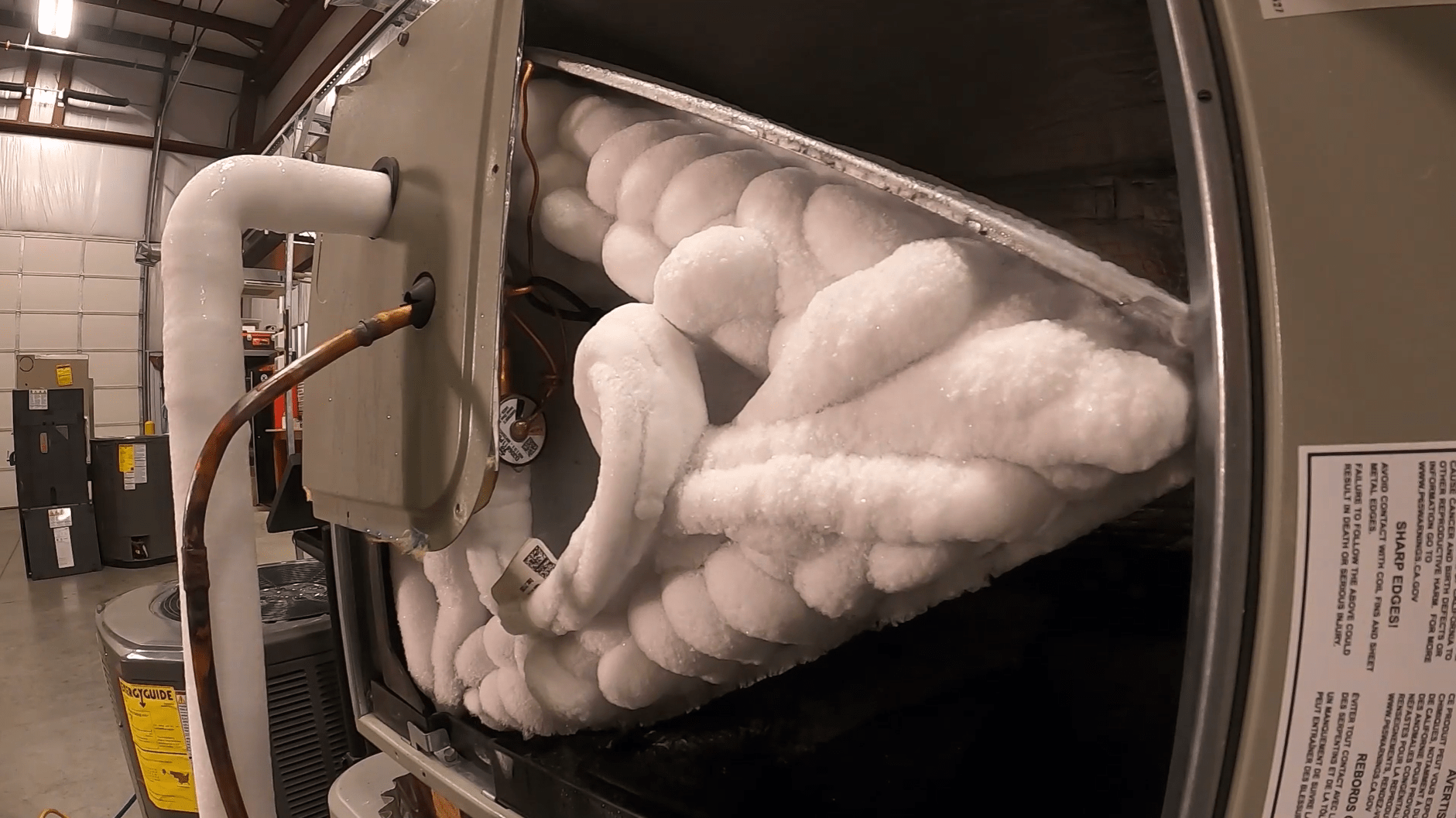
Image Source: gopaschal.com
Recognizing the Signs of a Frozen AC Unit
Spotting a frozen AC unit early can save you a lot of trouble. There are several key indicators you can look for.
Reduced Airflow from Vents
One of the first and most noticeable signs of a frozen AC unit is a drastic reduction in the amount of air coming out of your vents. If you feel weak airflow or no airflow at all from some or all of your vents, it’s a strong indicator that something is wrong. The ice on the evaporator coil acts like a blockage, preventing air from passing through it freely.
AC Blowing Warm Air
When your air conditioner is frozen, it can no longer absorb heat from your home effectively. This means that the air circulating through your system remains warm, and that’s what you’ll feel coming from your vents. If your thermostat is set to cool, but the air feels warm, an iced-up AC is a prime suspect.
Visible Ice on the Outdoor Unit
In some cases, you might be able to see ice building up on the outdoor part of your air conditioner, specifically on the refrigerant lines. These lines connect the indoor and outdoor units. If you notice frost or ice coating these copper tubes, it’s a clear sign that the system is experiencing an issue that’s causing freezing.
Strange Noises from the Unit
A frozen air conditioner can sometimes make unusual noises. You might hear hissing or gurgling sounds. These sounds can be caused by the refrigerant struggling to flow through the frozen components or by water dripping as the ice melts.
Water Leaks Around the Indoor Unit
As ice builds up on the evaporator coil, it can eventually start to melt and drip. This can lead to water pooling around your indoor air handler unit. If you notice puddles or wet spots near your AC, it might be a consequence of the system freezing over.
Why Does an Air Conditioner Freeze Up?
Several factors can contribute to your air conditioner freezing up. Most of them relate to issues with airflow or refrigerant levels.
Low Refrigerant Levels
Refrigerant is the substance that circulates through your AC system, absorbing heat from your home and releasing it outside. If your system has a refrigerant leak, the pressure within the system can drop. This low pressure causes the temperature of the evaporator coil to fall below freezing, leading to ice formation. This is a common reason for an AC not cooling and ice building up.
Restricted Airflow
Proper airflow is essential for your air conditioner to function correctly. If air cannot flow freely over the evaporator coil, the coil will get too cold and freeze. Common causes of restricted airflow include:
- Dirty Air Filter: This is the most frequent culprit. A clogged air filter blocks air from entering the system, reducing the amount of air that passes over the evaporator coil. This is a crucial maintenance task that, if neglected, can lead to an AC iced up.
- Blocked Vents or Ducts: Furniture, rugs, or closed vents can obstruct the path of air, both to the AC unit and from it. Ensure all vents are open and unobstructed.
- Dirty Evaporator Coil: Over time, dust and debris can accumulate on the evaporator coil itself. This buildup insulates the coil, hindering its ability to absorb heat and also impeding airflow.
- Fan Malfunctions: The blower fan in your indoor unit is responsible for pushing air through the system. If the fan motor is failing or the fan blades are dirty, it can significantly reduce airflow.
Thermostat Issues
Sometimes, a faulty thermostat can cause your AC to run continuously without allowing it to cycle off. This constant operation, especially during cooler weather or when there’s already an issue with airflow or refrigerant, can lead to the system freezing up.
Issues with the Condensate Drain Line
The condensate drain line removes moisture that is condensed from the air as it passes over the evaporator coil. If this line becomes clogged with algae, mold, or debris, water can back up. While this usually leads to water damage or shutoff, in some specific scenarios, it could indirectly contribute to freezing if it disrupts the overall system balance.
Extreme Low Outdoor Temperatures
While less common, running your air conditioner when the outside temperature is too low (typically below 60-65°F or 15-18°C) can also cause it to freeze up. The system is designed to operate efficiently within a specific temperature range. When it operates in conditions that are too cold, the pressures and temperatures inside the unit can fall to a point where ice forms.
How to Know If Your Air Conditioner Is Frozen: A Detailed Checklist
To definitively determine if your AC unit is frozen, go through this checklist.
1. Check the Airflow
- Action: Turn your AC to the “Cool” setting and fan to “High.” Place your hand in front of a few different vents.
- Observation: Is the airflow significantly weaker than usual? Are some vents blowing very little air or no air at all?
- Indicator: Weak or no airflow is a strong sign of ice buildup.
2. Feel the Air Temperature
- Action: After the AC has been running for a while, feel the air coming from the vents.
- Observation: Is the air cool, or does it feel warm or room temperature?
- Indicator: If your AC is blowing warm air when it should be cooling, it’s a likely symptom of a frozen evaporator coil.
3. Inspect the Refrigerant Lines
- Action: Carefully locate the copper refrigerant lines that connect your indoor and outdoor units. Be cautious as these lines can be hot or cold.
- Observation: Do you see any frost or ice forming on these lines, particularly on the larger, insulated line?
- Indicator: Visible ice on refrigerant lines is a definitive sign of a frozen AC.
4. Listen for Unusual Sounds
- Action: Spend some time listening to your indoor and outdoor AC units while they are running.
- Observation: Do you hear any hissing, bubbling, or banging noises?
- Indicator: Strange sounds can indicate refrigerant flow issues or ice formation.
5. Look for Water Leaks
- Action: Check the area around your indoor air handler unit (often located in a closet, attic, or basement).
- Observation: Are there any puddles of water or signs of moisture damage?
- Indicator: Leaking water can be a result of melted ice from a frozen coil.
6. Examine Your Air Filter
- Action: Locate and remove your air filter. This is usually found in the return air duct or within the air handler itself.
- Observation: Is the filter extremely dirty and clogged with dust and debris?
- Indicator: A very dirty filter is a common cause of restricted airflow, which can lead to freezing.
What to Do If Your AC is Frozen
If you’ve confirmed your air conditioner is frozen, the first and most important step is to turn it off. Continuing to run a frozen AC can cause serious damage to the compressor, which is the most expensive component to replace.
Step 1: Turn Off the Air Conditioner
- Locate your thermostat and set the system to “Off.”
- Alternatively, you can turn off the power to the unit at your home’s electrical breaker box. Look for the breaker labeled “AC,” “Air Conditioner,” or “HVAC.”
Step 2: Set the Fan to “On”
- If you have a separate switch or setting for the fan on your thermostat, set it to “On” or “Fan Only.” This will help circulate air through the system and speed up the defrosting process.
- Do NOT use the “Cool” setting.
Step 3: Allow the Unit to Defrost
- This can take anywhere from a few hours to an entire day, depending on the severity of the ice buildup and the ambient temperature.
- Ensure that the condensate drain line is clear so that the melting ice has a place to go. You can often locate the drain line outside the house, where it typically exits near the outdoor unit.
Step 4: Inspect and Replace the Air Filter
- Once the ice has melted, or while you are waiting, it’s crucial to replace your air filter if it was dirty. A clean filter is essential for preventing future freezing.
Step 5: Once Defrosted, Restart the AC
- After the ice has completely melted, you can turn your thermostat back to the “Cool” setting.
- Monitor the unit closely to see if it starts cooling properly and if the signs of freezing have disappeared.
Troubleshooting Common Causes After Defrosting
If your AC freezes up again shortly after defrosting, or if it continues to blow warm air, it’s time to investigate the underlying cause.
H4: Checking the Air Filter (Again)
- Problem: Even if you just replaced it, a new filter could be the wrong size or type, or airflow could still be restricted for other reasons.
- Solution: Ensure you are using the correct size and MERV rating for your system. Check again for any blockages in the return air grilles.
H4: Examining Evaporator Coil Cleanliness
- Problem: If the filter was neglected for a long time, the evaporator coil itself might be heavily soiled.
- Solution: The evaporator coil is often located inside the air handler. Cleaning it can be a delicate process. If you’re not comfortable, call a professional. You can sometimes see if it’s dirty by looking into the air handler.
H4: Verifying Refrigerant Levels
- Problem: Low refrigerant is almost always due to a leak in the system.
- Solution: This is a job for a qualified HVAC technician. They can detect leaks, repair them, and recharge the system with the correct amount of refrigerant. Do not attempt to add refrigerant yourself, as it requires specialized knowledge and equipment.
H4: Investigating Fan Motor Issues
- Problem: A weak or failing blower motor will reduce airflow.
- Solution: A technician can diagnose fan motor problems. Sometimes, the fan motor capacitor needs replacement, or the entire motor may need to be replaced.
H4: Ensuring Proper Drainage
- Problem: A clogged condensate drain line can cause water to back up.
- Solution: You can often clear a clogged drain line yourself using a wet/dry vacuum on the exterior outlet or by flushing it with a vinegar/water solution. If the clog is deep within the system, a technician might be needed.
What NOT to Do When Your AC is Frozen
It’s important to know what actions can worsen the situation.
- Do not: Continue to run the AC on the “Cool” setting. This can damage the compressor.
- Do not: Try to chip or break off the ice yourself. You can easily damage the delicate fins of the evaporator coil or the refrigerant lines.
- Do not: Pour hot water directly onto the frozen components. While it will melt the ice, it can cause water damage and may not be effective for severe freezing.
- Do not: Ignore the problem. A recurring frozen AC indicates an underlying issue that needs to be addressed.
When to Call a Professional HVAC Technician
While some minor AC issues can be addressed by homeowners, a frozen air conditioner often points to more complex problems. It’s generally advisable to call a professional HVAC technician if:
- The AC freezes up repeatedly.
- You suspect a refrigerant leak (low refrigerant is a common cause).
- You are uncomfortable performing any of the diagnostic or defrosting steps.
- After defrosting and replacing the filter, the AC still doesn’t cool properly.
- You hear loud or unusual noises coming from the unit.
- You need professional cleaning of the evaporator coil or internal components.
A qualified technician has the tools and expertise to accurately diagnose the cause of the freezing, repair any leaks, and ensure your system is operating safely and efficiently. They can also perform essential maintenance that prevents future freezing issues.
Preventive Maintenance: Key to Avoiding a Frozen AC
Regular maintenance is the best defense against a frozen air conditioner and other common AC problems.
Regular Filter Changes
- Frequency: Check your air filter monthly and replace it every 1-3 months, depending on the filter type and household conditions (e.g., pets, allergies).
- Benefit: This is the single most effective way to ensure proper airflow and prevent freezing.
Professional Annual Tune-Ups
- Schedule: Have your HVAC system inspected and serviced by a professional at least once a year, ideally before the cooling season begins.
- Benefits: A technician will clean coils, check refrigerant levels, inspect fan motors, ensure proper drainage, and identify potential issues before they become major problems.
Keep Outdoor Unit Clear
- Ensure the area around your outdoor condenser unit is free of debris, leaves, and overgrown vegetation. This allows for proper air circulation.
Maintain Proper Indoor Humidity Levels
- Extremely high indoor humidity can sometimes exacerbate AC issues, though it’s not a direct cause of freezing. Using a dehumidifier can help manage humidity.
Frequently Asked Questions (FAQ)
Q1: Can I run my AC if it’s frozen?
A1: No, you should never run your air conditioner if it is frozen. This can cause serious damage to the compressor, the most expensive part of your AC system.
Q2: How long does it take for an AC to defrost?
A2: It typically takes several hours (4-12 hours, sometimes up to 24 hours) for an AC to defrost completely. The exact time depends on the amount of ice buildup and the ambient temperature.
Q3: What if my AC keeps freezing up?
A3: If your AC freezes up repeatedly, it indicates an underlying problem. The most common causes are low refrigerant levels (due to a leak), severely restricted airflow (dirty coils or a bad filter), or fan motor issues. You need to call a qualified HVAC technician to diagnose and repair the root cause.
Q4: Is it okay to spray water on a frozen AC unit?
A4: It’s generally not recommended to spray water directly onto a frozen AC unit, especially hot water, as it can cause water damage. The best approach is to turn off the cooling and allow it to defrost naturally by circulating fan air.
Q5: My AC is blowing warm air. Is it definitely frozen?
A5: While a frozen AC is a common reason for blowing warm air, it’s not the only one. Other possibilities include low refrigerant, a malfunctioning compressor, or an issue with the thermostat. However, checking for ice on the coils or refrigerant lines is a good first step.
Conclusion
Recognizing the signs of a frozen AC unit – like reduced airflow, warm air blowing from vents, and visible ice – is essential for prompt action. A frozen AC is a sign that something is not right with your system. By understanding the common causes, such as dirty air filters, low refrigerant, or airflow obstructions, you can take steps to prevent this problem. If you discover your AC is frozen, the immediate action is to turn it off to prevent further damage. Once defrosted, address the underlying issue, whether it’s a simple filter change or a call to a professional for more complex repairs. Regular maintenance is your best bet to keep your air conditioner running smoothly and efficiently, ensuring your home stays cool and comfortable all season long.

My name is Carlos Gadd, and I am the creator of AirPurityGuide.com.. With a passion for footwear, I share my experiences, insights, and expertise about shoes. Through my blog, I aim to guide readers in making informed decisions, finding the perfect pair, and enhancing their footwear knowledge. Join me on this journey to explore everything about shoes!