
Your air conditioner’s pipes freezing up, often referred to as frozen AC lines, is a common and frustrating problem for homeowners. When you notice ice forming on the refrigerant lines of your HVAC system, it signals an issue that needs immediate attention. Why is my air conditioner pipes freezing? The most common reasons include a dirty air filter, low refrigerant levels due to a refrigerant leak, a faulty blower motor, or a dirty evaporator coil.
An AC system’s job is to move heat from inside your home to the outside. It does this by using a special fluid called refrigerant. This refrigerant circulates through two main pipes, also known as lines. One line carries warm, low-pressure refrigerant from your indoor unit to your outdoor unit. The other line carries cool, high-pressure refrigerant from your outdoor unit back to your indoor unit. For this process to work efficiently and without issues, the refrigerant must be at the correct pressure and temperature. When ice forms on these pipes, it means something is disrupting this delicate balance.
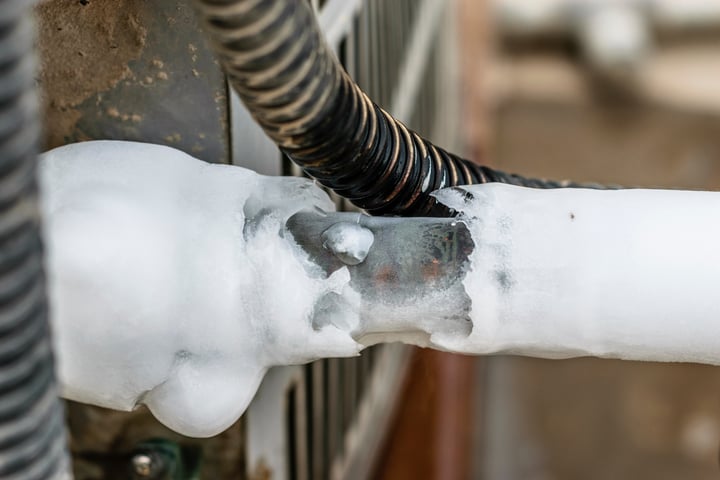
Image Source: www.topnotchheatingandair.com
The Science Behind AC Freezing
To grasp why AC pipes freeze, it’s helpful to understand a bit about how an air conditioner works. Your AC system is essentially a heat pump. It uses the principles of thermodynamics and the properties of refrigerant to transfer heat.
- Refrigerant Cycle: The refrigerant absorbs heat from your indoor air as it passes through the evaporator coil (located inside your home). As it absorbs heat, it turns from a liquid into a gas. This gas then travels to the outdoor unit (condenser) where it releases the heat and turns back into a liquid. The cycle repeats, cooling your home.
- Pressure and Temperature: The temperature of the refrigerant is directly related to its pressure. When the pressure is low, the refrigerant gets very cold. This is what allows it to absorb heat from your home.
If something goes wrong and the refrigerant gets too cold, or if there isn’t enough warm air passing over the evaporator coil, the moisture in the air can freeze onto the coil and pipes. This is how frozen AC lines occur.
Common Culprits for Frozen AC Pipes
Let’s dive into the specific reasons your air conditioner pipes might be freezing.
1. Dirty Air Filter: The Silent Killer
A dirty air filter is arguably the most frequent culprit behind an AC system freezing up. Your air filter’s primary job is to catch dust, dirt, pollen, and other airborne particles before they can enter your HVAC system and clog its components.
- Airflow Restriction: When the air filter becomes clogged with debris, it significantly restricts the amount of air that can flow over the evaporator coil.
- Cold Spot Formation: The evaporator coil needs a consistent flow of warm indoor air to absorb heat. Without adequate airflow, the refrigerant inside the coil gets too cold. This extreme cold causes the moisture in the air to condense and then freeze on the coil and the refrigerant lines connected to it.
- The Vicious Cycle: As ice builds up, it further restricts airflow, creating a feedback loop. The more ice there is, the less air can get through, and the colder the refrigerant becomes, leading to more ice.
Frequency of Filter Changes:
| HVAC System Type | Recommended Filter Change Frequency |
|---|---|
| Standard System | Every 1-3 months |
| Homes with Pets | Every 1-2 months |
| Homes with Allergies/Asthma | Every 1 month |
| High-Efficiency Filters | Every 3-6 months (check manufacturer) |
Actionable Advice: Regularly check and replace your air filter. This simple maintenance task is the easiest way to prevent many common AC problems, including freezing.
2. Low Refrigerant: A Sign of a Deeper Issue
Having low refrigerant is another major reason for your AC pipes to freeze. However, refrigerant doesn’t get “used up” like fuel. If your system is low on refrigerant, it almost always indicates a refrigerant leak.
- Pressure Drop: Refrigerant circulates under specific pressures. When there’s a leak, the system loses refrigerant, causing the pressure within the lines to drop.
- Temperature Plummet: As we discussed, lower pressure means lower temperatures. The refrigerant becomes excessively cold as it tries to evaporate and absorb heat, leading to freezing on the evaporator coil and lines.
- The Evaporator Coil’s Role: The evaporator coil is where the refrigerant absorbs heat from your indoor air. If the refrigerant level is too low, the coil doesn’t have enough refrigerant to absorb heat efficiently. This allows the coil to become colder than it should be, and the surrounding moisture freezes.
- Identifying a Leak: Signs of a refrigerant leak can include hissing sounds from your AC unit, a persistent decrease in cooling performance, and the presence of oily residue near refrigerant lines.
Important Note: If you suspect a refrigerant leak or low refrigerant, do not attempt to add more refrigerant yourself. Refrigerant is a hazardous substance, and overcharging the system can cause further damage and reduce efficiency. A qualified HVAC technician must locate and repair the leak before recharging the system.
3. Dirty Evaporator Coil: Suffocating the System
The evaporator coil is the indoor component of your AC system. It’s a series of fins and tubes where the magic of cooling happens. When this coil gets dirty, it directly impacts airflow and heat absorption.
- Reduced Heat Transfer: Dust, dirt, and debris accumulate on the evaporator coil’s surface. This layer of grime acts as an insulator, preventing the coil from effectively absorbing heat from the indoor air.
- Refrigerant Over-Cooling: With less heat to absorb, the refrigerant flowing through the coil gets too cold. This excessive cold causes the moisture in the air to condense and freeze onto the coil, eventually spreading to the refrigerant lines.
- Aesthetic Clues: A dirty evaporator coil will often look caked with dust and grime. You might also notice reduced airflow coming from your vents.
Maintenance is Key: Regular professional cleaning of the evaporator coil, typically during annual HVAC maintenance, is crucial to prevent this issue.
4. Faulty Blower Motor: The Air Mover
The blower motor is responsible for circulating air throughout your home via the ductwork. If the blower motor isn’t working correctly, it directly impacts the airflow over the evaporator coil.
- Insufficient Airflow: A weak or failing blower motor will move less air. This lack of airflow means the evaporator coil isn’t getting enough warm indoor air to absorb heat.
- Refrigerant Temperature Drop: Consequently, the refrigerant inside the coil becomes too cold, leading to freezing.
- Signs of a Faulty Blower Motor: You might notice weak airflow from your vents, strange noises coming from the indoor unit (like humming or grinding), or the fan may not turn on at all.
Diagnosis and Repair: Diagnosing a faulty blower motor requires a professional. They can assess if the motor is failing, if there’s an issue with the fan belt, or if the motor capacitor needs replacing.
5. Clogged Drain Line: Water Woes
Your AC system produces condensation as it cools the air. This moisture is supposed to drain away through a clogged drain line. If this line becomes blocked, the water can back up.
- Water Pooling: A blockage can cause water to pool around the indoor unit. While this doesn’t directly cause the pipes to freeze, it can lead to a humid environment.
- Indirect Freezing: More importantly, a clogged drain line can sometimes be a symptom of other issues, such as a dirty evaporator coil that is contributing to the freeze-up. If the drain pan overflows and gets into the blower compartment, it can affect airflow.
- Secondary Problems: A clogged drain line can also lead to mold growth and water damage within your home.
Clearing the Blockage: HVAC technicians can clear drain line blockages using specialized tools, such as wet/dry vacuums or plumbing snakes. Regular flushing of the drain line can help prevent future clogs.
6. Low Ambient Temperature: External Factors
While less common for indoor freezing, operating your air conditioner when the outdoor temperature is too low can lead to frozen AC lines.
- Design Limitations: Most residential air conditioners are designed to operate efficiently within a specific temperature range. When outdoor temperatures drop significantly, the system can struggle to function correctly.
- Refrigerant Behavior: At very low outdoor temperatures, the pressure within the system can fall too low, causing the refrigerant in the evaporator coil to become excessively cold and freeze the moisture in the air.
- Heat Pump Exception: It’s worth noting that if you have a heat pump, it’s designed to work in colder temperatures than a standard AC. However, even heat pumps have lower operating limits.
Recommendation: Avoid running your air conditioner when the outdoor temperature is below 60-65 degrees Fahrenheit (15-18 degrees Celsius). If you need heating in cold weather, use your furnace or heat pump’s heating mode.
7. Improper Installation: A Foundation for Problems
If your air conditioner wasn’t installed correctly, it can lead to a host of problems, including freezing. This is why choosing a reputable HVAC contractor is so important.
- Incorrect Refrigerant Charge: An installer might overcharge or undercharge the system with refrigerant, both of which can cause freezing.
- Ductwork Issues: Poorly sealed or improperly sized ductwork can lead to inadequate airflow, contributing to freezing.
- Coil Placement: If the evaporator coil isn’t positioned correctly or isn’t properly insulated, it can create conditions ripe for freezing.
Long-Term Impact: Improper installation can cause ongoing issues and potentially shorten the lifespan of your HVAC system. Always ensure your installer is certified and experienced.
Decoding the Symptoms: What to Look For
When your AC pipes are freezing, you’ll likely notice several signs:
- Ice on Refrigerant Lines: This is the most obvious indicator. You’ll see frost or solid ice on the larger copper pipe (the suction line) connecting your indoor and outdoor units.
- Reduced Cooling: Your home won’t feel as cool as it should. The system might be running, but it’s not effectively removing heat.
- Weak Airflow: You’ll feel less air coming from your vents, or the air might feel warmer than usual.
- Strange Noises: Sometimes, the sound of ice forming or the struggling blower motor can create unusual noises.
- Water Leaks: As the ice melts (when the system is off), it can cause significant water leaks around your indoor unit.
What to Do When Your AC Pipes Freeze
If you discover ice on your AC pipes, follow these steps:
- Turn Off the AC: Immediately switch your thermostat from “Cool” to “Off.”
- Turn On the Fan: Switch the thermostat’s fan setting to “On” (not “Auto”). This will circulate air and help melt the ice more quickly.
- Check the Air Filter: While the ice is melting, check your air filter. If it’s dirty, replace it.
- Wait for Ice to Melt: Allow the system to run with the fan on until all the ice has completely melted. This can take several hours.
- Check for Leaks: Once the ice is gone, inspect the refrigerant lines for any signs of leaks or damage.
- Call a Professional: Even after the ice melts and you replace the filter, it’s crucial to have a qualified HVAC technician inspect your system. They can diagnose the underlying cause of the freezing, whether it’s low refrigerant, a dirty evaporator coil, a faulty blower motor, or another issue.
Table: Troubleshooting Frozen AC Lines
| Symptom | Potential Cause | Recommended Action |
|---|---|---|
| Ice on pipes | Dirty air filter | Replace air filter. |
| Ice on pipes | Low refrigerant (leak) | Turn off AC, turn fan on. Call HVAC technician. |
| Ice on pipes | Dirty evaporator coil | Turn off AC, turn fan on. Call HVAC technician for cleaning. |
| Ice on pipes | Faulty blower motor | Turn off AC, turn fan on. Call HVAC technician for repair/replacement. |
| Reduced cooling | Low refrigerant | Turn off AC, turn fan on. Call HVAC technician. |
| Weak airflow | Dirty air filter | Replace air filter. |
| Weak airflow | Dirty evaporator coil | Turn off AC, turn fan on. Call HVAC technician for cleaning. |
| Weak airflow | Faulty blower motor | Turn off AC, turn fan on. Call HVAC technician for repair/replacement. |
| Water pooling/leaks | Clogged drain line | Turn off AC, turn fan on. Call HVAC technician to clear the drain line. |
| System not cooling at all | Multiple potential causes | Turn off AC, turn fan on. Call HVAC technician. |
Frequently Asked Questions (FAQ)
Q: Can I just chip the ice off my AC pipes?
A: No, you should never chip or force the ice off your AC pipes. This can damage the delicate copper tubing and the fins of the evaporator coil, leading to more expensive repairs. Allow the ice to melt naturally by turning off the cooling and running the fan.
Q: How long does it take for frozen AC lines to melt?
A: It can take several hours for the ice to completely melt, especially if the buildup is significant. Ensure the fan is running to speed up the process.
Q: Is it safe to run my AC when the pipes are frozen?
A: No, it is not safe. Running your AC with frozen lines can severely damage the compressor, which is the most expensive component of your system.
Q: How often should I have my AC serviced?
A: It’s recommended to have your HVAC system serviced by a professional at least once a year, ideally before the peak cooling season. This regular maintenance can catch potential problems like dirty coils or low refrigerant before they lead to freezing.
Q: My AC pipes froze, and I replaced the filter. It seems to be working now. Do I still need a technician?
A: Yes. While a dirty filter is a common cause, if the problem occurred, there might be other contributing factors or an underlying issue that needs to be addressed. A technician can perform a comprehensive check to prevent future occurrences.
A frozen air conditioner is more than just an inconvenience; it’s a sign that your system needs attention. By understanding the common causes of frozen AC lines and taking prompt action, you can prevent costly damage and ensure your home stays comfortable throughout the summer. Regular maintenance and a keen eye for any unusual signs will go a long way in keeping your AC running smoothly.

My name is Carlos Gadd, and I am the creator of AirPurityGuide.com.. With a passion for footwear, I share my experiences, insights, and expertise about shoes. Through my blog, I aim to guide readers in making informed decisions, finding the perfect pair, and enhancing their footwear knowledge. Join me on this journey to explore everything about shoes!