
Can you simply throw away an old window air conditioner? No, you cannot simply throw away an old window air conditioner in your regular trash. These units often contain refrigerants and other materials that are considered hazardous waste or require special handling for recycling. Improper disposal can harm the environment and may even lead to fines. This guide will walk you through the correct methods for disposing of your old window AC unit.
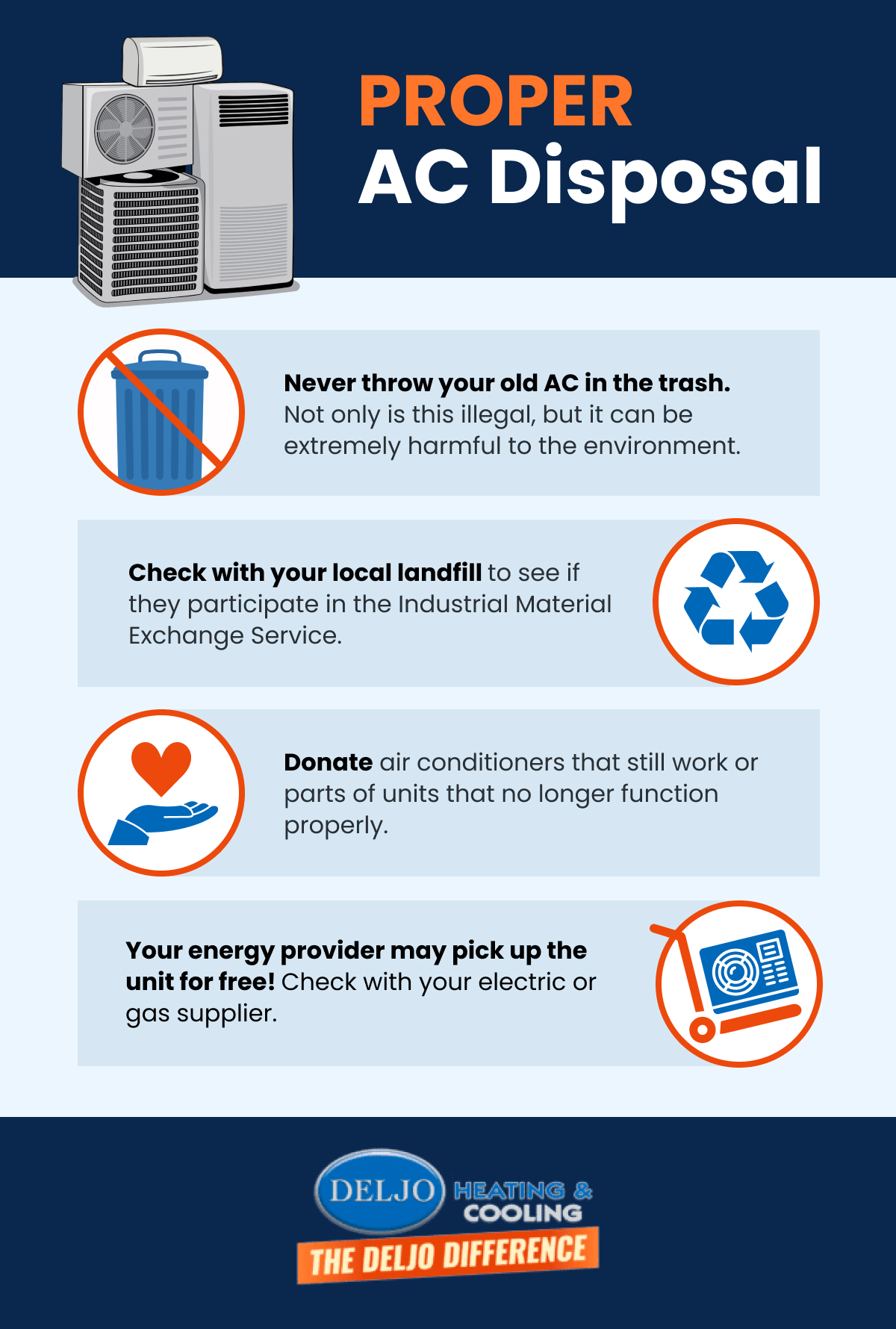
Image Source: deljoheating.com
Why Proper Disposal Matters
Window air conditioners are more than just metal and plastic; they contain components that can negatively impact our planet if not handled correctly.
Environmental Concerns
- Refrigerants: The cooling process in air conditioners relies on refrigerants, like Freon, which are potent greenhouse gases. When released into the atmosphere, they contribute significantly to climate change.
- Ozone Depletion: Older units may contain refrigerants that also damage the ozone layer.
- Heavy Metals and Plastics: AC units contain metals, plastics, and sometimes even small amounts of mercury or lead. These materials can leach into the soil and water if dumped in landfills, causing contamination.
Legal and Financial Implications
- Fines: Many municipalities and states have regulations against improper disposal of appliances containing refrigerants. You could face penalties if you don’t follow the rules.
- Landfill Bans: Most landfills no longer accept appliances like air conditioners due to the hazardous materials they contain.
Preparing Your Old Window AC for Disposal
Before you can hand over your old unit, there are a few steps you should take.
Step 1: Recovering the Refrigerant
This is the most critical step and must be done by a certified technician. Refrigerants are regulated substances. It’s illegal and harmful to vent them into the atmosphere. A certified professional will use specialized equipment to safely remove and contain the refrigerant.
- Why this is crucial: Releasing refrigerants is harmful to the environment.
- Who can do it: Only EPA-certified technicians are allowed to handle refrigerant recovery.
- How it works: They use recovery machines that capture the refrigerant into special tanks.
Step 2: Cleaning the Unit (Optional but Recommended)
While not strictly necessary for all disposal methods, a quick clean can make the unit easier to handle and potentially more appealing for donation or resale if it’s still functional.
- Wipe down the exterior.
- Clean the filter.
- Ensure there are no loose parts.
Step 3: Disconnecting Power
Before attempting to remove the unit from the window, always make sure the power to the air conditioner is turned off at the circuit breaker.
- Safety First: Never work on electrical appliances without ensuring the power is completely disconnected.
- Locate the Breaker: Find your home’s electrical panel and identify the breaker for the AC unit.
- Flip the Switch: Turn the breaker to the “off” position.
Methods for Proper AC Disposal
Once your unit is ready, you have several options for its disposal.
1. Recycling Window AC Units
Recycling window AC is often the most environmentally responsible choice. Many components can be salvaged and reused.
Electronics Recycling Centers
Many electronics recycling centers accept window air conditioners. These facilities are equipped to handle the various materials, including refrigerants, metals, and plastics, in an environmentally sound manner.
- How to find them:
- Search online for “electronics recycling near me” or “appliance recycling centers.”
- Check your local government’s waste management or public works department website.
- What to expect:
- Some centers may charge a small fee for accepting large appliances.
- They will ensure refrigerant recovery and proper breakdown of components.
Retailer Take-Back Programs
When purchasing a new air conditioner, especially an Energy Star appliance recycling compatible model, ask the retailer about their take-back programs. Many large appliance retailers offer to haul away your old unit when they deliver the new one.
- Benefits: Convenient, often included with delivery of a new unit.
- Check requirements: Confirm if they handle window units specifically and if there are any associated fees.
Municipal Recycling Programs
Your local municipality might have special collection days for large appliances or designated drop-off locations.
- Check your local waste management website: Look for information on bulky item pickup or appliance recycling events.
- Adhere to guidelines: They will usually specify how the unit needs to be prepared (e.g., refrigerant removed).
2. Selling or Donating a Working Unit
If your old window air conditioner is still in good working condition, selling or donating it is a great way to give it a second life and help someone else stay cool.
Selling Your Old AC
- Online Marketplaces: Use platforms like Craigslist, Facebook Marketplace, or eBay. Be honest about the unit’s condition and age.
- Local Classifieds: Local newspapers or community bulletin boards can also be effective.
- Price it reasonably: Factor in its age and condition.
Donating Your Old AC
- Local Charities: Organizations that help low-income families, seniors, or people rebuilding their lives might accept working AC units. Habitat for Humanity ReStores or similar organizations are good places to check.
- Community Centers or Shelters: Local shelters or community centers may also be in need of cooling solutions.
- Ensure it’s functional: Donating a broken unit can create a burden for the recipient organization.
3. Scrap Metal AC Disposal
Window air conditioners contain a significant amount of metal. You can take them to a scrap metal yard for a small return.
Finding a Scrap Metal Yard
- Search online: Look for “scrap metal yards” or “metal recyclers” in your area.
- Call ahead: Confirm they accept appliances and if they have any specific drop-off requirements.
Preparation for Scrap Metal Yards
- Refrigerant Removal: This is paramount. You will likely need documentation or a certification from a technician proving the refrigerant has been safely removed. Most reputable scrap yards will not accept units with refrigerants.
- Dismantling (Optional): Some yards might offer better prices if you separate certain materials, but this is usually not necessary for AC units.
Table: Comparison of Disposal Methods
| Method | Pros | Cons | Best For |
|---|---|---|---|
| Electronics Recycling | Environmentally sound, ensures proper hazardous material handling. | May involve a fee, requires finding a specialized center. | Those prioritizing environmental protection and proper handling of materials. |
| Retailer Take-Back | Convenient, especially when buying a new unit. | Limited to new purchases, availability varies by retailer. | Consumers purchasing a new AC unit. |
| Municipal Programs | Often free or low-cost, accessible locally. | Requires adherence to specific schedules and preparation guidelines. | Residents with accessible local government recycling services. |
| Selling/Donating | Gives unit a second life, helps others, can earn money. | Only an option if the unit is functional, requires effort to sell. | Working units that are still in good condition. |
| Scrap Metal Recycling | Can yield a small cash return, recycles metal components. | Requires proper refrigerant removal documentation, low return value. | Units that are not functional and have had refrigerant safely removed. |
4. Professional Appliance Removal Services
If you prefer a hands-off approach or are disposing of multiple appliances, consider hiring an appliance removal service or local junk removal company.
How These Services Work
- Booking: You contact the company, describe the item you need removed, and schedule a pickup.
- Pricing: They typically charge based on the item’s size, weight, and the amount of labor involved. Some may offer flat rates for appliances.
- Disposal: Reputable services will ensure the appliance is disposed of or recycled responsibly. It’s wise to ask about their disposal practices.
When to Use These Services
- Convenience: They do all the heavy lifting and transportation.
- Multiple Items: If you’re decluttering and have several large items.
- Difficulty Removing: If you cannot safely remove an AC unit from your window yourself.
5. Hazardous Waste Disposal
While less common for window ACs themselves unless they are significantly damaged or leaking, it’s important to know that refrigerants fall under the umbrella of hazardous waste disposal.
- When this is relevant: If a unit is severely damaged and you’re unsure how to proceed, contact your local hazardous waste facility for guidance.
- Never attempt: Do not try to break open the unit or tamper with the internal components, especially the sealed refrigerant lines.
How to Remove an AC Unit from a Window Safely
Removing an AC unit can be a one-person job, but it’s much easier and safer with a helper.
Tools You Might Need
- Screwdriver (Philips and flathead)
- Adjustable wrench or pliers
- Utility knife
- Measuring tape
- Gloves
- Safety glasses
- Helper!
Steps for Removal
- Turn off Power: As mentioned, ensure power is off at the breaker.
- Disconnect Cord: Unplug the unit from the wall outlet.
- Remove Accordion Panels: Most window ACs have expandable side panels (accordion pieces). These are usually secured by screws or clips. Remove these first.
- Check for Mounting Screws: Look for screws securing the unit to the window frame or the sill. Remove these.
- Break the Seal: Sometimes, the unit can get stuck due to paint or weather sealant. Use a utility knife to carefully cut along the edges where the unit meets the window frame to break any seal.
- Lift and Pull: With a helper, carefully tilt the unit slightly upwards from the bottom and slide it out of the window. Be prepared for its weight.
- Secure for Transport: If you’re moving it yourself, secure it in your vehicle so it doesn’t shift during transport.
Important Safety Note: If you are not comfortable with this process, it’s best to hire professionals for removal.
Special Considerations for Different Types of ACs
While this guide focuses on window units, the principles extend to other cooling systems.
Refrigerator Disposal
Similar to AC units, refrigerators also contain refrigerants and must be disposed of properly. Many of the same rules for AC units apply, including the need for professional refrigerant recovery. Electronics recycling centers and appliance removal services are good options for refrigerator disposal.
Mini-Split and Central Air Systems
These systems are more complex and require professional handling for both removal and disposal. The refrigerant lines are more extensive, and the components are larger. Always hire licensed HVAC technicians for these.
Frequently Asked Questions (FAQ)
Q1: Can I get money for my old window AC unit?
A1: If your unit is still functional, you might get some money by selling it. If it’s just scrap metal, you might get a very small amount from a scrap metal yard after the refrigerant has been removed.
Q2: What if my old AC unit is broken?
A2: A broken unit still needs proper disposal. Your best options are electronics recycling centers, municipal appliance recycling programs, or professional appliance removal services. The refrigerant must still be recovered by a certified technician before disposal.
Q3: Do I need to have the refrigerant removed if I’m taking it to a scrap yard?
A3: Yes, absolutely. It is illegal and environmentally harmful to vent refrigerants. Reputable scrap yards will require proof that the refrigerant has been safely removed by a certified professional.
Q4: Are there any incentives for recycling old appliances?
A4: Sometimes, utility companies or local governments offer rebates or discounts for upgrading to more energy-efficient appliances, which can include a credit for properly recycling your old unit. It’s worth checking with your local energy provider.
Q5: Who handles refrigerant recovery?
A5: Only EPA-certified technicians are authorized to perform refrigerant recovery. This is a crucial step for any appliance containing refrigerants.
Conclusion
Disposing of an old window air conditioner properly is a responsibility we all share. By following these guidelines, you can ensure that hazardous materials are managed safely and that valuable components are recycled. Whether you choose electronics recycling, a retailer take-back program, or a professional removal service, making the right choice protects our environment and adheres to regulations. Don’t just toss it; dispose of it with care!

My name is Carlos Gadd, and I am the creator of AirPurityGuide.com.. With a passion for footwear, I share my experiences, insights, and expertise about shoes. Through my blog, I aim to guide readers in making informed decisions, finding the perfect pair, and enhancing their footwear knowledge. Join me on this journey to explore everything about shoes!