
When it’s time to replace your old window air conditioner, knowing how to dispose of it properly is crucial. Can you simply throw it in the trash? No, you cannot. Window air conditioners contain refrigerants and electronic components that require special handling. This guide will walk you through the most responsible and eco-friendly ways to get rid of your old unit.
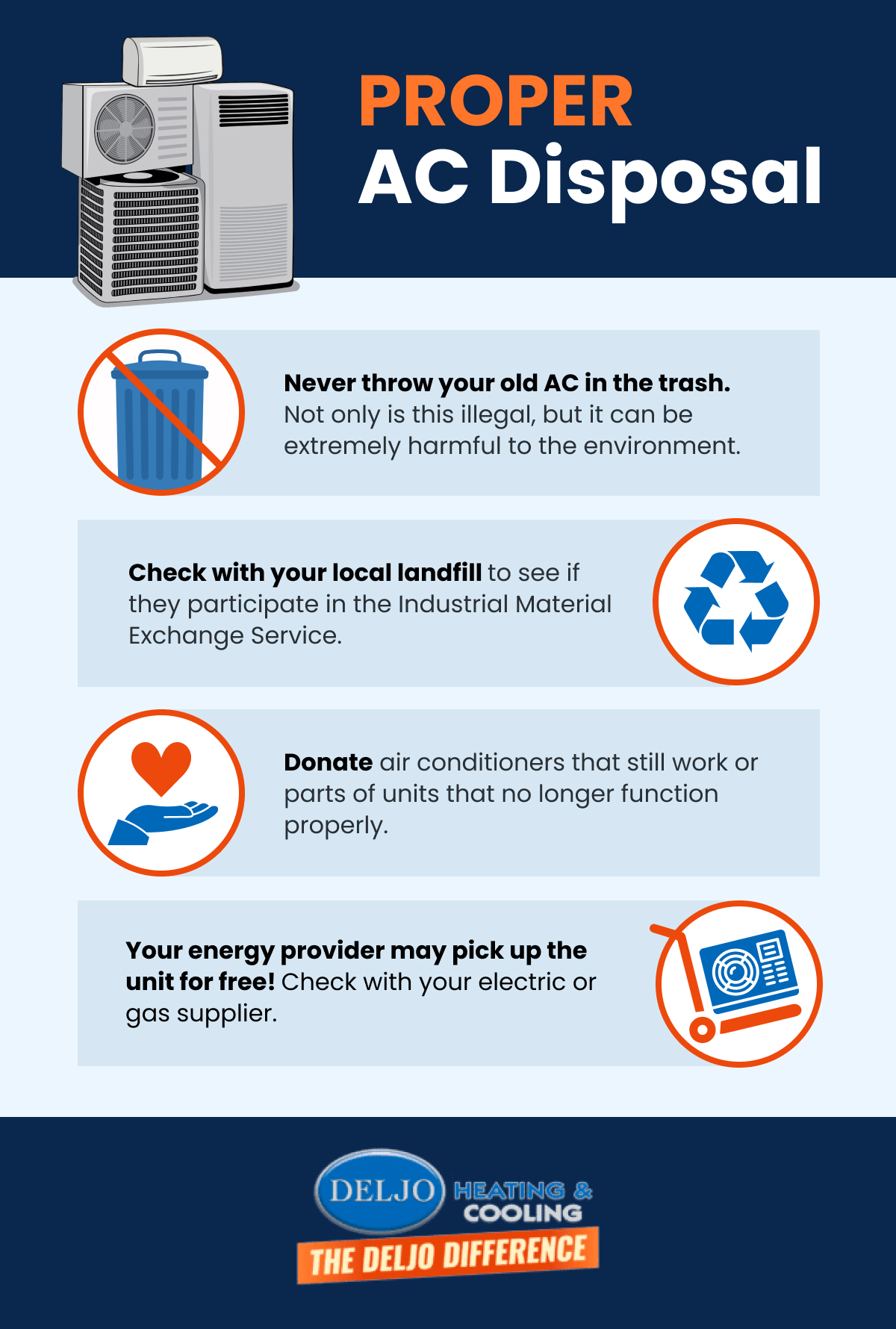
Image Source: deljoheating.com
Why Proper Disposal Matters
Throwing an old window air conditioner in the regular trash is a bad idea for several reasons. First, these units contain refrigerants, chemicals that can be harmful to the environment if released. Secondly, air conditioners are considered electronic waste, or e-waste, and contain valuable materials that can be recycled. Improper disposal contributes to landfill waste and can lead to pollution. Responsible appliance disposal ensures these harmful substances are managed safely and valuable resources are recovered.
Options for Getting Rid of Your Old Window AC
There are several ways to handle the removal of your old air conditioner, ranging from selling it to utilizing professional services.
Selling a Used Window AC
If your window air conditioner is still in working condition, selling it is a great way to give it a second life and recoup some of your investment. This is an excellent option for responsible appliance disposal and reduces waste.
Where to Sell
- Online Marketplaces: Websites like Craigslist, Facebook Marketplace, OfferUp, and eBay are popular platforms for selling used items. Be sure to take clear photos and provide an honest description of the unit’s condition.
- Local Classifieds: Check local newspapers or community bulletin boards.
- Yard Sales: If you’re decluttering other items, a working AC unit can be a good addition to your yard sale.
Tips for Selling
- Clean it Thoroughly: A clean unit is more appealing.
- Test it Before Listing: Ensure it cools effectively.
- Provide Key Information: Include the brand, model number, cooling capacity (BTUs), and any known issues.
- Be Honest: Disclose any cosmetic damage or functional quirks.
- Consider Pricing: Research similar units in your area to set a competitive price.
Donating Your Old Window AC
If selling isn’t feasible, donating a working unit is another fantastic way to contribute to your community and practice responsible appliance disposal.
Where to Donate
- Local Charities: Many charities accept working appliances. Habitat for Humanity ReStores are a common option.
- Community Centers: Some community centers or shelters may need AC units for their facilities.
- Non-Profit Organizations: Look for local organizations that help low-income families or those affected by disaster, as they might benefit from a working AC.
What to Consider Before Donating
- Confirm Acceptance: Always call ahead to ensure the organization accepts window air conditioners and if they have any specific requirements.
- Transportation: You’ll likely need to arrange transportation for the unit to the donation center.
Recycling Window AC Units
Recycling is a vital part of responsible appliance disposal for units that are no longer working or cannot be sold or donated. Recycling window AC units prevents harmful substances from entering landfills and allows for the recovery of valuable materials.
What to Know About AC Recycling
- Refrigerant Removal: The most critical step in AC recycling is the proper removal of refrigerants. These are regulated substances and must be handled by certified technicians. Attempting to remove refrigerant yourself is dangerous and illegal.
- E-Waste Regulations: Window air conditioners are classified as e-waste. Many municipalities have specific guidelines for e-waste disposal.
- Materials Recovery: AC units contain metal, plastic, and other components that can be recycled and reused.
Finding Local Appliance Recycling Centers
- Local Waste Management: Your city or county waste management department is often the best starting point. They can provide information on local recycling programs and drop-off locations.
- Appliance Retailers: Many appliance retailers offer haul-away services when you purchase a new unit. They often partner with recycling facilities.
- Dedicated Recycling Centers: Search for “local appliance recycling” or “e-waste recycling” in your area. Some centers specialize in appliance disposal.
- Junk Removal Services: Many junk removal services will also haul away and properly dispose of or recycle old appliances.
Utilizing Junk Removal Services
For a hassle-free solution, consider using professional junk removal services. These companies handle the heavy lifting and ensure proper disposal or recycling. This is a convenient option for old air conditioner removal, especially if you have other items to discard.
How Junk Removal Services Work
- Booking: You typically book a service online or by phone.
- On-Site Estimate: The service will often provide an estimate based on the volume or weight of items to be removed.
- Removal: A team will come to your home, load the appliance, and take it away.
- Disposal/Recycling: Reputable services will ensure your old air conditioner is disposed of responsibly, often prioritizing recycling window AC units.
Choosing a Junk Removal Service
- Reputation: Look for companies with good reviews and a clear commitment to responsible disposal.
- Pricing: Get quotes from a few different services to compare costs.
- Services Offered: Ensure they explicitly state they handle appliance removal and e-waste disposal.
- Eco-Friendly Practices: Ask if they prioritize recycling and environmentally sound disposal methods.
HVAC Disposal Services
If you’re upgrading a central HVAC system and have a window AC unit to dispose of simultaneously, some HVAC companies might offer disposal services or can recommend partners. HVAC disposal typically involves careful handling of refrigerants and proper component breakdown.
Step-by-Step Guide to Responsible Disposal
Let’s break down the process of getting rid of your old window air conditioner responsibly.
Step 1: Assess the Unit’s Condition
Before you do anything, take a good look at your window air conditioner.
- Is it working? Even if it’s old, a functional unit has more disposal options.
- What is its age and condition? A unit that’s less than 5-10 years old and in good repair is a prime candidate for selling or donating.
- Are there any obvious damages? Cracked casing, missing parts, or leaks are signs that it might be better suited for recycling.
Step 2: Decide on Your Disposal Method
Based on your assessment, choose the best option:
- Working Unit: Sell or Donate.
- Non-Working Unit: Recycle or use a Junk Removal Service.
Step 3: Prepare the Unit for Disposal
Regardless of the method, some preparation is usually required.
For Selling or Donating:
- Clean: Wipe down the exterior and interior. Clean or replace the air filter.
- Test: Run it for a bit to ensure it’s functioning.
- Remove Mounting Hardware: Detach any brackets or window mounting kits that came with the unit.
- Document: Take clear photos and gather any manuals or warranty information.
For Recycling or Junk Removal:
- Ensure Refrigerant is Handled: If you are taking it to a recycling center yourself, confirm they handle refrigerant removal or that it has already been properly recovered. If you’re using a service, they will manage this.
- Disconnect Power: Ensure the unit is unplugged from the wall.
- Carefully Remove from Window: This is often the trickiest part.
- Support the Unit: Have someone help you. Window AC units can be heavy and awkward.
- Loosen Screws: Unscrew any screws or brackets securing the unit to the window frame and accordion side panels.
- Slide Out: Gently slide the unit out of the window. Be prepared for it to be heavy.
- Protect the Unit and Surroundings: Lay down a blanket or drop cloth to protect the floor inside and the ground outside.
Step 4: Execute the Disposal Plan
This is where you take action based on your chosen method.
If Selling:
- List your item online, post flyers, or prepare for your yard sale.
- Arrange for pickup or shipping with the buyer.
If Donating:
- Contact the chosen charity to schedule a drop-off or inquire about pickup.
- Transport the unit to the donation center.
If Recycling:
- Drop-off at a Recycling Center:
- Check Hours: Verify the operating hours of the recycling facility.
- Transportation: You’ll need a vehicle large enough to transport the unit.
- Fees: Some centers may charge a small fee for appliance disposal.
- Haul-away by Retailer: If you purchased a new unit with haul-away service, they will typically remove the old one during the delivery of the new one.
- Junk Removal Service: Schedule your pickup and have the unit ready.
Key Considerations for Eco-Friendly Disposal
Making eco-friendly choices extends beyond just recycling.
Refrigerant Recovery
This is a critical aspect of HVAC disposal and refrigerator disposal, as these appliances often contain refrigerants like Freon (now phased out for newer, more environmentally friendly alternatives).
- Why it’s Important: Refrigerants, if released into the atmosphere, are potent greenhouse gases that contribute to climate change. Older refrigerants can also deplete the ozone layer.
- Who Handles It: Only certified technicians are legally allowed to handle and recover refrigerants. Most recycling facilities and junk removal services work with certified professionals or have them on staff to ensure this step is done correctly.
- Don’t Do it Yourself: Never attempt to discharge refrigerant from your AC unit. It’s harmful to your health and the environment, and it’s illegal.
E-Waste and Certified E-Waste Disposal
Window air conditioners are considered electronic waste due to their electrical components.
- What is E-Waste: E-waste includes discarded electrical or electronic devices.
- Why Certified Disposal Matters: Certified e-waste disposal facilities follow strict guidelines for dismantling electronics, safely removing hazardous materials (like lead, mercury, and cadmium), and recovering valuable resources (like copper, aluminum, and plastics).
- Finding Certified Facilities: Look for certifications like R2 (Responsible Recycling) or e-Stewards. Many municipalities will have a list of certified recyclers in their area.
Minimizing Landfill Waste
Every appliance that is properly recycled reduces the strain on landfills. Landfills are finite resources, and their expansion can lead to environmental degradation.
- Prioritize Reuse: Selling or donating a working unit is the most eco-friendly option as it extends the product’s lifecycle.
- Responsible Recycling: If reuse isn’t an option, ensuring the unit is taken to a facility that dismantles and recycles its components is the next best step.
Alternatives to Window AC Units
As you consider disposing of your old unit, you might also think about more energy-efficient and environmentally friendly cooling solutions for the future.
- Mini-Split Systems: These are highly efficient and offer zoned cooling.
- Portable Air Conditioners: While sometimes less efficient than window units, they offer flexibility.
- Evaporative Coolers (Swamp Coolers): These use water evaporation and are very energy-efficient in dry climates.
- Smart Thermostats: When paired with an efficient AC, these can significantly reduce energy consumption.
Common Questions About Window AC Disposal
Q: Can I just put my old window air conditioner on the curb for bulk trash pickup?
A: In most areas, no. Window air conditioners contain refrigerants and electronic components that are regulated and require special handling. Check with your local waste management services, as some may offer specific collection days for appliances, but simply placing it on the curb is generally not permitted.
Q: How do I find a local appliance recycling center?
A: You can usually find local appliance recycling centers by:
* Checking your city or county’s waste management website.
* Searching online for “appliance recycling near me” or “e-waste disposal [your city]”.
* Asking appliance retailers when you purchase a new unit, as they often have take-back programs.
Q: Is it illegal to dispose of a window air conditioner in the regular trash?
A: Yes, in many jurisdictions, it is illegal to dispose of appliances containing refrigerants in regular trash due to environmental regulations. Releasing refrigerants is harmful.
Q: What if my window air conditioner is broken? Can it still be recycled?
A: Yes, absolutely! Broken units are prime candidates for recycling. They will be taken to a facility where they can be properly dismantled, with hazardous materials removed and valuable components like metals and plastics recovered.
Q: How much does it cost to dispose of a window air conditioner?
A: Disposal costs can vary.
* Recycling Centers: Some may offer free drop-off, while others might charge a small fee (often $10-$30) to cover the costs of refrigerant recovery and processing.
* Junk Removal Services: These services typically charge based on the volume of items and may have a base fee for appliance removal, often ranging from $75 to $200 or more depending on the service and location.
* Retailer Take-Back: If purchasing a new unit, haul-away fees from retailers can range from $50 to $150.
Q: Do I need to worry about refrigerant if I’m just giving it away?
A: If you are selling or donating a working unit, the refrigerant is still contained within the sealed system. The responsibility for proper refrigerant handling shifts to the new owner or the eventual recycler when the unit is no longer functional. However, if the unit is damaged and you suspect a leak, it’s best to have it professionally assessed before giving it away.
Q: What’s the difference between recycling and proper disposal for an AC unit?
A: “Proper disposal” is an umbrella term that includes all responsible methods. “Recycling” specifically refers to the process of breaking down the unit into its constituent materials (metals, plastics, etc.) so they can be reprocessed into new products. For an AC unit, proper disposal almost always involves a recycling component after safe refrigerant removal.
By following these guidelines, you can ensure your old window air conditioner is disposed of safely, responsibly, and in an eco-friendly manner, protecting both your health and the environment.

My name is Carlos Gadd, and I am the creator of AirPurityGuide.com.. With a passion for footwear, I share my experiences, insights, and expertise about shoes. Through my blog, I aim to guide readers in making informed decisions, finding the perfect pair, and enhancing their footwear knowledge. Join me on this journey to explore everything about shoes!