
The most common question when looking at air conditioners is: How many BTUs are in a ton of AC? A ton of air conditioning is equivalent to 12,000 BTUs.
This simple conversion is the cornerstone of understanding your air conditioner’s power. But what does it really mean, and why is this measurement so crucial for keeping your home comfortable? Let’s dive deep into the world of BTUs and tons, exploring everything from basic BTU conversion to complex HVAC sizing.
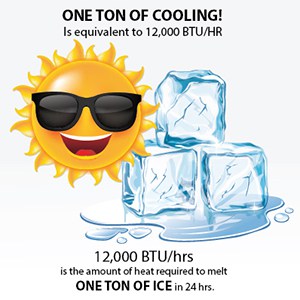
Image Source: www.acwarehouse.com
Deciphering the Language of Cooling: BTUs and Tons
When you’re shopping for an air conditioner, you’ll see two primary measurements for its cooling power: BTUs (British Thermal Units) and Tons. These might seem like technical jargon, but they are essential for ensuring you choose the right unit for your needs.
What is a BTU?
A British Thermal Unit (BTU) is a standard unit of energy. In the context of air conditioning, it measures the amount of heat an air conditioner can remove from a space in one hour. Think of it as the “muscle” of your AC unit. The higher the BTU rating, the more heat it can take out of the air, and therefore, the more effectively it can cool your room or home.
Key aspects of BTUs:
- Energy Measurement: It’s a measure of energy, specifically the energy needed to raise the temperature of one pound of water by one degree Fahrenheit.
- Heat Removal: In AC terms, it quantifies how much heat the unit expels from the indoor air.
- Direct Indicator of Cooling Power: A higher BTU number means a more powerful cooling unit.
What is a Ton of Cooling?
A “ton” of cooling is a unit commonly used in the HVAC industry. It’s not about the weight of the air conditioner, but rather its cooling capacity. Historically, the term “ton” originated from the amount of ice required to cool a space. One ton of cooling is defined as the amount of heat that needs to be removed to freeze one US ton (2,000 pounds) of water at 32°F in 24 hours.
Key aspects of a Ton:
- Standardized Measurement: It provides a standardized way to compare the cooling power of different AC units.
- Industry Commonality: Widely used for central air conditioning systems and larger cooling appliances.
- Direct Relationship to BTUs: Crucially, one ton of cooling is equivalent to 12,000 BTUs per hour.
The Crucial BTU Conversion: Ton to BTU Explained
As mentioned, the fundamental BTU conversion you need to know is that one ton of cooling equals 12,000 BTUs per hour. This is the industry standard and the most important piece of information when translating between these two units.
This means:
- A 1-ton AC unit has a cooling capacity of 12,000 BTUs per hour.
- A 2-ton AC unit has a cooling capacity of 24,000 BTUs per hour (2 tons x 12,000 BTUs/ton).
- A 3-ton AC unit has a cooling capacity of 36,000 BTUs per hour (3 tons x 12,000 BTUs/ton).
And so on. This linear relationship makes it easy to calculate the BTU output of any air conditioner if you know its tonnage.
Why This Conversion Matters for Your Home
Knowing the ton to BTU conversion is vital for several reasons, primarily related to HVAC sizing and ensuring optimal performance.
- Choosing the Right Size Unit: If a room or home is too small for a powerful unit, it can over-cool the space quickly and cycle on and off frequently. This is inefficient, leads to uneven temperatures, and can cause humidity problems. Conversely, an undersized unit will struggle to cool effectively, run constantly, and wear out faster.
- Energy Efficiency: An appropriately sized AC unit operates more efficiently. It reaches the desired temperature without excessive cycling, saving energy and reducing utility bills.
- Comfort and Humidity Control: Proper air conditioner capacity not only cools the air but also removes humidity. Oversized units don’t run long enough to dehumidify effectively, leaving your home feeling clammy.
- Preventing Premature Wear: An AC unit that is constantly running on the brink of its capacity will experience accelerated wear and tear, leading to costly repairs and a shorter lifespan.
Fathoming AC Tonnage: More Than Just a Number
AC tonnage is a critical specification for any air conditioning system. It’s a direct indicator of the unit’s cooling capacity, but it’s not a one-size-fits-all measurement. The ideal tonnage for your space depends on various factors that contribute to the overall heat load calculation.
The Factors Influencing Heat Load Calculation
A proper heat load calculation is essential for determining the correct AC tonnage. This calculation considers the amount of heat entering and being generated within a space. Ignoring this step is a common mistake that leads to discomfort and inefficiency.
Key factors in a heat load calculation include:
- Square Footage: The most basic factor. Larger areas require more cooling.
- Ceiling Height: Higher ceilings mean a larger volume of air to cool.
- Insulation Levels: Poorly insulated walls, attics, and windows allow more heat to enter.
- Window Size, Type, and Orientation: South-facing windows, especially those with single-pane glass, contribute significantly to heat gain.
- Climate Zone: The average temperature and humidity levels in your region play a huge role.
- Number of Occupants: People generate body heat.
- Heat-Generating Appliances: Computers, televisions, ovens, and lighting all add to the heat load.
- Sun Exposure: How much direct sunlight enters the space.
- Air Leakage: Gaps and cracks in the building envelope allow conditioned air to escape and unconditioned air to enter.
- Ductwork: The condition and insulation of your ductwork impact efficiency. Leaky ducts can lose a significant amount of cooled air.
Common AC Tonnage Sizes and Their BTU Equivalents
Understanding the typical sizes of residential air conditioners can help visualize the BTU per hour output.
| AC Unit Size (Tons) | BTU per Hour (Approximate) | Typical Applications |
|---|---|---|
| 1 Ton | 12,000 BTUs | Small rooms, studio apartments, single small bedrooms |
| 1.5 Tons | 18,000 BTUs | Medium-sized rooms, smaller homes, large bedrooms |
| 2 Tons | 24,000 BTUs | Medium-sized homes, larger living areas |
| 2.5 Tons | 30,000 BTUs | Average-sized homes, multiple interconnected rooms |
| 3 Tons | 36,000 BTUs | Larger homes, homes with significant heat load |
| 3.5 Tons | 42,000 BTUs | Larger homes, homes with high ceilings or poor insulation |
| 4 Tons | 48,000 BTUs | Very large homes, homes in hot climates |
| 5 Tons | 60,000 BTUs | Entire large homes, commercial spaces |
Note: These are general guidelines. The exact BTU output can vary slightly between manufacturers and models.
Why “Oversizing” is a Problem
Many people believe that a bigger AC unit is always better. This is a common misconception. Oversizing an AC unit, even with a correct initial ton to BTU conversion, can lead to several issues:
- Short Cycling: The unit cools the space too quickly and shuts off before it has adequately dehumidified the air. This results in a cool but damp and uncomfortable environment.
- Increased Energy Consumption: While it might seem counterintuitive, short-cycling units can be less energy-efficient because the compressor uses the most energy when it starts up.
- Uneven Temperatures: The space may feel cold in some areas and still warm in others as the unit cycles on and off rapidly.
- Reduced Lifespan: Frequent starts and stops put more strain on the compressor and other components, potentially shortening the AC’s operational life.
Why “Undersizing” is Also a Problem
Conversely, an undersized unit will struggle to keep up with the heat load calculation.
- Inability to Cool: The unit may run constantly but never reach the desired temperature, especially on hot days.
- Excessive Wear and Tear: The continuous running will put a significant strain on the system, leading to premature failure.
- Higher Energy Bills: While it might seem like a unit constantly running would use a lot of energy, it’s often less efficient than a correctly sized unit that cycles appropriately.
- Poor Dehumidification: Similar to oversizing, an undersized unit running constantly might not have enough “off” time to effectively remove humidity.
Comprehending Air Conditioner Capacity: Beyond BTUs and Tons
While BTUs and tons are the primary metrics for air conditioner capacity, other factors contribute to how effectively an AC unit cools your home.
SEER Ratings: Efficiency Matters
SEER (Seasonal Energy Efficiency Ratio) is a measure of how energy-efficient an air conditioner is over an entire cooling season. A higher SEER rating means the unit is more efficient and will cost less to operate.
- Higher SEER = More Efficient Cooling: A unit with a higher SEER rating can provide the same amount of cooling (measured in BTUs) using less electricity.
- Government Standards: Minimum SEER ratings are set by the government, and these standards have increased over time.
- Impact on Running Costs: While a higher SEER unit might have a higher upfront cost, the long-term energy savings can often justify the investment.
When considering HVAC sizing, always look at both the tonnage (cooling power) and the SEER rating (energy efficiency). You want a unit that provides adequate cooling power without wasting energy.
EER Ratings: Instant Cooling Power
EER (Energy Efficiency Ratio) measures the cooling efficiency of an air conditioner at a specific outdoor temperature (typically 95°F) and indoor temperature (typically 80°F). It’s a snapshot of efficiency under peak conditions.
- EER vs. SEER: SEER is a seasonal average, while EER is a point-in-time measurement.
- Good for Specific Climates: EER can be a useful metric in very hot climates where units are consistently operating under high-temperature conditions.
The Role of Other Factors in Cooling Performance
- Compressor Type: Inverter-driven compressors are more efficient than single-stage or two-stage compressors because they can adjust their speed to match the cooling demand, leading to more consistent temperatures and lower energy use.
- Refrigerant Type: Modern refrigerants are designed to be more environmentally friendly and can also contribute to efficiency.
- Fan Speed and Airflow: Proper airflow is crucial for distributing cool air throughout your home.
Practical Steps for Choosing the Right AC Size
Now that you grasp the relationship between BTUs and tons, and the importance of a thorough heat load calculation, here’s how to approach selecting the right air conditioner capacity.
Step 1: Consult a Professional HVAC Technician
The most accurate way to determine the correct AC tonnage for your home is to have a qualified HVAC professional perform a Manual J load calculation. This is the industry-standard method for sizing HVAC equipment, and it takes into account all the variables mentioned earlier.
- Why DIY Calculations Can Be Flawed: While online calculators can offer a rough estimate, they rarely account for the unique characteristics of your home, insulation, window types, and local climate as thoroughly as a professional.
Step 2: Understand Your Home’s Specific Needs
Even with professional advice, it’s helpful to be aware of your home’s characteristics:
- Age of the Home: Older homes may have less efficient insulation.
- Recent Renovations: Did you add insulation or upgrade windows? This can change your cooling needs.
- Occupancy Patterns: Do you have many people in the home regularly?
- Lifestyle: Do you frequently use heat-generating appliances in living areas?
Step 3: Don’t Just Focus on BTUs and Tons
Remember to factor in efficiency ratings like SEER. A slightly higher BTU unit with a much higher SEER rating might be a more cost-effective and comfortable choice in the long run than a lower-efficiency, higher-tonnage unit.
Step 4: Consider Zoning
For larger homes or homes with varying occupancy and usage patterns, a zoned HVAC system might be a more efficient solution. Zoning allows you to control the temperature in different areas of your home independently, reducing energy waste in unoccupied spaces.
Frequently Asked Questions (FAQ)
Q1: How do I convert BTUs to Tons for my AC?
A1: The standard conversion is simple: divide the total BTUs per hour by 12,000. For example, if your AC unit is rated at 24,000 BTUs per hour, it is a 2-ton unit (24,000 / 12,000 = 2).
Q2: Can I use a simple online calculator for AC sizing?
A2: Online calculators can provide a rough estimate, but they are not a substitute for a professional heat load calculation performed by an HVAC technician. These calculators often don’t account for critical factors like insulation, window quality, and specific home layout.
Q3: What happens if my AC is too big (oversized)?
A3: An oversized AC unit will cool the space too quickly and shut off before it can effectively remove humidity, leading to a cool but clammy feeling. It also cycles on and off more frequently, which is inefficient and puts more wear on the system.
Q4: What happens if my AC is too small (undersized)?
A4: An undersized AC unit will run constantly without being able to cool the space to the desired temperature, especially during hot weather. This leads to discomfort, wasted energy, and premature wear on the equipment.
Q5: Is a 3-ton AC the same as 36,000 BTUs?
A5: Yes, using the standard BTU conversion, a 3-ton AC unit provides 36,000 BTUs per hour of cooling capacity (3 tons * 12,000 BTUs/ton = 36,000 BTUs).
Q6: How many BTUs do I need for a 1500 sq ft house?
A6: This depends on many factors beyond just square footage. A proper heat load calculation is necessary. However, as a very general guideline, a 1500 sq ft home might require a 2.5 to 3-ton AC unit.
Q7: Does the SEER rating affect the BTU output of an AC?
A7: No, the SEER rating does not change the BTU output (cooling capacity) of the unit. It measures how efficiently the unit delivers that cooling capacity. A higher SEER unit uses less electricity to achieve the same amount of cooling as a lower SEER unit.
Q8: What is a “refrigeration ton”?
A8: A “refrigeration ton” is the same as a “ton of cooling” in air conditioning. It’s an imperial unit of cooling capacity, equivalent to 12,000 BTUs per hour.
In conclusion, the relationship between BTUs and tons is a fundamental aspect of selecting and operating an air conditioning system. By understanding the BTU conversion, the importance of a precise heat load calculation, and the nuances of AC tonnage, you can ensure your home remains a comfortable and energy-efficient sanctuary. Always prioritize a professional assessment for accurate HVAC sizing to achieve optimal cooling capacity.

My name is Carlos Gadd, and I am the creator of AirPurityGuide.com.. With a passion for footwear, I share my experiences, insights, and expertise about shoes. Through my blog, I aim to guide readers in making informed decisions, finding the perfect pair, and enhancing their footwear knowledge. Join me on this journey to explore everything about shoes!