
A window air conditioner typically uses between 5 and 15 amps, depending on its cooling capacity and efficiency. This is a crucial piece of information when setting up your cooling system to ensure your home’s electrical system can handle the load.
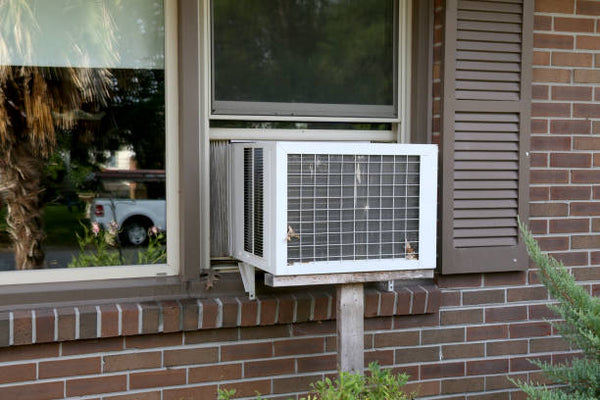
Image Source: cdn.shopify.com
Deciphering Window AC Amperage Needs
Choosing the right window air conditioner involves more than just looking at the British Thermal Units (BTUs) for cooling power. You also need to consider its electrical needs, specifically its window AC amperage draw. This number tells you how much electrical current the unit requires to operate. Getting this wrong can lead to tripped breakers, damaged appliances, or even fire hazards. Let’s dive deep into what this means for your home.
The Core of Window Air Conditioner Current Draw
At its heart, a window air conditioner is an electrical appliance that converts electricity into cool air. The window air conditioner current draw refers to the amount of electrical current, measured in amperes (amps), that the unit pulls from the electrical outlet when it’s running. This draw can fluctuate slightly based on the unit’s operational cycle (e.g., when the compressor kicks on) and the ambient temperature.
Fathoming Window AC Power Consumption
When we talk about window AC power consumption, we’re really looking at how much electrical energy the unit uses over time. This is directly related to its amperage. Higher amperage generally means higher power consumption. The power is typically measured in watts (W) or kilowatts (kW). The relationship is straightforward: Power (Watts) = Voltage (Volts) × Current (Amps). For most U.S. household circuits, the voltage is 120 volts.
Window Air Conditioner Wattage Explained
The window air conditioner wattage is the rate at which the unit uses energy. A 5-amp unit running on a 120-volt circuit will use approximately 600 watts (5 A × 120 V = 600 W). A 15-amp unit on the same circuit would use around 1800 watts (15 A × 120 V = 1800 W). Knowing the wattage helps you calculate how much electricity the unit will consume and, consequently, how much it might add to your electricity bill.
How Much Electricity Does a Window AC Use?
The amount of electricity a window AC uses is a combination of its wattage and how long it runs. If you have a 10-amp unit (approx. 1200 watts) running for 8 hours a day, it will consume about 9.6 kilowatt-hours (kWh) per day (1200 W × 8 hours / 1000 = 9.6 kWh). Your electricity bill is usually calculated based on kWh usage.
Key Electrical Specifications to Look For
When you’re shopping for a window AC, you’ll find various electrical specifications on the product label or in the manual. These are essential for ensuring compatibility and safe operation:
- Amperage Rating: This is the maximum current the unit is designed to draw.
- Voltage: Standard household voltage in the US is 120V.
- Wattage: The power the unit consumes.
- Plug Type: This indicates the required outlet.
Factors Influencing Window AC Amperage
Several factors determine the specific window air conditioner amp rating of a unit. Understanding these helps you make an informed choice.
Cooling Capacity (BTUs)
The most significant factor is the cooling capacity, measured in BTUs (British Thermal Units). A higher BTU rating means the air conditioner can cool a larger space or cool a smaller space more quickly. Larger units with higher BTU ratings generally require more power and thus draw more amps.
- Small Room Units (5,000-6,000 BTU): These are typically the most energy-efficient and have the lowest amperage draw, often in the 5-7 amp range.
- Medium Room Units (8,000-10,000 BTU): These units draw more power, commonly falling between 7-10 amps.
- Larger Room Units (12,000-15,000+ BTU): These powerful units can draw 10-15 amps or even more, especially older or less efficient models.
Energy Efficiency (EER and SEER)
Energy efficiency ratings, such as the Energy Efficiency Ratio (EER) and Seasonal Energy Efficiency Ratio (SEER), play a crucial role. A higher EER or SEER rating indicates that the unit uses less electricity to produce the same amount of cooling. Therefore, a more efficient unit with the same BTU rating will likely have a lower amperage draw.
- EER: Measures efficiency at a single, peak operating temperature.
- SEER: Measures efficiency over an entire cooling season, giving a more realistic picture.
Compressor Type and Age
The type and age of the compressor can also affect amperage. Modern compressors, especially those with variable speed technology, are often more efficient and can have a lower or more controlled amperage draw compared to older, single-speed compressors. Older units might draw more amps due to wear and tear or less advanced technology.
Ambient Temperature and Settings
The actual window air conditioner current draw can fluctuate. When the compressor first starts, there’s an initial surge in amperage. During operation, the unit cycles on and off to maintain the set temperature. On hotter days, or if the unit is struggling to cool a space, the compressor will run more frequently and for longer periods, leading to higher overall electricity consumption and a sustained higher amperage draw.
Window AC Electrical Requirements and Circuit Breaker Size
Proper electrical setup is paramount for safe and effective operation. This involves understanding your window AC electrical requirements and the correct window AC circuit breaker size.
The Importance of Dedicated Circuits
For most window air conditioners, especially those 8,000 BTU and larger, it’s highly recommended to use a dedicated electrical circuit. This means the air conditioner is the only appliance on that particular circuit.
- Why a Dedicated Circuit?
- Prevents overloading of the circuit.
- Avoids tripping the circuit breaker when other appliances are used simultaneously.
- Ensures the air conditioner receives a stable power supply.
Determining the Right Circuit Breaker Size
The window AC circuit breaker size should be slightly larger than the unit’s maximum amperage draw. This is to prevent nuisance tripping due to the initial surge when the compressor starts, but it also needs to be small enough to protect the circuit and the appliance from overcurrent.
A general rule of thumb is to use a circuit breaker that is 25% larger than the unit’s maximum amperage draw.
- Example: If a window AC has a maximum amperage draw of 10 amps, a 15-amp circuit breaker would be appropriate (10 amps × 1.25 = 12.5 amps; the next standard breaker size up is 15 amps).
- Important Note: Always consult the air conditioner’s manual for specific recommended breaker sizes.
Understanding Window AC Plug Types
The window AC plug type is a visual indicator of the circuit requirements. Plugs are designed with specific configurations of prongs to ensure they can only be plugged into compatible outlets, which are connected to the appropriate circuits.
Common plug types for 120-volt window AC units include:
- NEMA 5-15P: This is the standard three-prong plug found on most household appliances. It is rated for 15 amps. If your AC unit has this plug, it likely draws 10-12 amps or less, and can often be used on a general-purpose 15-amp circuit (though a dedicated circuit is still preferred).
- NEMA 5-20P: This plug has one of its vertical prongs bent at a 90-degree angle. It is rated for 20 amps and requires a NEMA 5-20R receptacle. Units with this plug typically draw between 12-16 amps and absolutely require a dedicated 20-amp circuit.
Table: Common Window AC Plug Types and Circuit Needs
| Plug Type | Amperage Rating | Outlet Requirement | Typical AC Amperage Draw | Circuit Recommendation |
|---|---|---|---|---|
| NEMA 5-15P | 15 Amps | Standard 3-prong | 5 – 12 Amps | Dedicated 15-Amp Circuit (Best) |
| NEMA 5-20P | 20 Amps | 90-degree prong | 12 – 16 Amps | Dedicated 20-Amp Circuit |
Never try to force a plug into an incompatible outlet or use an adapter to bypass the intended plug configuration. This is a serious safety hazard.
Calculating Your Window AC’s Power Usage
Knowing how to calculate your unit’s power usage can help you manage your energy costs and identify the best window AC amp usage for your needs.
Step-by-Step Calculation
- Find the Amperage Rating: Check the unit’s nameplate or manual. Let’s say it’s 9 amps.
- Find the Voltage: For most home units, it’s 120 volts.
- Calculate Wattage: Amps × Volts = Watts.
- 9 Amps × 120 Volts = 1080 Watts (or 1.08 kW)
- Estimate Daily Usage: Decide how many hours per day the AC will run. Let’s say 8 hours.
- Calculate Daily kWh: (Watts / 1000) × Hours = kWh.
- (1080 Watts / 1000) × 8 Hours = 8.64 kWh per day.
- Calculate Monthly kWh: Daily kWh × 30 Days = Monthly kWh.
- 8.64 kWh × 30 Days = 259.2 kWh per month.
- Estimate Monthly Cost: Monthly kWh × Your Electricity Rate ($/kWh) = Monthly Cost.
- If your rate is $0.15/kWh, then 259.2 kWh × $0.15/kWh = $38.88 per month.
Interpreting Your Electricity Bill
Your electricity bill will typically show your total kWh usage for the billing period. By comparing the estimated usage of your window AC to your total bill, you can gauge its impact on your overall consumption.
Tips for Optimizing Window AC Amperage and Usage
Reducing your window AC’s amperage draw and overall energy consumption can save you money and lessen the strain on your home’s electrical system.
Choosing the Right Size Unit
One of the most effective ways to manage amperage is to select the correct size unit for your space. An oversized unit will cycle on and off frequently, which can be inefficient and put more stress on the compressor. An undersized unit will run constantly and still struggle to cool the room.
- Room Size Guide (Approximate BTU Needs):
- 100-150 sq ft: 5,000 BTU
- 150-250 sq ft: 6,000 BTU
- 250-350 sq ft: 8,000 BTU
- 350-450 sq ft: 10,000 BTU
- 450-550 sq ft: 12,000 BTU
- 550-700 sq ft: 14,000 BTU
- 700-1000 sq ft: 18,000 BTU
Regular Maintenance
Proper maintenance ensures your unit runs efficiently, which can help minimize its amperage draw.
- Clean or Replace Air Filters: Dirty filters restrict airflow, forcing the unit to work harder. Clean them monthly during the cooling season.
- Check Condenser and Evaporator Coils: Keep these clean and free of debris. Dirty coils reduce heat transfer efficiency.
- Ensure Proper Installation: Make sure the unit is sealed well in the window to prevent cool air from escaping and hot air from entering.
Smart Usage Habits
Simple changes in how you use your AC can make a difference.
- Use a Programmable Thermostat or Timer: Set the AC to turn off when you’re not home or to a higher temperature.
- Seal Air Leaks: Drafts around windows and doors can significantly increase AC workload.
- Use Fans: Ceiling or portable fans can help circulate cool air, allowing you to set the thermostat a few degrees higher.
- Block Sunlight: Use curtains, blinds, or awnings to keep direct sunlight out of the room during the hottest parts of the day.
Frequently Asked Questions (FAQ)
Here are some common questions about window AC amps:
Q1: Can I plug a window AC into a regular outlet?
Generally, small window AC units (typically 5,000-8,000 BTU) that use a standard NEMA 5-15P plug (the regular three-prong plug) can be plugged into a standard 15-amp household outlet. However, it is always best practice to have a dedicated circuit for any air conditioner, especially if you plan to use other appliances on the same circuit. Larger units or those with a NEMA 5-20P plug (with the bent prong) require a 20-amp outlet and a dedicated 20-amp circuit. Always check the unit’s plug type and the manufacturer’s recommendations.
Q2: What happens if I plug my window AC into an overloaded circuit?
Plugging a window AC into an overloaded circuit will likely cause the circuit breaker to trip, cutting off power to that circuit. If the breaker doesn’t trip, the wiring could overheat, posing a significant fire risk. It can also damage the air conditioner itself.
Q3: How do I know what the amperage rating of my window AC is?
The amperage rating is usually listed on the unit’s nameplate, which is typically found on the side or back of the air conditioner. You can also find this information in the product manual.
Q4: Does a window AC use more amps when it’s hotter outside?
Yes, a window AC will generally draw more current (amps) when it’s hotter outside. This is because the compressor has to work harder and run for longer periods to maintain the desired temperature in the room.
Q5: What is the average amp draw for a 10,000 BTU window AC?
A 10,000 BTU window AC typically draws between 7 and 10 amps. However, this can vary depending on the unit’s energy efficiency rating. More efficient models will be at the lower end of this range.
Q6: Can I run my window AC and a microwave on the same circuit?
It depends on the amperage ratings of both appliances and the rating of the circuit breaker. A typical microwave can draw 8-12 amps, and a 10,000 BTU AC might draw 7-10 amps. If you try to run both simultaneously on a 15-amp circuit, it’s very likely the breaker will trip. It’s best to avoid running high-draw appliances together, especially on circuits that are not dedicated.
By paying close attention to the window AC amperage, window air conditioner current draw, window AC power consumption, and window air conditioner wattage, you can ensure your unit operates safely, efficiently, and without costing you a fortune in electricity bills. Always prioritize safety and consult with a qualified electrician if you have any doubts about your home’s electrical system.

My name is Carlos Gadd, and I am the creator of AirPurityGuide.com.. With a passion for footwear, I share my experiences, insights, and expertise about shoes. Through my blog, I aim to guide readers in making informed decisions, finding the perfect pair, and enhancing their footwear knowledge. Join me on this journey to explore everything about shoes!