
The AC compressor lifespan is a crucial factor in determining the overall air conditioner service life. Typically, an AC compressor can last anywhere from 10 to 20 years, although this can vary significantly based on several factors. Understanding these elements can help you maximize your HVAC compressor life expectancy and avoid premature typical AC compressor replacement time.
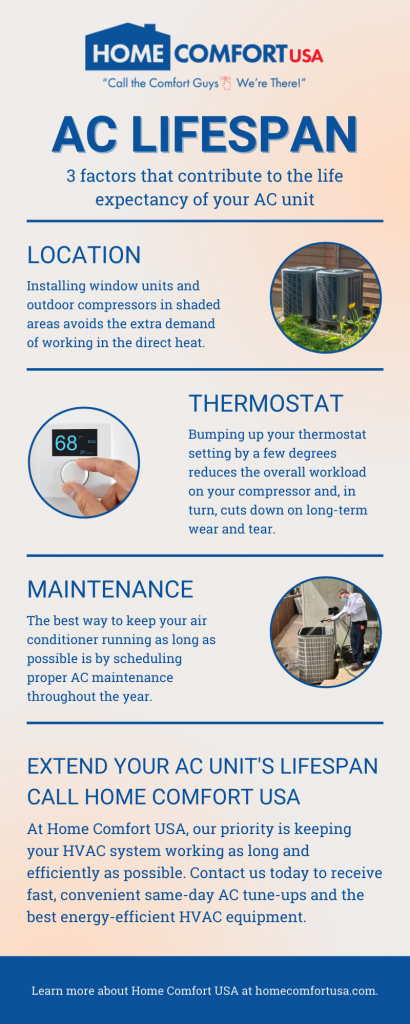
Image Source: www.homecomfortusa.com
What is an AC Compressor?
The AC compressor is often called the “heart” of your air conditioning system. It’s a vital component responsible for circulating refrigerant throughout the AC unit. This circulation is what cools your home. The compressor takes low-pressure refrigerant gas and compresses it into high-pressure, high-temperature gas. This hot gas then moves to the condenser coil, where it releases heat to the outside air. As it releases heat, it condenses into a high-pressure liquid. This liquid then travels through the system, gets cooled, and evaporates, absorbing heat from your indoor air.
How Long Does an AC Unit Last?
While the compressor is a key part, the how long does an AC unit last question depends on the lifespan of all its components. Generally, a well-maintained central air conditioning system can last between 15 to 20 years. However, the compressor is often one of the first major components to fail, and its lifespan directly impacts the unit’s overall life.
Average Lifespan of Central Air Compressor
The average lifespan of central air compressor is quite consistent with the general AC compressor lifespan, falling within the 10 to 20-year range. Several factors influence this, and we’ll delve into those shortly. It’s important to remember that this is an average; some compressors might fail sooner, while others can last even longer with excellent care.
Factors Affecting AC Compressor Lifespan
Many elements contribute to how long your AC compressor will serve you reliably. These factors range from how it’s used to how well it’s cared for.
Installation Quality
The initial installation of your AC system plays a massive role in its future performance and lifespan.
- Proper Sizing: An oversized or undersized compressor will work harder than it should. An undersized unit will struggle to cool your home, leading to constant running and overheating. An oversized unit will cycle on and off too frequently, causing stress on the compressor.
- Correct Refrigerant Charge: Too much or too little refrigerant can strain the compressor. An improper charge can lead to the compressor running hotter, reducing its efficiency and lifespan.
- Secure Mounting: The compressor needs to be securely mounted to prevent vibrations that can cause internal damage over time.
- Adequate Ventilation: The outdoor unit, which houses the compressor, needs proper airflow. Obstructions like overgrown shrubs or debris can restrict ventilation, causing the compressor to overheat.
Air Conditioning Compressor Maintenance
Regular air conditioning compressor maintenance is arguably the most significant factor in extending its life. Think of it like servicing your car; consistent upkeep prevents bigger problems.
- Regular Filter Changes: Dirty air filters restrict airflow to the evaporator coil. This makes the entire system, including the compressor, work harder to cool your home. Clogged filters can lead to coil freezing, which can damage the compressor. Aim to change or clean your air filters every 1-3 months, depending on your home environment (pets, allergies, etc.).
- Annual Tune-Ups: Schedule a professional HVAC technician to inspect and service your AC unit annually. They will:
- Clean the condenser and evaporator coils.
- Check refrigerant levels.
- Inspect electrical connections.
- Lubricate moving parts (where applicable).
- Test the thermostat and controls.
- Check for any signs of wear or damage.
- Keep the Outdoor Unit Clean: Ensure the area around your outdoor condenser unit is clear of debris, leaves, and plant growth. This allows for proper airflow, which is crucial for heat dissipation. Gently rinse the fins of the condenser unit with a hose periodically to remove accumulated dirt and dust.
Operating Conditions and Usage Patterns
How you use your AC unit also impacts its compressor’s longevity.
- Thermostat Settings: Setting your thermostat too low for extended periods can cause the system to run continuously, putting extra wear on the compressor. Frequent, drastic temperature changes also stress the system.
- Climate: Homes in extremely hot climates that rely heavily on AC for many months of the year will naturally see more wear and tear on their compressors compared to those in milder climates.
- System Age: As AC units age, their components, including the compressor, naturally degrade. Older systems may be less efficient and more prone to issues.
Environmental Factors
External elements can also influence the compressor’s lifespan.
- Power Surges and Fluctuations: Unstable electrical power can damage sensitive electronic components within the compressor. Installing a surge protector can offer some protection.
- Corrosion: If your home is in a coastal area, salt air can accelerate corrosion of the outdoor unit’s components, including the compressor. Regular cleaning and protective coatings can help mitigate this.
- Weather Exposure: While designed for outdoor use, extreme weather conditions can take a toll. Protecting the unit from direct impacts or excessive moisture can be beneficial.
Signs of a Failing AC Compressor
Knowing the signs of a failing AC compressor can help you address issues before a complete breakdown occurs. Early detection often means less costly repairs. Here are common indicators:
Unusual Noises
- Grinding or Scraping: These noises often indicate that internal metal parts are rubbing together, possibly due to a lack of lubrication or worn bearings.
- Clicking: Persistent clicking sounds, especially when the unit tries to start, could point to electrical problems or a failing starting capacitor.
- Buzzing or Humming: While some humming is normal, a loud or unusual buzzing sound might suggest an electrical issue or an overworked compressor.
- Screeching or Squealing: This could be a sign of motor problems or issues with the compressor’s internal components.
Performance Issues
- Warm Air Blowing: If your AC is blowing warm air, it’s a strong indication that the compressor is not circulating refrigerant properly.
- Reduced Cooling: Even if it’s still cooling, a noticeable decrease in its cooling capacity means the compressor might be weakening.
- Frequent Cycling: If the unit turns on and off more frequently than usual (short-cycling), it could be struggling to maintain the set temperature or experiencing internal issues.
- Increased Humidity: A properly functioning AC also helps dehumidify your home. If you notice increased humidity levels, the compressor might not be working efficiently.
Electrical Problems
- Tripped Breaker: A compressor that is overheating or experiencing an electrical fault will draw too much power, often tripping the circuit breaker.
- Dimming Lights: If your lights dim every time the AC kicks on, it could signify the compressor is drawing a significant amount of power, potentially indicating an issue.
Visible Signs
- Leaking Oil: Refrigerant lines carry oil that lubricates the compressor. If you notice an oily residue around the outdoor unit, it could be a sign of a refrigerant leak, which can lead to compressor damage.
- Rust or Corrosion: While some surface rust is normal on outdoor units, excessive rust or corrosion, especially around the compressor itself, could indicate underlying issues.
Typical AC Compressor Replacement Time
When the inevitable happens, knowing the typical AC compressor replacement time is important for planning. Replacing a compressor is a significant repair, often costing several thousand dollars. It’s usually considered when:
- The AC compressor failure symptoms are severe and cannot be resolved with simpler repairs.
- The cost of repair approaches or exceeds 50% of the cost of a new AC unit, especially for older systems.
- The compressor has failed completely, and the unit is no longer functional.
It’s also worth considering replacement if your AC unit is nearing the end of its air conditioner service life (15-20 years) and other components are also showing signs of wear. In such cases, investing in a new, more energy-efficient system might be a better long-term financial decision.
Compressor Longevity Factors: A Summary Table
To help visualize the key aspects influencing your compressor’s life, here’s a table:
| Factor | Impact on Lifespan | How to Maximize |
|---|---|---|
| Installation Quality | Significant positive or negative impact | Ensure professional installation, proper sizing, and correct refrigerant charge. |
| Regular Maintenance | Crucial for extending lifespan | Annual tune-ups, clean filters, keep outdoor unit clear. |
| Operating Conditions | Constant high demand shortens life | Avoid extreme thermostat settings, ensure good ventilation. |
| Climate | Hot climates lead to more wear | Proper maintenance is even more critical in hot regions. |
| System Age | Older units are naturally more prone to failure | Proactive maintenance, consider replacement when nearing end of life. |
| Power Quality | Surges can cause damage | Install surge protectors. |
| Environmental Exposure | Corrosion, weather can degrade components | Regular cleaning, consider protective measures in harsh environments. |
HVAC Compressor Life Expectancy: What to Expect
When discussing HVAC compressor life expectancy, it’s about setting realistic expectations. While 10-20 years is common, achieving the higher end of this spectrum requires diligent care. An average lifespan is just that – an average. Some units might fail at 8 years, while others could push 22 years. The goal of proactive maintenance and informed usage is to push your compressor towards the upper limit of its potential lifespan.
Troubleshooting Common AC Compressor Issues
Sometimes, a compressor might show AC compressor failure symptoms that aren’t immediately indicative of total failure.
Overheating Compressor
If your compressor is overheating, it might shut itself off to prevent damage. This can be caused by:
- Dirty Condenser Coils: Restricts airflow, preventing heat dissipation.
- Low Refrigerant: Causes the compressor to work harder.
- Blocked Airflow: Obstructions around the outdoor unit.
- Electrical Issues: Faulty capacitor or wiring.
Solution: Clean coils, check refrigerant levels, clear obstructions, and have an HVAC technician inspect electrical components.
Compressor Not Starting
This is a common and frustrating issue. Potential causes include:
- Tripped Circuit Breaker: Simple reset might solve it, but investigate why it tripped.
- Faulty Start Capacitor: The capacitor helps give the compressor the initial “kick” to start.
- Bad Contactor: A relay that controls power to the compressor.
- Internal Compressor Damage: The worst-case scenario.
Solution: Check the breaker. If it continues, professional diagnosis is required to test the capacitor, contactor, and compressor itself.
Strange Noises
As mentioned earlier, noises are a significant warning sign.
- Grinding/Scraping: Often points to internal mechanical wear.
- Clicking: Could be electrical or a sign the motor is failing to engage.
- Buzzing: Electrical issues or strain.
Solution: Immediately consult a technician. These noises often indicate internal damage that can worsen quickly.
When to Consider AC Compressor Replacement
Deciding whether to repair or replace an AC compressor is a significant financial decision. Here are key considerations that help determine the typical AC compressor replacement time:
Age of the Unit
If your AC unit is already 15 years or older, a major repair like a compressor replacement might not be the most economical choice. The remaining components of the system are also likely nearing the end of their air conditioner service life, and you could face other costly repairs soon. A new, energy-efficient unit can offer better performance and lower utility bills, potentially offsetting the upfront cost.
Cost of Repair vs. Replacement
Compressor replacement is one of the most expensive AC repairs. Obtain a detailed quote from your HVAC technician. If the repair cost is more than 50% of the price of a new system, replacement is often the more sensible option. Consider the warranty on the new compressor and the overall lifespan you can expect from a new unit.
Energy Efficiency
Older AC units are typically less energy-efficient than newer models. Replacing an aging unit with a high-efficiency model can lead to significant savings on your electricity bills. Look for units with high SEER (Seasonal Energy Efficiency Ratio) ratings.
Frequency of Repairs
If your AC unit has required multiple repairs recently, it might indicate that the system is becoming unreliable. Even after replacing the compressor, other parts could fail. A pattern of frequent breakdowns suggests it’s time to consider a complete system replacement.
Warranty Considerations
Check if your compressor is still under warranty. If it is, the repair costs will likely be covered, making repair a more attractive option. However, even a warranty repair doesn’t guarantee the longevity of the rest of the aging system.
Preserving Your Compressor: Best Practices
To maximize your AC compressor lifespan and achieve the best HVAC compressor life expectancy, implement these best practices:
- Schedule Annual Professional Maintenance: This is non-negotiable. A qualified technician can identify and fix minor issues before they become major problems.
- Change Air Filters Regularly: As mentioned, this is a simple but highly effective way to protect your compressor.
- Keep the Outdoor Unit Clear: Ensure unobstructed airflow around the condenser. Trim back bushes and clear away leaves and debris.
- Monitor for Early Warning Signs: Listen for unusual noises and pay attention to any changes in cooling performance. Address these promptly.
- Consider a Surge Protector: Protect your system from power fluctuations, especially if you live in an area prone to thunderstorms.
- Maintain Proper Refrigerant Levels: Only a qualified technician can check and adjust refrigerant levels. Do not attempt this yourself.
- Avoid Drastic Temperature Changes: Set your thermostat and try to maintain a consistent temperature. Extreme adjustments put undue stress on the system.
Frequently Asked Questions (FAQ)
Q1: How often should I have my AC serviced?
A1: It is recommended to have your AC unit professionally serviced at least once a year, typically in the spring before the cooling season begins.
Q2: Can I clean the AC compressor myself?
A2: You can gently rinse the fins of the outdoor condenser unit with a hose. However, avoid spraying water directly into the electrical components or onto the fan motor. Internal cleaning and refrigerant checks should only be done by a qualified HVAC technician.
Q3: What is the most common cause of AC compressor failure?
A3: Overheating due to poor airflow or lack of maintenance, electrical issues (like a failing capacitor or contactor), and low refrigerant levels are among the most common causes of AC compressor failure.
Q4: My AC is blowing warm air. Is it definitely the compressor?
A4: Not necessarily, though a failed compressor is a common cause. Other issues like low refrigerant, a faulty fan motor, or a clogged evaporator coil can also lead to warm air. A technician will need to diagnose the exact problem.
Q5: How much does it cost to replace an AC compressor?
A5: The cost can vary widely depending on your location, the type of compressor, and the labor rates of the HVAC company. Generally, you can expect to pay anywhere from $1,000 to $4,000 or more for a compressor replacement.
Q6: What is the difference between a single-stage, two-stage, and variable-speed compressor?
A6:
* Single-stage: Operates at one speed (on or off), like a light switch.
* Two-stage: Operates at two levels: a lower speed for normal cooling and a higher speed for peak demand.
* Variable-speed: Can adjust its speed infinitely to precisely match cooling needs, offering the highest efficiency and comfort.
Variable-speed compressors are generally more durable due to less frequent on/off cycling, but also more expensive to replace.
By investing in regular maintenance and being mindful of how you use your system, you can significantly contribute to the longevity of your AC compressor and enjoy efficient, comfortable cooling for years to come.

My name is Carlos Gadd, and I am the creator of AirPurityGuide.com.. With a passion for footwear, I share my experiences, insights, and expertise about shoes. Through my blog, I aim to guide readers in making informed decisions, finding the perfect pair, and enhancing their footwear knowledge. Join me on this journey to explore everything about shoes!