
If your air conditioner is frozen, it can take anywhere from 1 to 24 hours to completely thaw. The exact time depends on several factors, including how badly it’s frozen and the ambient temperature.
A frozen air conditioner is a common problem that can leave you without cool air when you need it most. When your AC unit freezes up, it means ice has formed on the evaporator coil. This ice buildup restricts airflow, making your AC inefficient and potentially damaging the system. But how long does it typically take for this ice to melt away? This guide will explore the factors influencing AC defrost time, and what you can do to speed up the process.
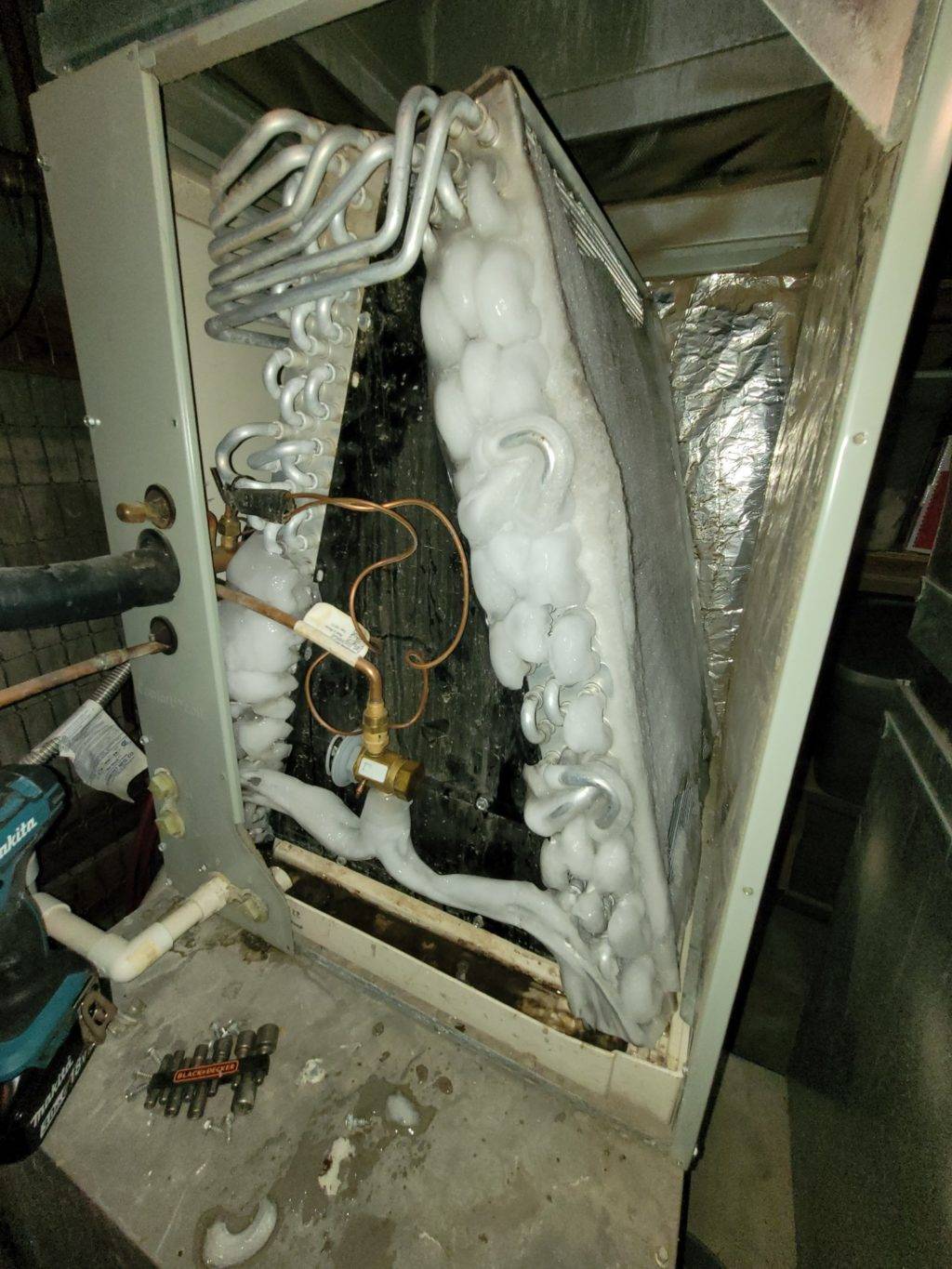
Image Source: www.manmadediy.com
Why Does Your AC Freeze Up?
Before we dive into the thawing process, it’s essential to grasp why your AC might freeze in the first place. Several issues can lead to an AC iced over defrost situation:
- Low Refrigerant Levels: This is one of the most common culprits. Refrigerant is the substance that circulates through your AC, absorbing heat from your home. If the refrigerant level is low, the pressure inside the evaporator coil drops. This causes the coil to get too cold, so cold that moisture in the air freezes on contact.
- Dirty Air Filter: A clogged air filter restricts airflow over the evaporator coil. When not enough warm air passes over the coil, it can’t absorb heat effectively. This causes the coil to become too cold and eventually freeze. Think of it like trying to breathe through a thick blanket – airflow is severely limited.
- Blocked Airflow: Beyond a dirty filter, other obstructions can impede airflow. This includes blocked vents, closed or blocked supply and return registers, or a malfunctioning blower motor. Any obstacle that prevents sufficient warm air from reaching the evaporator coil can lead to freezing.
- Dirty Evaporator Coil: If the evaporator coil itself is covered in dirt and grime, it acts as an insulator. This prevents proper heat transfer, leading to the coil becoming excessively cold and freezing.
- Thermostat Issues: A faulty thermostat could be stuck in the “on” position or incorrectly calling for cooling even when temperatures are not warm enough, leading to overcooling and freezing.
- Low Outdoor Temperatures: While less common during peak cooling seasons, running your AC when outdoor temperatures are consistently below 60°F can also cause freezing. The system isn’t designed to operate effectively in such cool conditions.
How Long Does It Take An Air Conditioner To Unfreeze?
The AC unit ice melt time can vary significantly. In general, you can expect the process to take anywhere from one to 24 hours. This wide range is due to several contributing factors:
- Severity of the Ice Buildup: A thin layer of frost will melt much faster than thick, solid ice. The more ice present, the longer the thawing will take.
- Ambient Temperature: Warmer room temperatures will naturally accelerate the melting process. If the ambient air is warmer, it will transfer more heat to the frozen components, speeding up how long to defrost AC.
- Fan Operation: Leaving the AC system running with the fan set to “on” (not “auto”) can help circulate air over the ice, aiding in melting. However, if the compressor is still running, it can continue to make the coil cold.
- System Shutdown: The most effective way to initiate the defrosting process is to turn off the AC system entirely. This allows the ambient air to warm the coils without the constant cold being generated by the compressor.
Factors Influencing AC Unit Thaw Duration
Let’s break down the elements that determine your AC unit thaw duration:
1. The Amount of Ice
- Light Frost: If you see only a thin layer of frost on the evaporator coil, it might take as little as 1 to 2 hours to melt once the system is turned off.
- Moderate Ice Buildup: A more substantial coating of ice, perhaps a quarter-inch thick, could take 6 to 12 hours to completely thaw.
- Thick Ice: If the ice is several inches thick, encasing the entire coil, it could take 12 to 24 hours or even longer for the ice on AC unit time to fully clear.
2. Indoor Temperature and Humidity
- Warmer Indoor Temperatures: A warmer house speeds up melting. If your thermostat is set to a higher temperature or the outside temperature is high, the indoor air will be warmer and melt the ice faster.
- Lower Indoor Temperatures: If your home is already cool, or if the AC has been running for a long time and the overall temperature has dropped, it will take longer to thaw.
- Humidity Levels: High humidity can slow down the melting process as the air needs to absorb more moisture.
3. Airflow and System Settings
- Fan “On” vs. “Auto”: Setting your thermostat’s fan to “on” helps circulate air, which can expedite melting. However, the compressor must be off for effective melting. If the compressor remains on while the fan is on, it might continue to freeze the coil.
- System Shutdown: The most crucial step is to turn off the AC unit at the thermostat. This stops the refrigerant from flowing and the cooling process, allowing the ice to melt naturally.
4. External Factors (for Outdoor Units)
While we’re primarily concerned with the indoor evaporator coil freezing, the outdoor condenser unit can also experience issues. If ice forms on the outdoor unit during extremely cold weather, this is a different scenario (often referred to as “icing up” in winter). However, for cooling season freezes, the focus is internal.
Steps to Defrost Your Air Conditioner
When you discover your AC is frozen, the immediate goal is to get it to unfreeze and begin the frozen AC recovery time. Here’s a step-by-step approach:
Step 1: Turn Off the AC System
This is the most critical first step.
- Go to your thermostat.
- Switch the system from “Cool” to “Off.”
- You can leave the fan set to “On” or “Auto” to help circulate air. Setting it to “On” can speed up the thawing.
Step 2: Allow Time for Thawing
Now, patience is key. You need to let the ice melt naturally.
- Avoid turning the AC back on too soon. This will only cause it to freeze again.
- Monitor the unit periodically. You should see water dripping from the unit as the ice melts. Place a bucket or towels underneath to catch any water if the unit is prone to leaks.
Step 3: Check and Replace the Air Filter
While the unit is thawing, it’s the perfect time to address a common cause of freezing.
- Locate your air filter (usually near the indoor air handler or in a return air vent).
- If it’s dirty, replace it with a clean one of the correct size and MERV rating. A clean filter is crucial for proper airflow.
Step 4: Inspect Vents and Registers
Ensure that airflow is not obstructed.
- Open all vents and registers in your home.
- Make sure furniture, curtains, or other items are not blocking them.
Step 5: Once Thawed, Turn the AC Back On
After you are confident that all the ice has melted (you should see no ice and water should be draining normally), you can turn your AC back on.
- Set your thermostat back to “Cool.”
- Start with a moderate temperature setting.
- Listen for any unusual noises and observe if it’s blowing cool air.
How Long Before AC Cools Again?
After the unit has thawed and you’ve turned it back on, it might take a little while for your home to return to the desired temperature. This period, often called how long before AC cools again, can range from 30 minutes to a couple of hours, depending on how warm your home got during the thawing process and the overall efficiency of your AC.
If your AC freezes up again shortly after thawing and restarting, it indicates an underlying problem that needs professional attention.
Troubleshooting Persistent Freezing Issues
If your AC continues to freeze up even after cleaning the filter and ensuring good airflow, you likely have a more serious issue. This is when you need to consider calling a professional HVAC technician. Common causes for recurring freezing include:
Low Refrigerant Charge
- Explanation: This is often due to a leak in the refrigerant lines. Refrigerant isn’t consumed like fuel; it circulates. If it’s low, it means there’s a leak somewhere.
- Professional Solution: A technician will need to locate the leak, repair it, and then recharge the system with the correct amount of refrigerant. Attempting to add refrigerant without fixing the leak is a temporary and potentially harmful fix.
Dirty Evaporator Coil
- Explanation: Even with regular filter changes, dust and debris can accumulate on the evaporator coil over time. This buildup acts as an insulator, hindering heat absorption.
- Professional Solution: A technician can thoroughly clean the evaporator coil using specialized cleaning solutions and tools. This is a more intensive cleaning than what most homeowners can do.
Faulty Blower Motor or Fan Capacitor
- Explanation: The blower motor is responsible for pushing air across the evaporator coil. If it’s not running at the correct speed or is failing, airflow will be insufficient, leading to freezing. A fan capacitor helps start and run the motor; if it fails, the motor might run slowly or not at all.
- Professional Solution: The technician can diagnose if the blower motor or capacitor is the issue and replace it if necessary.
Clogged Condensate Drain Line
- Explanation: The condensate drain line removes moisture that condenses on the evaporator coil. If this line gets clogged with algae, dirt, or debris, water can back up, increasing humidity around the coil and potentially leading to freezing, especially if the backup causes water to seep onto the coil.
- Professional Solution: Technicians can clear clogged drain lines using specialized tools and sometimes a wet vac. They might also recommend a condensate pump or an overflow shut-off switch.
Problems with the Expansion Valve (TXV) or Metering Device
- Explanation: These components regulate the flow of refrigerant into the evaporator coil. If they malfunction, the refrigerant flow can be too high or too low, leading to improper coil temperatures and freezing.
- Professional Solution: These are complex parts that require professional diagnosis and replacement.
What NOT to Do When Your AC is Frozen
While you want to fix the problem quickly, certain actions can worsen the situation or damage your AC:
- Do NOT turn the AC back on immediately after shutting it off. You must allow sufficient time for the ice to melt completely. Turning it back on while it’s still frozen will likely cause it to freeze again, potentially worsening the underlying issue.
- Do NOT try to chip away the ice with sharp objects. This can easily puncture the delicate evaporator coil or damage other components. The natural thawing process is the safest method.
- Do NOT ignore recurring freezing. If your AC freezes up more than once, it’s a sign of a deeper problem that needs professional attention. Continued operation of a frozen AC can lead to compressor failure, a very expensive repair.
Estimating AC Unit Ice Melt Time: A Quick Reference
To help you gauge the situation, here’s a simple table for the AC unit ice melt time:
| Ice Buildup Severity | Estimated Thaw Time (Hours) | Actions to Take |
|---|---|---|
| Light Frost | 1-2 | Turn off AC, check/replace filter, ensure vents are open. |
| Moderate Ice | 6-12 | Turn off AC, replace filter, ensure vents are open. Monitor for dripping water. |
| Thick Ice | 12-24+ | Turn off AC, replace filter, ensure vents are open. Call technician if persists. |
Summary: Your AC’s Thawing Timeline
So, to reiterate, how long does it take an air conditioner to unfreeze? Generally, 1 to 24 hours. This timeframe is heavily influenced by how much ice has formed and the surrounding environmental conditions. The key takeaway is to turn off the AC system immediately and allow it to thaw naturally. While it thaws, inspect and replace your air filter, and ensure all vents are open. If the freezing problem persists after these steps, it’s time to consult a qualified HVAC professional. They can diagnose and fix the root cause, ensuring your AC runs efficiently and reliably. Don’t underestimate the importance of regular maintenance, like filter changes, to prevent these frosty frustrations in the first place.
Frequently Asked Questions (FAQ)
Can I use a hairdryer to speed up AC defrost time?
While tempting, using a hairdryer or other heat sources directly on the evaporator coil is generally not recommended for residential AC units. The coils are delicate, and extreme heat could damage them. The safest method is allowing natural airflow and ambient room temperature to do the work.
What if my AC freezes up in the winter?
AC units are typically designed for cooling. Running an AC in very cold winter temperatures (below 60°F) can cause it to freeze up due to the system’s mechanics. If your AC freezes in winter, it’s usually an indication that it’s being operated outside its intended temperature range, or there’s a mechanical issue. You should turn it off and consult a professional.
How do I know if my AC has refrigerant leaks?
Symptoms of low refrigerant include reduced cooling, ice buildup on the coils, hissing sounds from the unit, and a noticeable drop in airflow. If you suspect a leak, it’s crucial to have a professional technician inspect and repair it.
Is it okay to run the AC fan without the compressor when it’s frozen?
Yes, running the fan alone (thermostat set to “Fan On” and “Cool Off” or “Heat”) can help circulate air and speed up the melting process. However, the primary step is turning the entire system off.
How often should I change my AC filter?
This depends on the type of filter and your home environment. As a general rule, check your filter monthly and replace it every 1-3 months. If you have pets, allergies, or live in a dusty area, you may need to change it more frequently.

My name is Carlos Gadd, and I am the creator of AirPurityGuide.com.. With a passion for footwear, I share my experiences, insights, and expertise about shoes. Through my blog, I aim to guide readers in making informed decisions, finding the perfect pair, and enhancing their footwear knowledge. Join me on this journey to explore everything about shoes!